
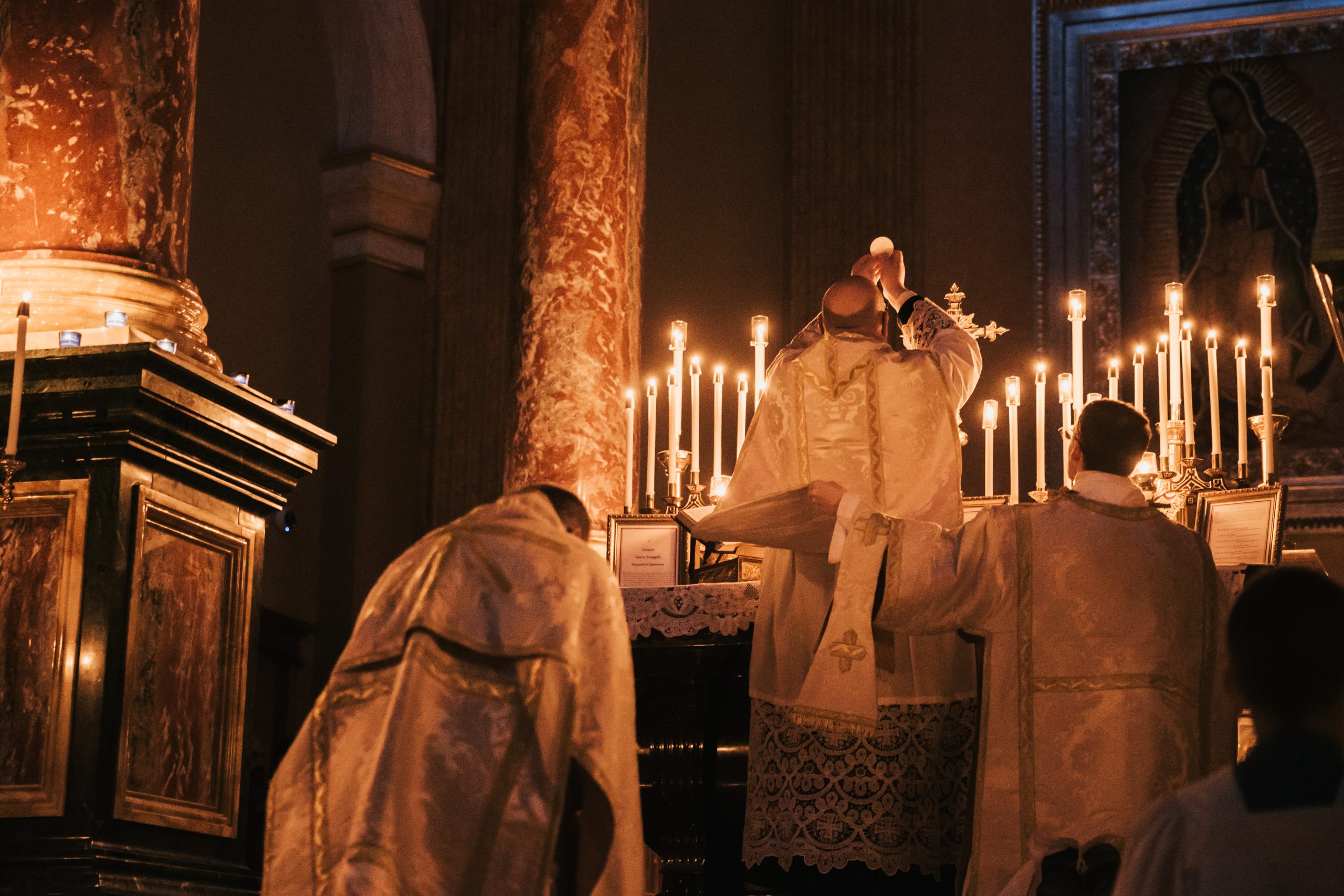
A candlelit tradition that prepares hearts for both Christ’s nativity and His return
By: Jacob Zepp
Master of Pontifical Ceremonies and Assistant Director of the Office of Sacred Worship
What is the Rorate Mass?
The Rorate Mass is a Votive (devotional) Mass in honor of the Blessed Virgin Mary, which is celebrated by candlelight before dawn during the Advent Season. The Mass is called “Rorate” because the opening prayer for the Mass in Latin begins with these words: Rorate, caeli, desuper, et nubes pluant justum, aperiatur terra, et germinet Salvatorem (“Drop down dew from above, you heavens, and let the clouds rain down the Just One; let the earth be opened and bring forth a Savior. (Cf. Is 45:8)
Why Celebrate a Votive Mass for Mary During Advent?
In the modern Roman Rite, the season of Advent has a twofold character: preparing for Christmas—the feast of Christ’s first coming —and awaiting Christ’s second coming at the end of time. Awaiting the end of time is not liturgically characterized by dread, doom, and destruction, but as we pray in the Lord’s Prayer—“Thy Kingdom come”—it is an object of hope. As the Roman Missal states, “Advent is thus a period for devout and joyful expectation.”
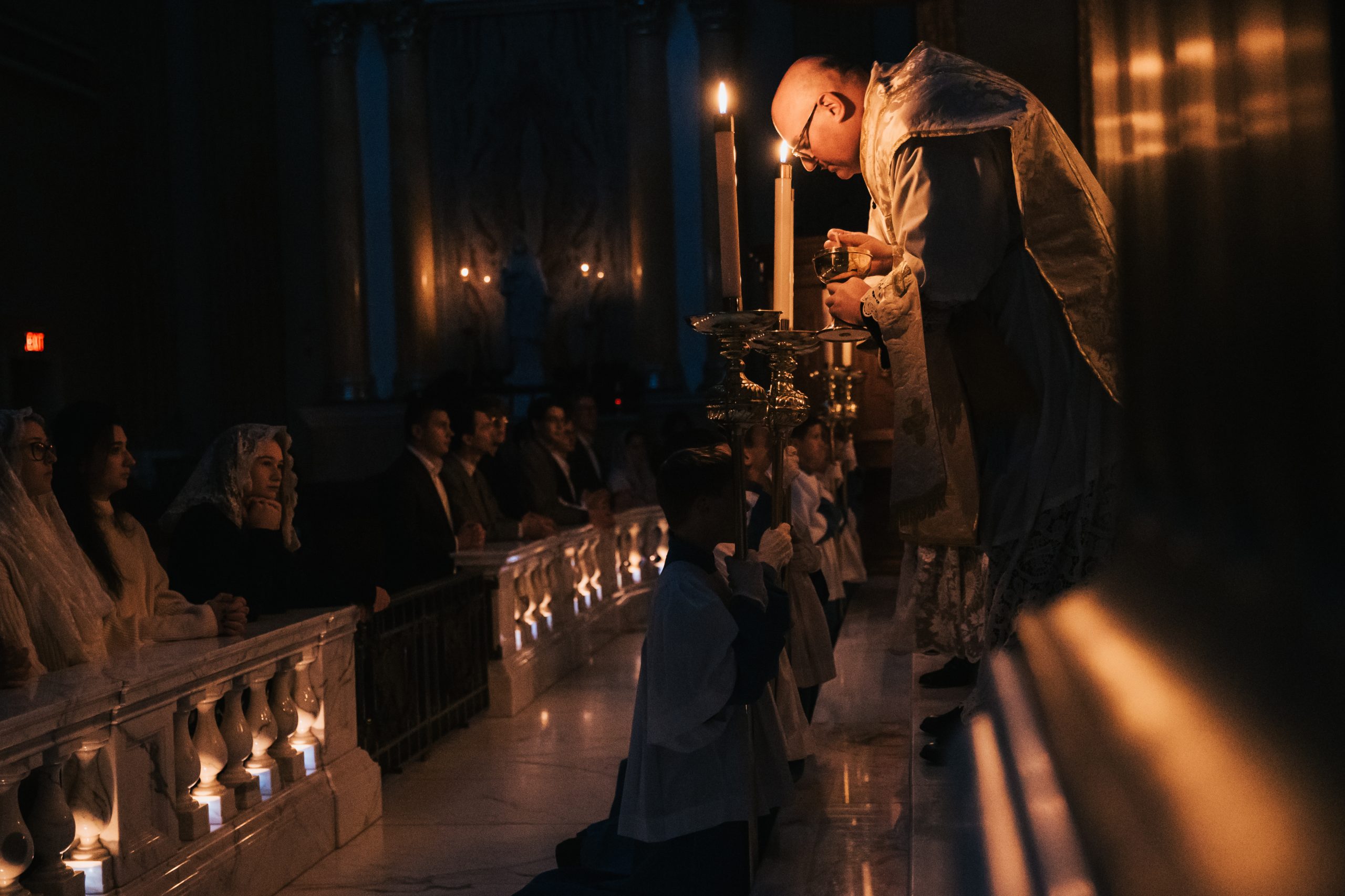
This season of expectation for the coming of Christ can be joined to Mary’s expectation for the birth of her Son. About eight years after the conclusion of Vatican II, Pope Paul VI explained that Advent, “should be considered as a time particularly suited to devotion to the Mother of the Lord.” He also remarked that “the Advent liturgy, by linking the awaiting of the Messiah and the awaiting of the glorious return of Christ with the admirable commemoration of His Mother, presents a happy balance in worship.” This balance in the liturgy is a theological norm that helps emphasize that devotion to the Blessed Virgin cannot be separated from Christ.
Why Before Sunrise?
The attitude of expectation is perhaps best captured by awaiting the sun to rise. As the psalmist says, “My soul waits for the Lord more than watchmen for the morning, more than watchmen for the morning. (Ps 130:6) While darkness veils the earth, man can only wait. In the early morning Rorate Mass, the faithful mirror the watchmen in the psalm, waiting for the light. As the liturgy begins, the faithful are surrounded by a physical darkness, awaiting the coming of the physical and spiritual light.
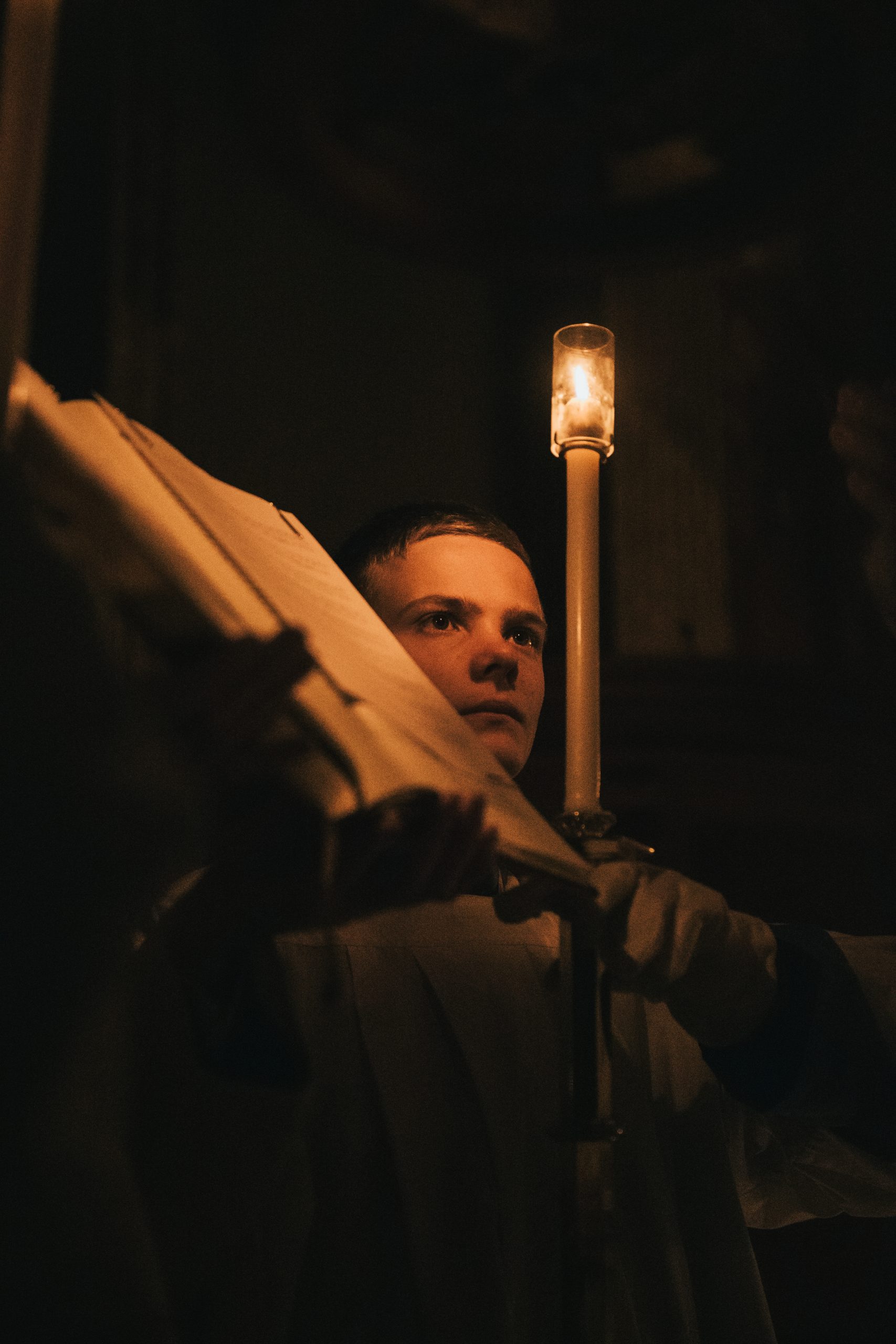
Light is a symbol for Christ, for Christ is the light of the world. (Cf. Jn 8:12) Christ is also “a light of the revelation of the Gentiles.” (Lk 2:32) During this Mass, the faithful are physically waiting for the light to dawn and spiritually waiting for the coming of the light of the world. The bond between the physical world and the spiritual world is made beautifully clear in this symbolism.
When Did The Custom Start?
The Rorate Mass originated in the Middle Ages as one of the many Advent devotions to the Blessed Virgin Mary. According to the modern liturgical theologian Adam Adolf, in, “The Liturgical Year: Its History and Its Meaning after the Reform of the Liturgy,” the liturgy was very popular among the people, especially in German-speaking areas. In some places, it was called the Golden Mass.
The practice of celebrating the Rorate Mass can be dated back to the eighth century in Ordo Romanus XV: “Then, on the Sunday before the feast of the Nativity of the Lord, they begin to sing of the conception [of the Lord in the womb] of holy Mary” (translation mine). Ordo Romanus XV is a collection of liturgical prescriptions from the eighth century, written by a Burgundian or Austrian monk to promote unity between the Gallican and the Roman liturgy. The Rorate Mass also appears later in the “Compiègne Antiphonary” (The Antiphonary of Charles the Bald), which was written in 877 and the antiphon for the day begins “Rorate Caeli.”
Eventually, these votive Masses were extended and began to be celebrated for nine consecutive days, making a Mass novena to the Blessed Mother. The nine-day celebration of these votive Masses endured from the Middle Ages until modern times.
Is the Rorate Mass Still Legitimately Practiced?
Yes, it is still permissible to celebrate a votive Mass for the Blessed Virgin Mary on most of the days during the Advent season. In the liturgy, which was reformed after the Second Vatican Council, there still exists a votive Mass for the Blessed Virgin Mary to be used during the Advent season. The opening antiphon for this Mass still begins, “Rorate, Caeli.” This Mass could be fittingly and beautifully celebrated by candlelight to help the faithful enter into the twofold joyful expectation for the feast of Christ’s nativity and second coming.
In recent years, this tradition has gained popularity, with celebrations featured on EWTN and at major pilgrimage sites including the Basilica of the National Shrine of the Immaculate Conception in Washington, D.C., the Shrine of Our Lady of Champion in Champion, Wis., and the Shrine of Our Lady of Guadalupe in La Crosse. This year, Father Edward Nemeth, the executive director of the Shrine of Our Lady of Guadalupe, will offer a Rorate Mass at 6:30 a.m. on Dec. 6 using the pre-Vatican II liturgy. His Eminence Raymond Leo Cardinal Burke will be the homilist for this Mass.