
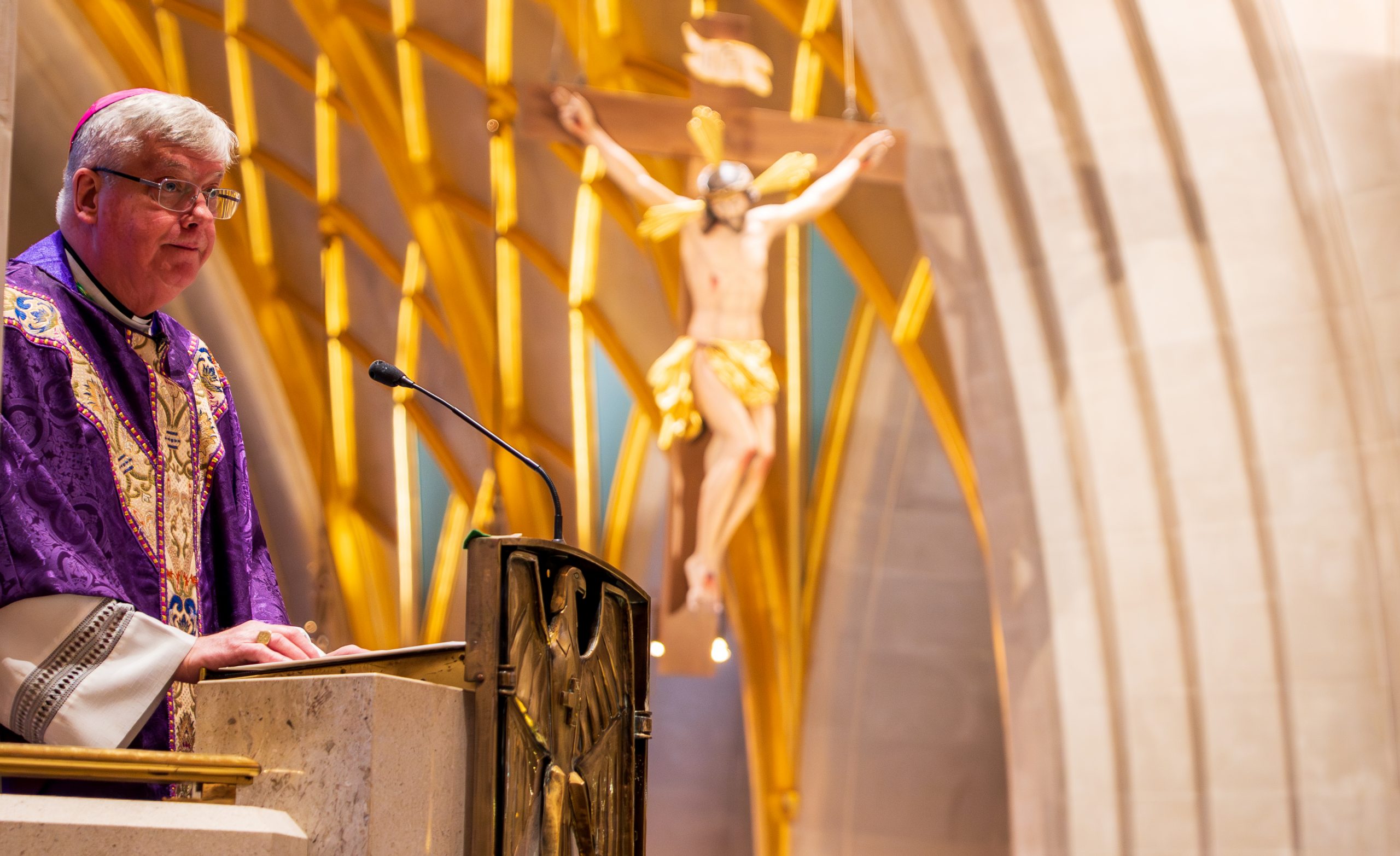
In this season of Lent, we turn our hearts to our ever-present need for healing. At the heart of the Church’s ministry is the ministry of healing—healing the wound of original sin, making possible our confirmation in Christ, sharing as we do through baptism in His identity and His mission and propelling us to heights previously unimaginable. While Lent is a season of repentance and renewal, it is also a time for us to reflect on our relationship with Christ and His Church. All too often, the world would have us separate Jesus from His body. This is not possible. His body, the Church, for whom He gave up His life, is His beloved, and she must become ours, too. She is our mother, our physician and our teacher.
It is through the Church, instituted by Christ and unceasingly brought to life by her divine spouse, that we enter into the dynamic of salvation, which is given us in Christ. The sacraments are visible signs of an invisible reality, given to us by Jesus and flowing from His crucified self, that brings us resurrected life.
The sacrament of baptism is the doorway to the new life we now have in Christ. Baptism cleanses us from original sin and gives us the capacity to be divinized by grace, becoming who Christ is by nature.
The Eucharist is the sacrament of our thanksgiving to God, the source of the power that becomes the medicine of immortality, transforming us from glory to glory. The Eucharist is the life of the Church, and that toward which all resurrected life flows and tends.
The sacrament of confirmation completes our baptismal graces by enhancing them and preparing us to be faithful witnesses. These graces help us to endure that final battle, rejecting the Antichrist.
The sacraments of confession and anointing are healing sacraments for the Body of Christ, still on pilgrimage. They are the healing remedy for post-baptismal sin and the bodily effects of the fall of man—tending toward death.
The sacraments of matrimony and holy orders restore man and woman to right relationship with each other and with God, imaging, as they do, Christ and His Church.
Christ instituted the sacrament of holy orders at the Last Supper for the Eucharist, so that God’s people might not just have manna from heaven, but have something even greater—the healing presence of Christ Himself, the one who is the truth, the life and the way. (cf. Jn 14:6)
The sacraments are the bridegroom Himself ministering to His bride, the Church, not with some magical potion but with His body and blood, soul and divinity—body, blood, soul and divinity imbued with resurrected life. It is through the gift of Himself, His body and blood, that we find healing from our sins, our brokenness, our estrangement from each other and our estrangement from God. God bids us to approach the sacraments for timely aid and assistance. God does not simply heal us, but through our wounds, He draws life from death and through those wounds makes us magnificent in a way we cannot fully grasp in this life.
The saints have said that Jesus retains His five precious wounds, even in His glorified state, lest we forget that it is by these wounds that He expresses His love to His bride, and so that we may understand that sin is death and life is Christ. I believe He lets us bear the scars of our wounds, too, so that we remember that we owed a debt we could not pay ourselves, that death was its jailer and that we were freed by the love of God, who alone gives us life.
Most Reverend
Gerard W. Battersby
Bishop of the Catholic Diocese of La Crosse