
St. Olaf Parish in Eau Claire
Abstinence, community and the breaking of bread in parish life during Lent
Story by Alexis Wislinsky
Supper clubs, Kwik Trip and the dedication to the Green and Gold are mainstays of Midwestern culture. Right alongside these traditions is the hallowed Friday Night Fish Fry. Perhaps even before the Lenten fast begins, with its command to abstain from meat in remembrance of our Lord’s Passion, local bars and restaurants (and even fast-food chains) have adopted some sort of pescatarian-forward entrée on Fridays. The institution of this within our state is, of course, thanks to the Catholic immigrants who brought their faith practices to Wisconsin.
Pillars of Devotion
Fasting and abstaining are pillars of Lent for a reason. Even before the institution of the Church, these practices were woven into the fabric of our Faith Tradition, as the Old Testament attests:
Then I proclaimed a fast there, at the river Ahava, that we might deny ourselves before our God, to seek from him a safe journey for ourselves, our children, and all our possessions. (Ezra 8:21)
Yet even now, says the Lord, return to me with all your heart, with fasting, with weeping and with mourning. (Joel 2:12)
There is a particular kind of spiritual purification that occurs when a person deprives themselves of a natural good. After Jesus’ first big public outing, if you will—His baptism in the River Jordan—He traveled to the desert and fasted for 40 days. Our Lord, and model par excellence, recognized the great strength that came from this sort of personal sacrifice. Fasting and abstaining for this reason have continued throughout our history, most notably on the day Christ offered Himself up for our sakes.
The Church in America, along with all churches worldwide, ordered abstinence from meat every Friday of the year. As a result, eating fish on Fridays became a habit in most households and shaped the state’s food culture. In the wake of Vatican II, U.S. bishops changed this practice in November 1966. The document “On Penance and Abstinence” shifted the sense of “we must” to “we urge,” regarding sacrifice in the form of abstinence from meat for Ash Wednesday, Fridays in Lent (except on solemnities) and Good Friday.
“Come and share a meal with us.”
On these days, many parish communities across the diocese carry on a tradition that brings people together and supports the mission of their parish: the fish fry. It’s an institution for many, and one well-known example of this tradition is St. Olaf Parish on Eau Claire’s north side.
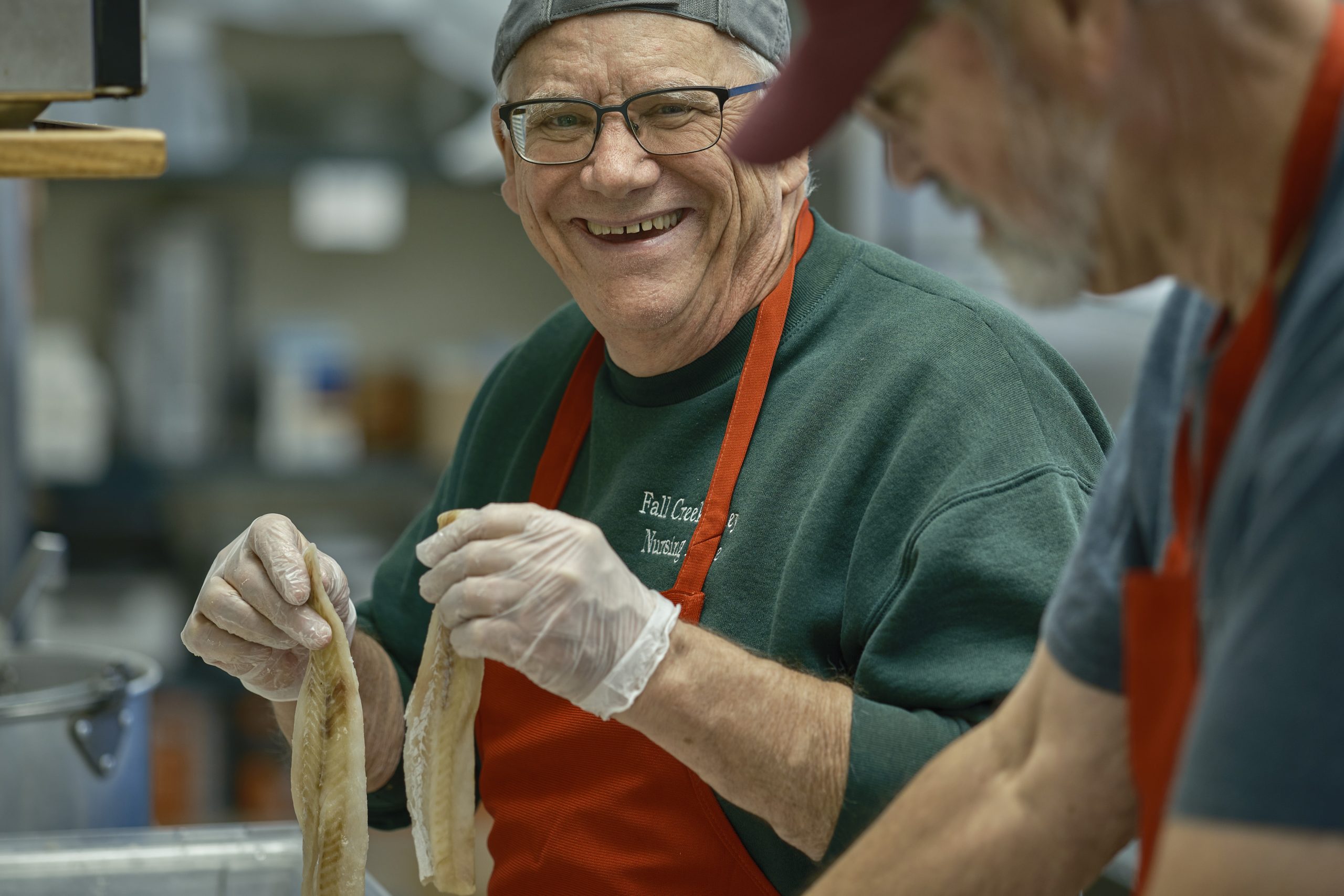
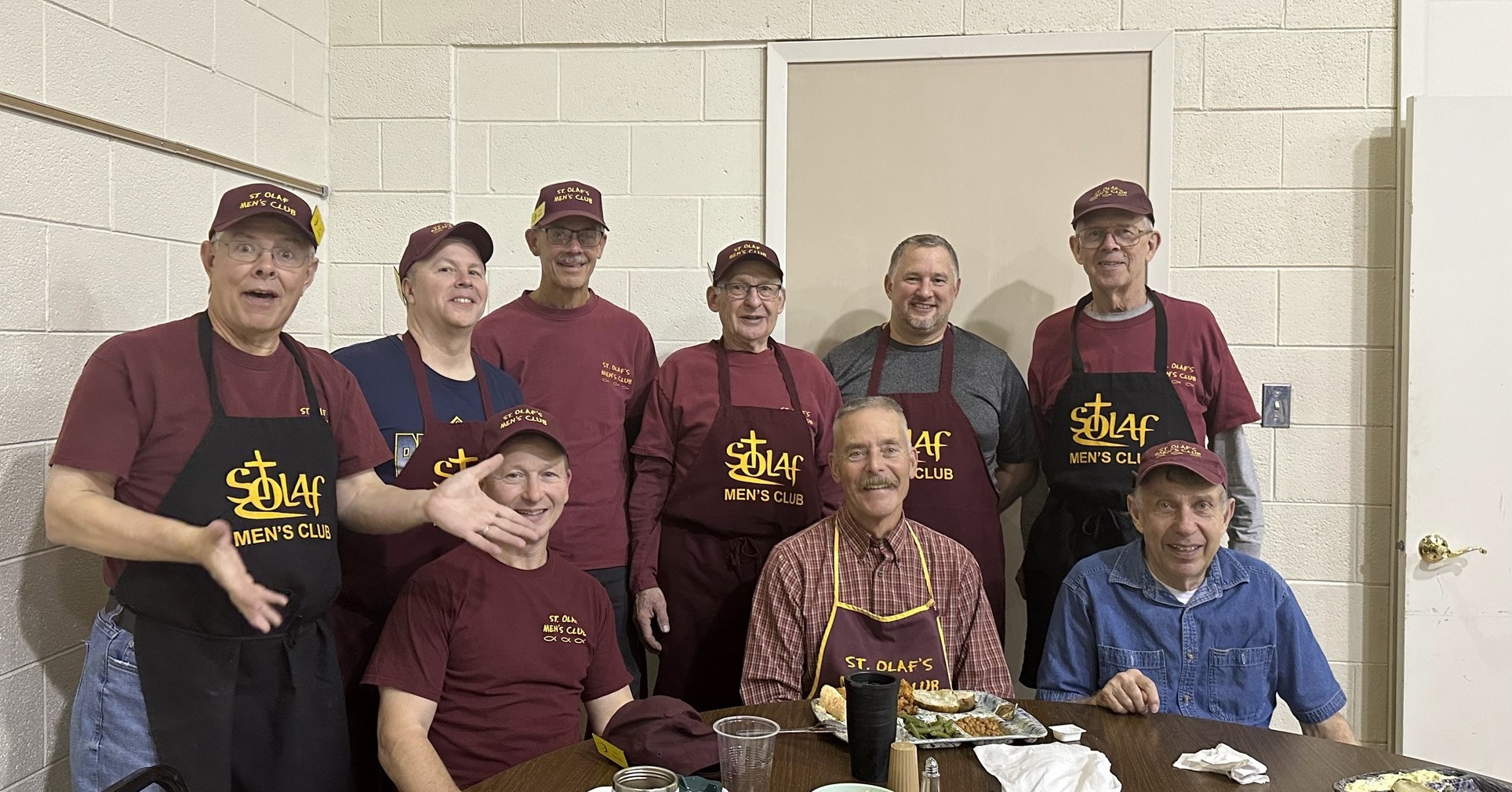
Since 1973, the St. Olaf Men’s Club has been tirelessly preparing its meal for hundreds on the first Fridays of the fall, as well as the third Fridays of the winter months. Their club, blessed to be comprised of over 100 men, relies on them for every aspect of the preparation, set-up, serving and clean-up of their famed fish fries.
Jay Bouley, a longtime parishioner (37 years to be exact), has been working these nights for the past 11 years. His position on the serving line is critical, as he greets each diner with a smile, welcomes first-timers and reconnects with regulars. When asked how many people come through the line on an average Friday, Jay confidently responded that it was anywhere between 550 and 850 diners.
Jay remarks, “The majority are not parishioners or perhaps not even Catholic. People bring friends from out of town—I’ve talked with someone from California who has never heard of a fish fry!”
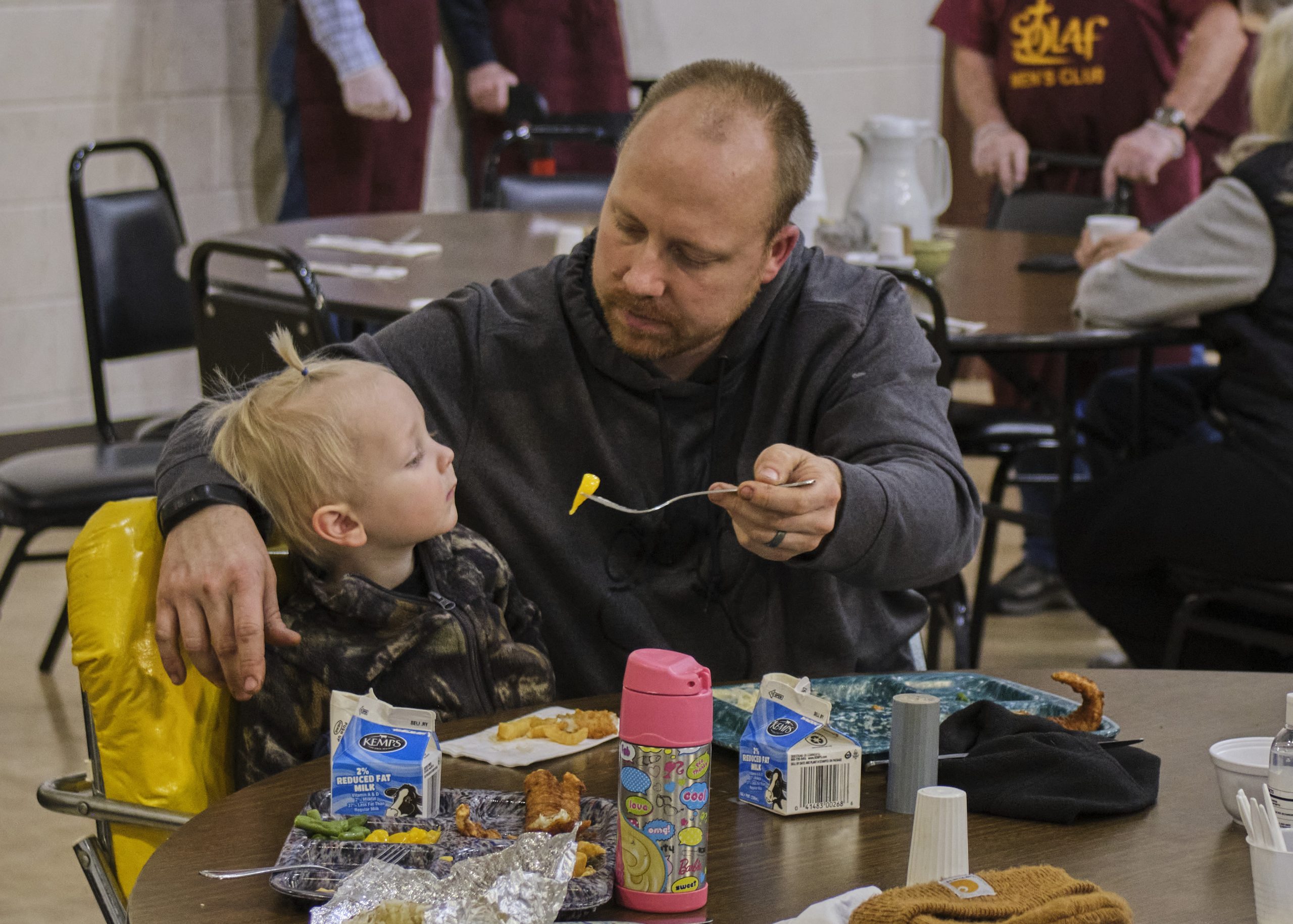
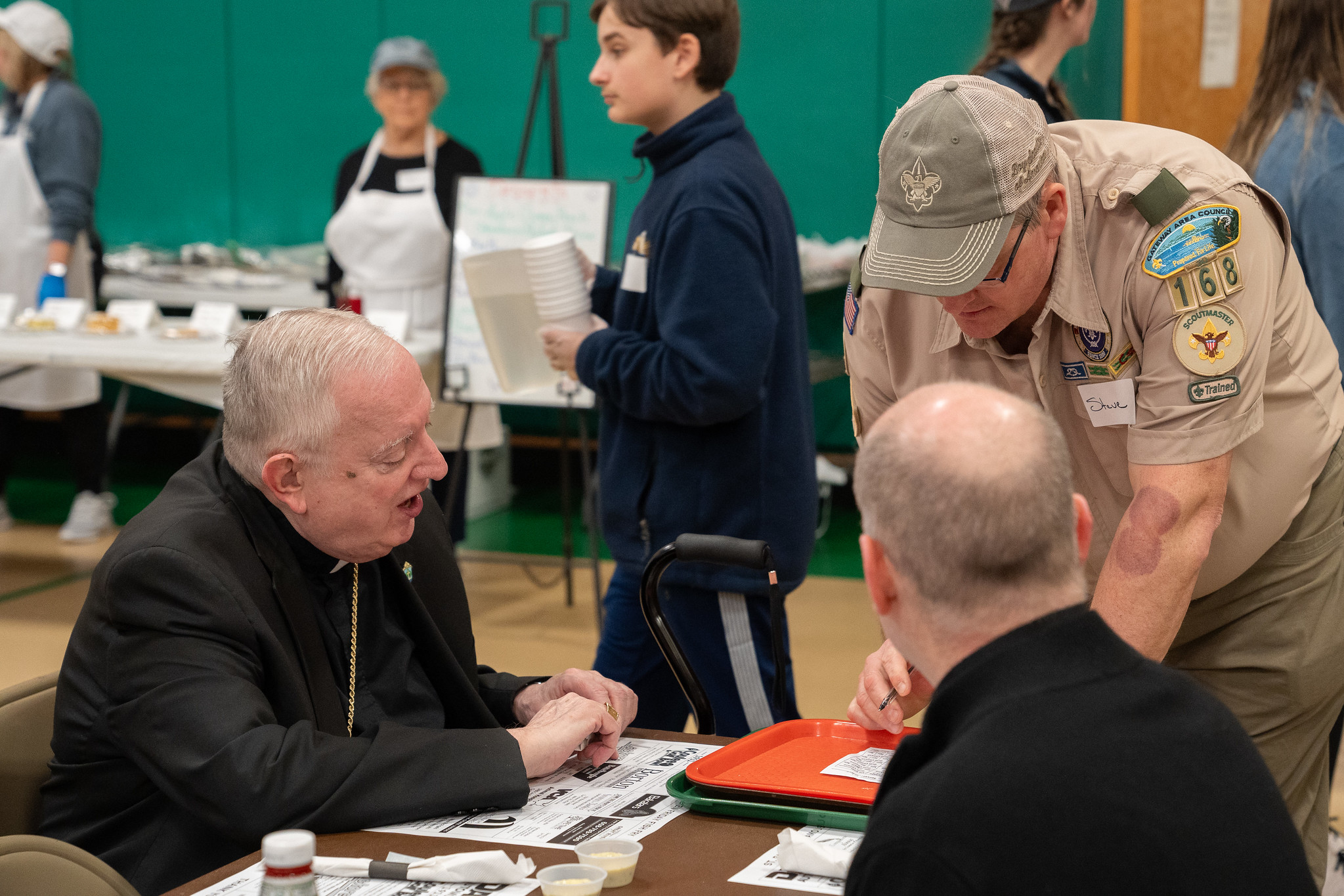
Promoting fellowship is a key aspect of these evenings, and it’s evident in the details. For example, round tables that seat up to nine are employed to encourage conversation, and children five and under eat free. To top it off, it’s all-you-can-eat. So, if you’re able to finish your three pieces of fish, potato and bean options, coleslaw and beets, mac n’ cheese and dessert with room to spare, you’re free to return to the line for seconds.
“This is our form of evangelism,” says Jay. “Come and share a meal with us.”
“They devoted themselves to the apostles’ teaching and fellowship, to the breaking of bread and the prayers.…” (Acts 2:42)
The centrality of a meal within the Catholic faith is hard to miss. Jesus often broke bread with His followers, alongside the outcasts of society. The institution of the Eucharist took place within the context of a Passover meal. In the Book of Revelation, we hear:
“And the angel said to me, ‘Write this: Blessed are those who are invited to the marriage supper of the Lamb.” And he said to me, “These are true words of God.” (Rev 19:9)
To come together over something as simple and necessary as food is a sacred facet of human society, and our Faith has always recognized this. Our current culture has leaned into the “I don’t have enough time” mentality of hurry, hurry, hurry. Many rely on drive-throughs, DoorDash and the like to try to minimize the stress of putting a meal together. It’s understandable why we depend on these things amid busy seasons. What we lose, however, is the sense of community and the conversation that only results from sitting around a common table to share a meal. In “Meditation XVII of Devotions upon Emergent Occasions,” the English poet John Donne famously writes, “No man is an island.”
Lent is an incredible time to commit oneself to spiritual renewal and follow the example of Christ in the desert. He set apart time for prayer and fasting, and we are called to do likewise. It can be tempting to see Lent as nothing more than a difficult and bleak time of sacrifice, a period that we must muscle our way through until the beauty of Easter morning arrives. There absolutely is discomfort in sacrifice, as the process of purification isn’t an easy one, but gathering in community over a shared meal, meeting someone new or breaking bread with old friends, is a practice that helps remind us we are not alone in this season. Great joy is found in solidarity!
When one joins this shared meal with the proper spirit, namely, regarding it as an occasion to come together in the midst of sacrifice with temperance, it’s a beautiful opportunity for fellowship as a Catholic community. And at parishes like St. Olaf’s, you are intentionally supporting the parish and its various ministries.
As we enter a new season of the liturgical year, may we see the opportunity to grow in our own personal devotions and holiness, as well as the chance to come together in solidarity. The community fostered by our participation in the eucharistic meal every Sunday can likewise be nurtured through coming together outside the Holy Mass at parish events like the fish fry. It’s a time to remember our humanity and dependence on one another, particularly in times of sacrifice.
For a list of parish fish frys across the diocese, visit the “Fishfrynder” webpage, follow this link: diolc.org/fishfrynder/.