
Father Derek Sakowski
A Franciscan path for repairing wounded relationships and renewing parish life
This fall marks the conclusion of a series of 800-year anniversaries commemorating the life of St. Francis of Assisi. On Oct. 3, 1226, Francis passed from this life into eternity.
If you ever have the privilege to visit Italy, consider making a pilgrimage to the Portiuncula in the valley below Assisi. The Portiuncula is now a little chapel housed within a big basilica. The place was dear to Francis. As his death neared at the age of 44, he asked to be brought back to the Portiuncula, literally the “little portion” given to him and his first followers by Benedictine monks to support their mission.
The Portiuncula was one of the few church buildings in the area that had fallen into disrepair but was lovingly restored by Francis and his followers. They slept in small huts around the chapel. In one of those huts, Francis sang during his final moments, inviting his companions to join him in praising God.
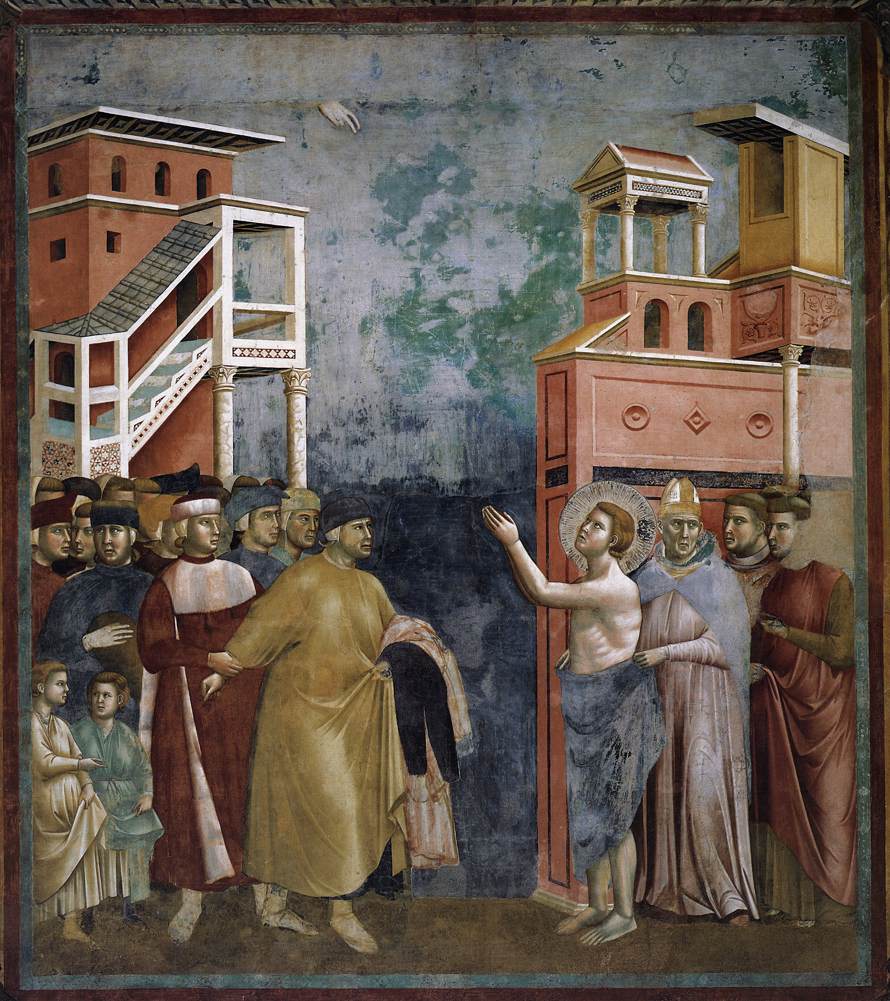
Two decades earlier, Francis had been praying in another chapel, halfway up the hill. He heard Jesus speak to him from the cross: “Francis, go and rebuild my Church, which, as you can see, is falling into ruin.” At first, Francis took Jesus quite literally. He gathered and begged for stones, sold some of his father’s fine cloth and also sold one of his horses to pay for further repairs. This led to a dramatic confrontation in which his furious father, Pietro, brought Francis before the bishop, demanding repayment. There, in that moment, Francis stripped off his fine clothes, renounced his earthly inheritance and claimed God as his Father.
He and a handful of companions willingly embraced a life of poverty, wearing simple peasant garments, traveling about in community and trusting God to provide for whatever they needed. Over the next two decades, their simple and joyful witness attracted 17,000 followers, including Clare and her sisters.
If we were alive in 1205 and recognized a need for Church renewal, how would we have approached it? Our modern Western approach tends to focus on organizational strategy, programs, goals, numbers and “success.” However, Francis was noticeably lacking in all those things. But when it came to the two great commandments (loving God with all your heart, mind, soul and strength; loving your neighbor as yourself), he was a living icon of the loving communion Jesus brought into this world. He and his followers lived in strong and healthy relationships. They lived as disciples who attracted other disciples. They were intimately connected to God and to each other in Christ-like love. While they accomplished many great things, it was their way of being as disciples that touched the hearts of many, though it posed a threat to those holding on to power or privilege. Most of us struggle to give up our familiar comforts in favor of an apostolic way of life.
An Unlikely Patron
I’ve often heard that you don’t choose patron saints; they choose you. This was definitely the case with the “Rebuild My Church Initiative.” For many years, we have recognized that the way we are running our 156 parishes is not working effectively. We understand that it will only become more challenging if we refuse to change. Many among us have been advocating for renewed pastoral planning for years. Then, suddenly, in the spring of 2023, this position emerged unexpectedly. Bishop Callahan was enthusiastic about appointing me to this role, emphasizing the need to focus more on the renewal of our priests.
Within weeks, almost imperceptibly, Francis of Assisi had inserted himself. I didn’t have any close devotion to him. But there he was, one of the patrons of our diocese, with beautiful 800-year anniversaries on the horizon: the gift of the nativity crèche in December 1223, the receiving of the stigmata in 1224, the Canticle of all Creatures during his final months on earth and his passing into heavenly life in October 1226.
When you consider it, Francis is rather a strange choice for a patron of “pastoral planning.” He lived blissfully in the present moment, taking quite literally the Lord’s invitation to be like the birds of the air and lilies of the field. His only notable strategic experience came from a brief stint on the battlefield, which ended in a disastrous skirmish that led to his capture.
In contrast, I have always enjoyed nerdy board games and like to think 10 steps ahead. Strategic thinking comes naturally to me. When I was younger, I would have been rather aggressive and thorough in advancing a pastoral plan for our diocese.
Instead, God placed me alongside Francis in a life of poverty. The opportunity came about so unexpectedly that it wasn’t included in the diocesan budget. As a busy pastor, I initially thought I would have plenty of free time to focus on this initiative. I did at first, but without a budget and staff, I quickly reached my limits!
Just as in the days of Francis of Assisi, when many who were powerful in the Church and in society felt threatened by his more vulnerable and joyful way of living in Christian community, many of our parishioners now are similarly afraid of what they might lose. If you visit the diocesan website and read the comments from the 40 listening sessions, you’ll notice how quickly people express their fears, frustrations and hurts. However, when asked to envision a future filled with hope and vibrancy, there is often a long pause (crickets)—about 10 seconds—before people respond, with some writing comments like “???” or “I don’t know.”
When we clutch tightly to what we have, fearing what we might lose, our hands remain closed to the abundance of God’s blessings. Francis’ approach to poverty encourages us to keep our hands open and extended, allowing us to vulnerably praise God and joyfully receive His blessings.
Repairing Wounded Relationships
There is an even deeper meaning to “Rebuild My Church”—repairing ruptured relationships within the Church. When Jesus spoke to Francis, He said: Francesco, va’ e ripara la mia casa che, come vedi, è tutta in rovina, which translates to “Francis, go and repair my house, which, as you see, is all in ruin.” The church buildings of San Damiano and the Portiuncula were in ruin, and Francis lovingly repaired them. The Church herself is also wounded and bleeding, and Francis’ embrace of the cross connected him with all the suffering members of the human race, who unite with the suffering body of Christ.
During the two-year waiting period for pastoral planning, I devoted much of my time to accompanying survivors of abuse, including those harmed by clergy, religious superiors or other church leaders. Many of these individuals feel like outsiders who are unwelcome in our communities. Numerous parishes and clergy members are often uncomfortable or resistant to allowing them to share their full stories. Instead of being present with them and truly understanding their experiences, responses can include attempts to fix the situation, offer unsolicited advice, minimize their pain, compare their experiences, express disbelief, assign blame, judge or shame them for the chaos in their lives. Most survivors will tell you that the lack of care from the Church has caused them more harm than the abuse itself.
I didn’t notice these things until I learned how to grieve my own experiences of neglect and abuse. As I’ve connected with my own grief and loss, I’ve learned how to be with others in their suffering—how to stand at the foot of their cross. Now, I increasingly observe that the culture in most of our parishes tends to prefer speaking nice-sounding words in the face of heartache, betrayal or loss. While this may seem like the “good Christian” thing to do, it often leaves people feeling alone and unloved in their pain. This situation resembles the story of the Good Samaritan, as it reflects how we tend to leave those who are beaten and wounded on the other side of the street, passing them by quickly to maintain our own comfort.
The Rebuild My Church Initiative, at its core, invites us to be disciples who make disciples. As in the time of Francis, we’re invited to look honestly and humbly at any ways we’ve fallen into ruin.
Over the last few generations, a massive number of Catholics left the Church, both in our diocese and across the country. We often judge them for this, just as the older brother judged the younger brother in Luke 15. We tend to believe they should check all the boxes and be more transactional, as we are. Much like the older brother, we can become joyless and hopeless, bound up in fear and jealousy, even though we are right here in our Father’s house. He desires to share an abundant feast with all His children, including us.
The invitation that Francis joyfully embraced encourages us to let go of our hoarding, grasping and striving. It is an invitation to embrace the cross and all those who are poor and suffering. It’s an invitation to be vulnerably united with the Lord and one another, uplifting our empty hands in praise as we receive together the abundant life He is eager to share with us.
St. Francis of Assisi, pray for us