
St. Francis, the Franciscan spirit in our diocese and the voices shaping this special issue
There are saints we admire from a distance, disconnected from the radical nature of their lives. Sanitized, polished and safe, they adorn stained glass, are etched in carved stone and, as many a Franciscan has ruefully said, are set gently in gardens and birdbaths.
St. Francis of Assisi has suffered this fate more than most.
He is easy to sentimentalize. But Francis was not decorative, and he was not tame. He was not a pleasant medieval mascot. He was radical. He was a soldier, a prisoner, a penitent, a beggar, a deacon, a mystic, a son of the Church and a man whose love of Christ became so total that it stripped him of nearly everything except joy.
This issue of Catholic Life is devoted to St. Francis not only because the Church has entered a special Jubilee Year of St. Francis, marking 800 years since his death, but because, for us in the Diocese of La Crosse, the commemoration is not conceptual.
Francis is our secondary patron.
Il Poverello’s brothers and sisters have also prayed, taught, served and adored Christ in our diocese for generations. The Franciscan Sisters of Perpetual Adoration (FSPA), a “community of vowed Franciscan women centered in Eucharist,” arrived in La Crosse in 1871 and have been among the most visible and enduring witnesses to Franciscan life in our diocese. Viterbo University, founded by the FSPA, continues to carry that same Franciscan spirit into classrooms, chapels, offices, dorms, sidewalks and lives still being formed.
So, this issue is not simply about Francis. It is about the Franciscan imprint already pressed into the soil beneath our feet by generations of Franciscans.
You will meet Father Conrad Targonski, OFM, a Franciscan priest and retired Navy captain who served with the Marines in Fallujah and now serves at Viterbo’s San Damiano Chapel. You will hear from Dr. Rick Trietley, president of Viterbo University, whose own journey from Afghanistan to Assisi became a road toward healing. You will read a reflection from Sister Sue Ernster, FSPA president, on seeing the person before the problem, and a meditation from Deacon Emilio Alvarez, a member of the Tau Shalom fraternity, on how Francis’ diaconal heart still shapes a life of service.
You will also encounter Bishop Emeritus William Patrick Callahan, OFM Conv., our former shepherd and the first Conventual Franciscan bishop appointed in the United States, whose joy, humor and love for the Church helped us see Francis as much more than a statue among the flowers.
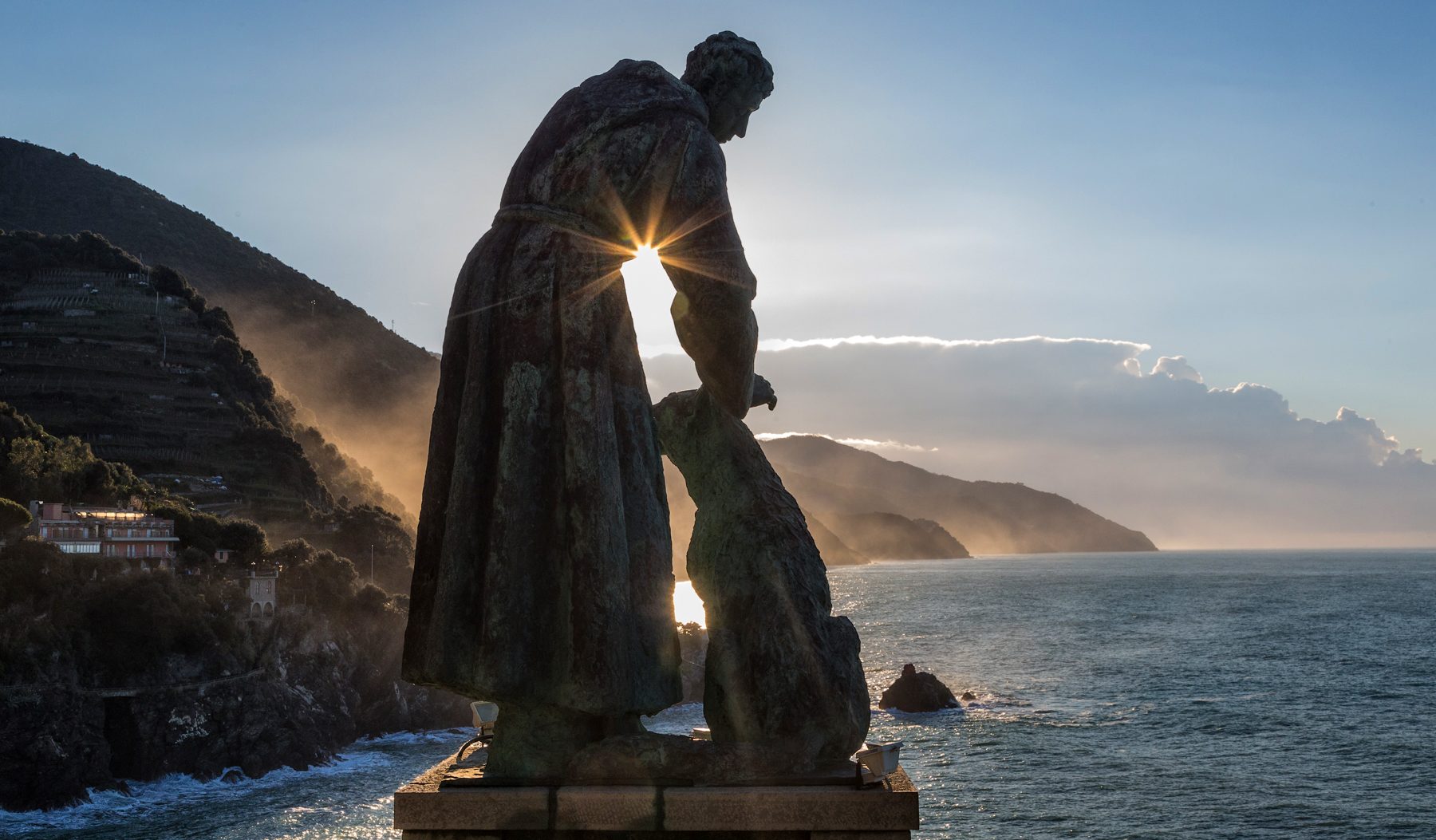
And on the cover, you will see Francis with the wolf of Gubbio. That story is not simply about a wolf. As the story goes, the people of Gubbio were terrified. A wolf had been attacking their town. The answer, at least to ordinary human instinct, was obvious: move back. Lock the gates. Drive it away. Take arms to meet the threat and defeat it.
But Francis did something else entirely.
He left the safety of the town and walked toward the creature everyone else knew only as danger. He walked toward the dark woods, toward the teeth, toward the thing that had been named only by its violence. And when he found the wolf, Francis did not begin with accusation.
He called him “Brother Wolf.” Not because the wolf was harmless. Not because fear was foolish. Not because the wounds of Gubbio were imaginary. Francis was not naïve. He understood that the wolf had caused real suffering. But Francis also saw what fear alone cannot see: a creature of God, wounded by hunger, driven by need, feared by all and welcomed by none.
There are people who know something of that exile. There are men and women who return from war, grief, addiction, betrayal, failure or private sorrow and find that the village no longer knows what to do with them. As Rudyard Kipling wrote, these “men in barricks don’t grow into plaster saints.”
They carry something others can sense but not name and they themselves cannot accurately convey. They feel they are watched carefully. Managed politely. Kept at a distance. And sometimes, after enough silence, suspicion or misunderstanding, the dark woods begin to feel more honest than the sunlight. At least the woods do not pretend not to see your teeth.
That is why the wolf of Gubbio still matters.
Because there are wolves in us. There are wolves among us. There are parts of the human heart that have been wounded, starved, cornered or taught to survive by snarling first. There are people whom we have reduced to their worst moment because it is easier than wondering what hunger drove them there. There are wounds we do not want to name. Griefs we keep busy enough to avoid. Resentments we have fed for years. Fears that outpace anxious prayer. Memories that still have teeth. People we have made into problems because seeing their dignity would require something more costly from us.
It is much easier to manage, fix, defeat, suppress or avoid the wolf than to meet it.
Francis shows another way. Not a sentimental way. Not a therapeutic slogan dressed up in brown robes. He shows us the Catholic way. The cruciform way. The way of Christ, who does not save us from a distance but enters the place of fear, sin, suffering and death, looks upon us with mercy, and calls us by name.
The story concludes with the wolf placing his paw in Francis’ hand. It is a strange and beautiful image: not conquest, but communion; not denial of danger, but the redemption of it. Francis does not pretend the wolf was never a wolf. He reveals that even the wolf was not beyond brotherhood.
Francis understood that the Gospel is not a mindset. It must be lived in the ordinary world, among real people and lepers, in wounded bodies, strained relationships, institutional failures, family burdens, poverty, illness, creation and prayer. Francis did not escape the world to find God. He found God by surrendering completely and radically to Christ within it.
This issue celebrates St. Francis during this Jubilee Year by turning to the Franciscans in our midst, whose lives and witness continue to reveal the saint more clearly than any statue can. They point us toward the Francis who walked toward the wolf, rebuilt the Church by becoming small, saw creation as a gift, embraced the poor as brothers and sisters, and adored Christ hidden beneath the humble form of bread:
It is our prayer that through these pages, stories and lived experiences, we might each become a little more willing to walk toward whatever we fear with Christ’s courage and Francis’ daring love.
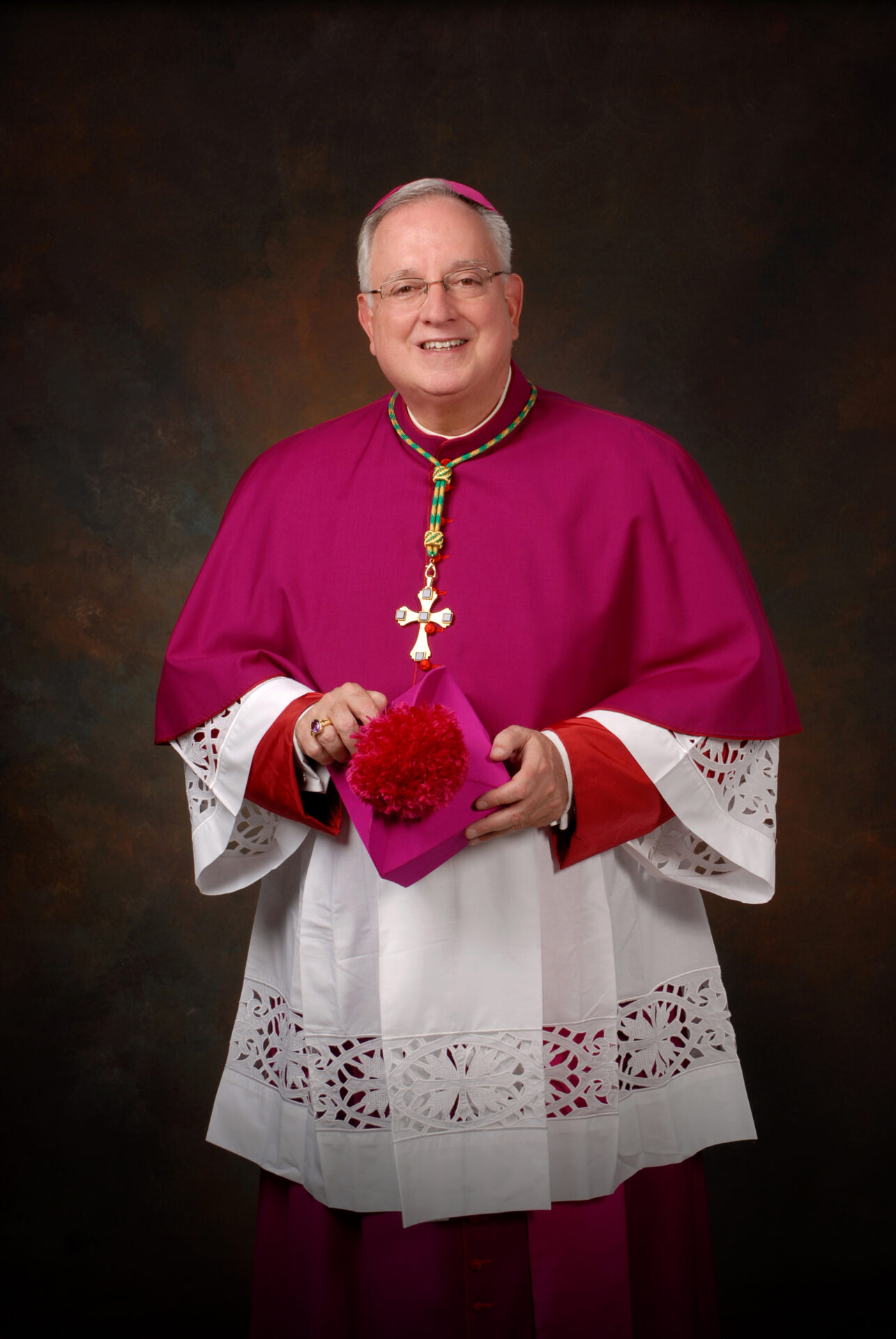
The Most Reverend William Patrick Callahan, Bishop Emeritus of the Diocese of La Crosse, served as the tenth bishop of the diocese after being appointed by Pope Benedict XVI in 2010. A Conventual Franciscan of the St. Bonaventure Province in Chicago, Bishop Callahan was ordained to the priesthood in 1977 and later served in parish ministry, vocations work, seminary formation and episcopal leadership. His episcopal motto, “We Adore You, O Christ,” reflects a life rooted in Franciscan devotion, reverence for the Church and love for the people of God. His witness brings a shepherd’s perspective shaped by prayer, service and decades of ministry.
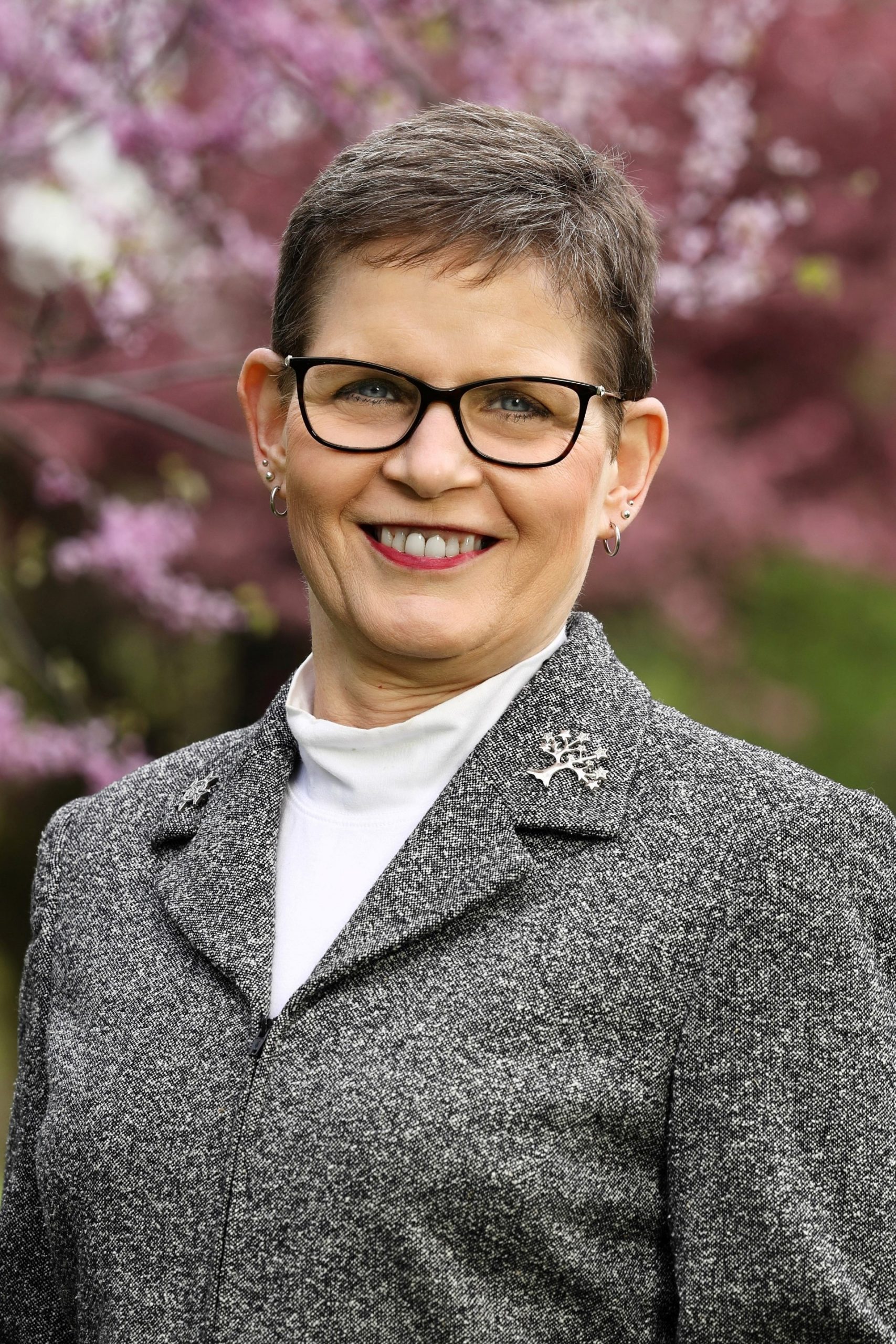
Sister Sue Ernster, FSPA, serves as president of the Franciscan Sisters of Perpetual Adoration. Before being elected president, she served the congregation as vice president and treasurer, bringing experience in accounting, pastoral ministry, campus ministry, parish administration and faith formation. Her leadership reflects the Franciscan call to justice, stewardship and care for creation, including her work with impact investing and the Economy of Francesco, a global movement inspired by St. Francis and convened by Pope Francis. Sister Sue’s perspective is shaped by prayer, service and a commitment to building an economy and community life rooted in Gospel values.
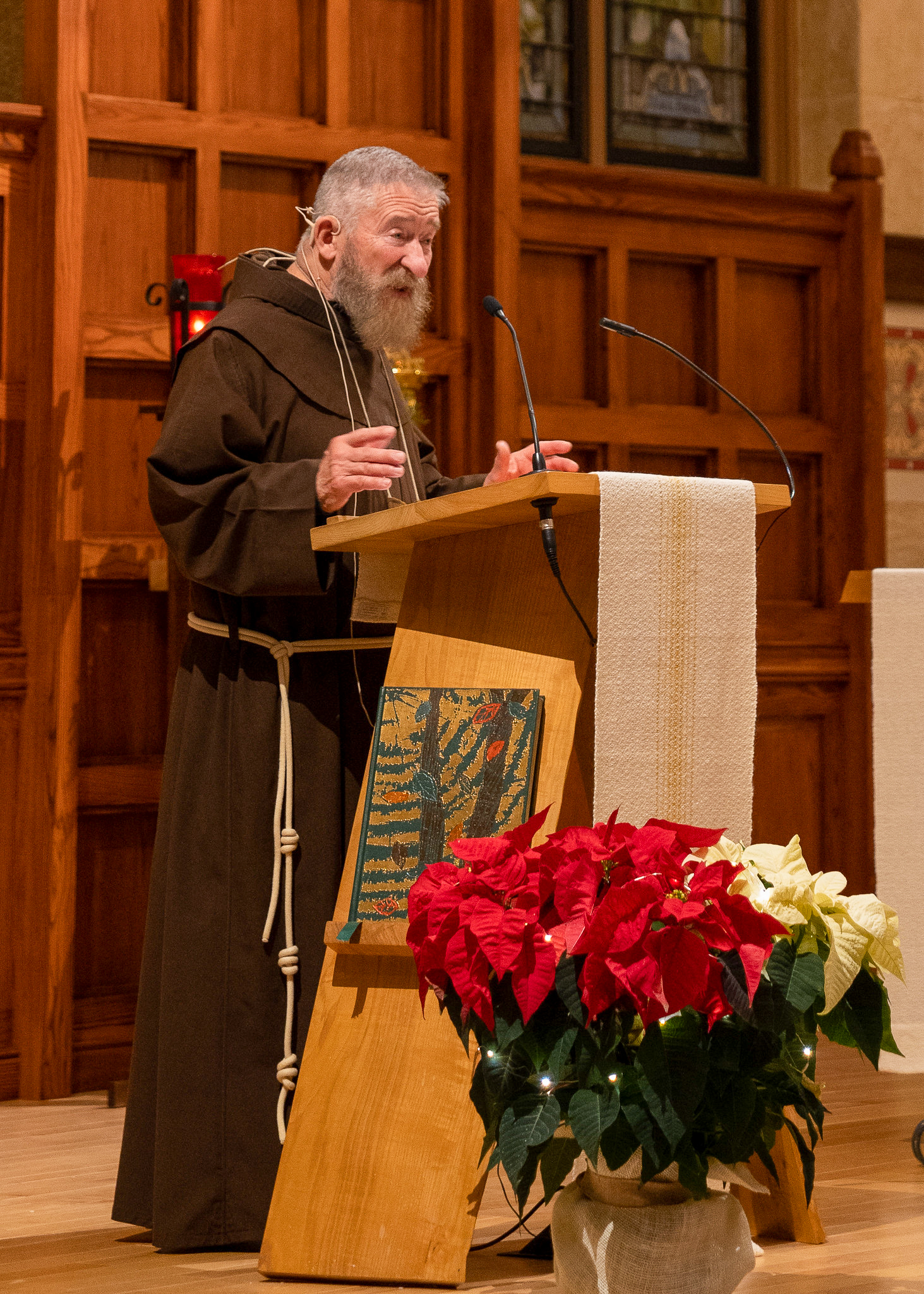
Father Conrad Targonski, OFM, serves as chaplain at Viterbo University in La Crosse, where his Franciscan vocation continues to unfold through students, veterans and the wider community. A retired U.S. Navy chaplain, he served sailors and Marines for 22 years and was present with Marines during the 2004 Battle of Fallujah. That experience, and his own return from war, helped him see St. Francis of Assisi with new eyes: not only as a saint of peace and creation, but as a wounded veteran who found healing in Christ. Father Conrad now accompanies veterans through counseling, retreats and pilgrimages to Assisi, helping them seek peace, recover their souls and encounter the mercy of God.
Rick Trietley Jr., EdD, serves as president of Viterbo University in La Crosse. Before being named president in 2022, he held several leadership roles at Viterbo, including vice president for student affairs, interim provost and executive vice president for student success. A retired U.S. Army lieutenant colonel, Trietley brings a background in military leadership, Catholic higher education and student formation. His work at Viterbo has focused on strengthening campus life, expanding student support and advancing the university’s mission. His perspective reflects a life shaped by service, leadership and a commitment to forming students for lives of purpose.
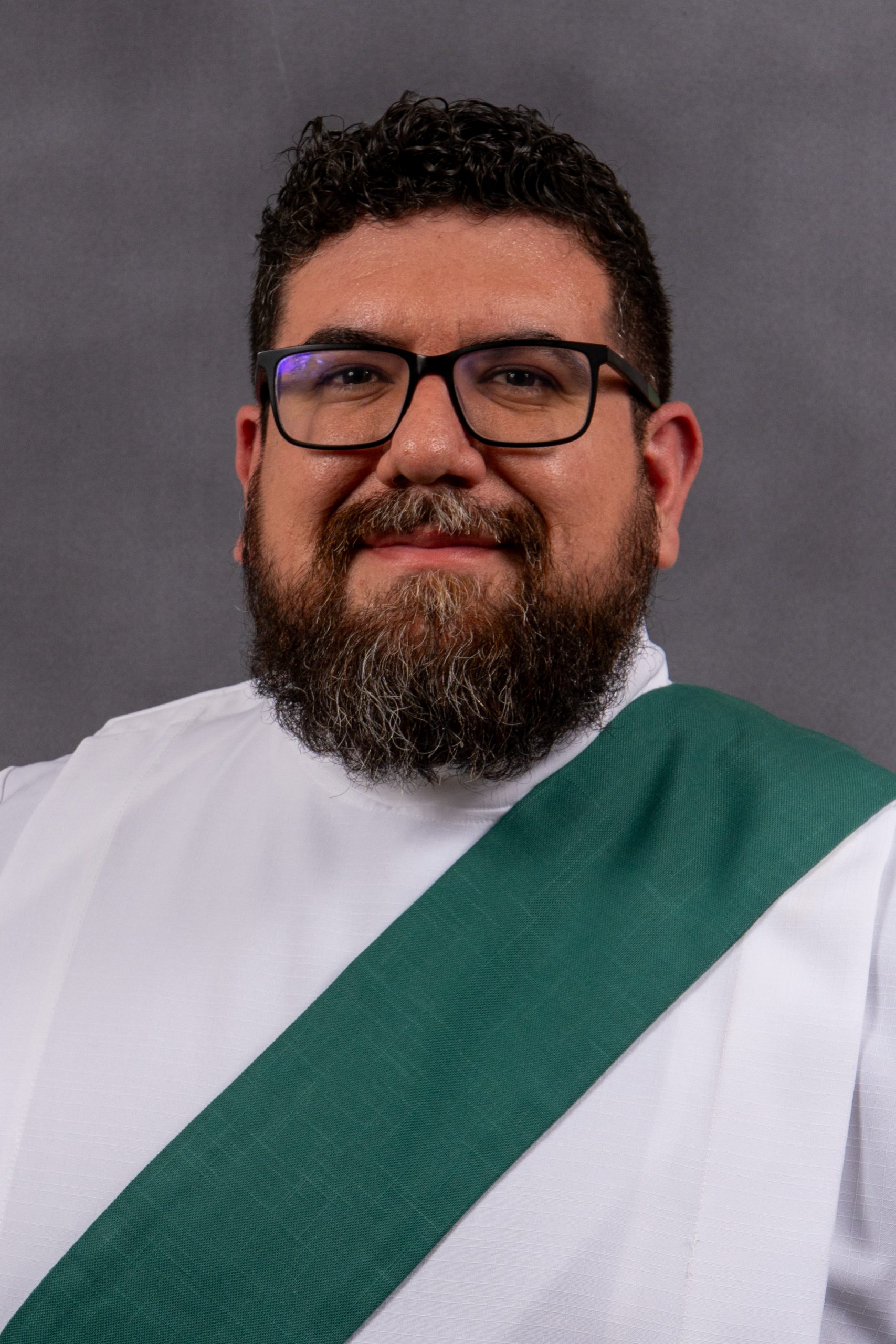
Emilio B. Alvarez serves as director of Campus Ministry at Viterbo University in La Crosse, where he helps form students through liturgy, retreats, service and Franciscan spirituality. A graduate of Loras College, he earned a master’s degree in servant leadership from Viterbo, a formation that continues to shape his ministry. A member of the Secular Franciscan Order, Emilio has also helped build Viterbo’s partnership with Casa Hogar Juan Pablo II in Peru and serves with Franciscan Pilgrimage Programs. As he prepares for ordination to the permanent diaconate, his witness reflects a life rooted in service, accompaniment and vocational generosity