
Jacob Zepp
Master of Pontifical Ceremonies and Assistant Director of the Office for Sacred Worship
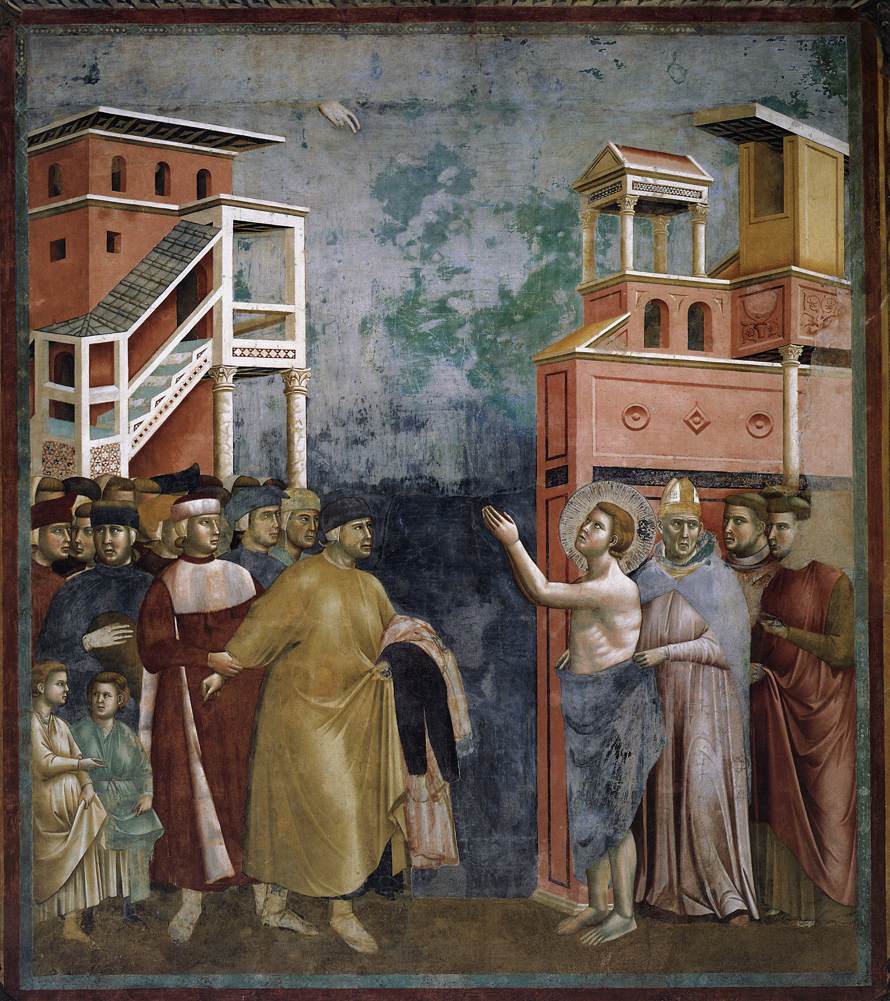
Following the pilgrimages and festivities of the National Eucharistic Congress, the Ordinary Jubilee of the Year 2025 and the election of Pope Leo XIV, the decree that established the special Jubilee Year to commemorate the transitus of St. Francis of Assisi has largely been received as “just another jubilee year.” The jubilee year is—however—an extraordinary occasion for sanctification and indulgences.

To best explain how to celebrate this jubilee year, one must understand what the term actually means, how indulgences are granted during the year and why it is important to seek them to begin with.
Why Jubilee?
“Jubilee” comes from the Latin jubilare, which denotes a shout of joy or happiness. It is also derived from the Hebrew word yobel, which translates to “ram’s horn.” In the time of the Old Testament, a ram’s horn served as the trumpet which announced the beginning of the jubilee year.
The laws concerning the jubilee year are recorded in the sacred Scriptures. In the book of Leviticus, the jubilee year is prescribed to occur every 50th year, following seven cycles of seven years (49 years). The jubilee year was a year of restart—a socio-economic refresh. It was characterized by three primary elements: the prohibition against farming (Lv 25:11), the liberation of indentured servants (Lv 25:39-49) and the restoration of property to its original owner (Lv 25:10, 13). The jubilee year of the Old Law was a time of joy and gladness.
The laws regarding the jubilee year of the Old Law no longer bind us, and as stated in Hebrews 10:1, “The [Old] Law has a shadow of the good things to come.” Christ’s death ended the Old Law, and by His suffering, He fulfilled all its precepts. With Christ’s coming, the means to obtain the blessings of heaven became a present reality. Therefore, the ceremonies of the Old Law needed to cease and make way for new ceremonies, ordered toward the worship of God in the present immediate hope of heavenly blessings. (cf. Thomas Aquinas, Summa Theologicae, I-II, Q. 101, A. 3)
In the Christian era, jubilee years are times when the Church grants extraordinary indulgences. They have been observed at various intervals. The first Christian jubilee year is said to have occurred in 1300 A.D. Subsequent jubilee years were observed at intervals of 100 years, 50 years, 33 years and, as it is in current practice, 25 years. In addition to these Ordinary Jubilee Years, the pope has the authority to call special or extraordinary jubilee years. The current jubilee year is this second type, a special or extraordinary jubilee year.
Indulgences
To appreciate the great gift the Church is giving us during the jubilee year, it is important to understand what an indulgence is. To understand the concept, we must first understand what sin is and its effects. In the broadest sense, sin is any thought, desire, word, action or omission, voluntary or involuntary, forbidden by the Law of God. The effects of sin are threefold: (1) the guilt of sin, (2) temporal punishment and (3) in the case of mortal sins, eternal punishment.
Mortal sins are sins of grave matter, committed when the sinner knows that they are grave, and committed with full consent of the will. These sins deprive us of sanctifying grace and supernatural life. Without this communion with God, we are incapable of eternal life, and are doomed to hell— eternal punishment.
Venial sins deter the life of grace, accustom us to sinful habits and lead us to commit mortal sins. The temporal punishment of sin is the punishment that is due to both venial sins and to mortal sins, even after the guilt of the sin has been forgiven.
The sacrament of penance does not remedy all the disorders sin has caused. Raised up from sin, the sinner must still recover his full spiritual health by doing something more to make amends for the sin: he must make satisfaction for, or expiate, his sins. Satisfactory penances greatly detach penitents from sin; they act as a bridle to keep them in check and encourage them to be more cautious and vigilant in the future.
Aftereffects and Consequences
Moreover, these penances heal sin’s aftereffects and combat evil habits formed through a sinful life by fostering acts of virtue that oppose them. The sacrament of penance, worthily received, always and immediately removes the guilt and all eternal punishment. It also confers spiritual healing and the actual graces necessary for future preservation from sin. It also bestows communion with God in sanctifying grace, either by restoring it or increasing it.
Temporal punishment must be purified either here on earth or after death in purgatory. God requires temporal punishment for sin to satisfy His justice, to teach us the great evil of sin and to warn us not to sin again. This punishment must not be viewed as a form of vengeance God inflicts but rather as a consequence of sin’s very nature. As the name implies, temporal punishment lasts only for a time. In this life, this debt can be paid by fulfilling the penance after confession, through praying various prayers at Mass, fasting, almsgiving, works of mercy, patiently enduring suffering and through indulgences.
Indulgences are often explained by analogy: imagine a young boy throwing a baseball through a window. Two things break as the glass shatters: 1) the boy’s relationship with the window owner is broken by guilt, and 2) the window itself is smashed. When the boy confesses his offense to the window owner, the owner will forgive the boy of his guilt. Simple justice also requires that the boy replace the window. It can be fixed in two ways: the boy can save up his money from small jobs to buy a new window or someone else can buy the window on the boy’s behalf.
Remission of Punishment for Sins Already Forgiven
Similarly, when we sin, we are: 1) guilty of damaging or breaking our relationship with God and His Church, and 2) simple justice requires we atone for our sin to remit the temporal punishment due to them. Guilt can be absolved in the sacrament of confession, and the temporal punishment can be remitted in two ways: by our good acts, words and thoughts or by an extraordinary gift (like someone buying the new window). This second way of repaying our debt is called an indulgence.
Simply put, an indulgence is the remission, granted by the Church, of the temporal punishment due to sins already forgiven. There are two types of indulgences: plenary indulgences (remission of all temporal punishment due to sin) and partial indulgences (remission of part of the temporal punishment due to sin). To gain an indulgence, one must be in the state of grace, have a general intention of gaining the indulgence and perform the Church’s required works. We can gain indulgences for ourselves and for the souls in purgatory.
By its very nature, an indulgence is not a pure act of grace, in which the temporal punishments for sin are remitted gratis—without anything being done in return. Instead, indulgences are rooted in the Church’s treasury of satisfaction, which consists of the infinite satisfaction of Christ and superabundant satisfactions of the saints.
During this special jubilee year, individuals can obtain a plenary indulgence by fulfilling the following conditions:
· Participate in a pilgrimage “to any Franciscan conventual church, or place of worship in any part of the world named after St. Francis or connected to him for any reason.”
· Spend at least a suitable period of time in pious meditation and raise prayers to God so that, following the example of St. Francis, sentiments of Christian charity towards one’s neighbor and authentic wishes for harmony and peace among peoples spring up in hearts. Conclude with the Our Father, the Creed and prayers invoking the Blessed Virgin Mary, St. Francis of Assisi, St. Clare and all the saints of the Franciscan family. Are in the state of grace (at least at the time the indulgence work is completed).
· Have the interior disposition of complete detachment from sin, even venial sin.
· Pray for the intentions of the Holy Father the day the indulgence work is performed or within several (about 20) days. One Our Father and one Hail Mary fully satisfies this.
· Receive the Eucharist the day the indulgence work is performed or within several (about 20) days.
· Make a sacramental confession the day the indulgence work is performed or within several (about 20) days.
Elderly individuals, the sick and their caregivers, as well as anyone unable to leave their homes for serious reasons, can also obtain a plenary indulgence. This is contingent upon their genuine detachment from sin and their intention to fulfill the three usual conditions as soon as possible. They can join spiritually in the jubilee celebrations of the Year of St. Francis by offering their prayers to the Merciful God, along with the pains and sufferings they experience in life.
If you lack the full disposition, or if the work and the prescribed conditions are not fulfilled, you will still gain a partial indulgence, remitting part of your temporal punishment.
The obtainment of these indulgences offered by the Church—whether plenary or partial—and the attainment of a closer union with God is the most fitting way to observe the current jubilee year. This is indeed an extraordinary occasion for sanctification and indulgences. It is a time to move past your sins and their just punishment and— following the example of St. Francis—to draw nearer to the Lord.