
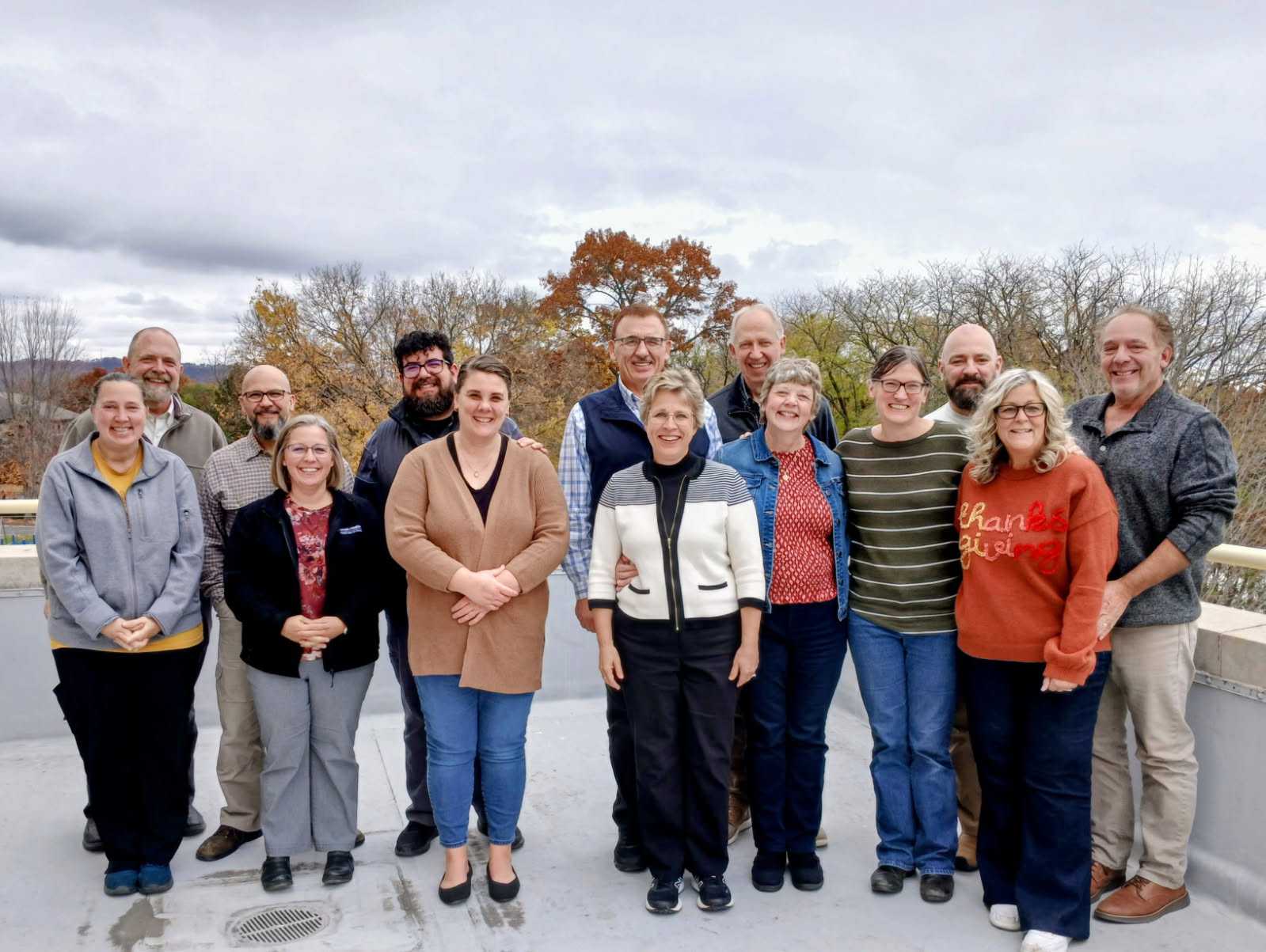
Story by Amy Eichsteadt
The diaconate is an ancient office. It appears in the Acts of the Apostles, when the earliest Church, overwhelmed by the needs of a growing community, set apart seven men of good repute, full of the Spirit and of wisdom, to serve at table so that the apostles could give themselves to prayer and the ministry of the word. The word chosen for what those seven men did was diakonia. Service. Not administration. Not management. Service.
Deacons distribute the Eucharist, baptize, witness marriages, preach the homily and accompany the dying. But the theology underneath all of it is simpler and more demanding than any job description: the deacon is, above all else, the visible sign in the Church that service looks like washing feet.
On June 6, 2026, six men from the Diocese of La Crosse kneeled before Bishop Gerard W. Battersbsy at the Cathedral of St. Joseph the Workman and received the laying on of hands. They came from dairy farms and dairy barns, military deployments and university campuses, from a pub in Oxford and a tree stand in the Wisconsin woods. One of them watched his son enter the seminary before he considered it himself. One of them heard God say “not yet,” twice, before everything fell into place. One of them walked a grieving friend through loss and heard, in that moment, something that sounded like a call.
They are a software engineer, a registered nurse, a campus minister, a radio host, a former dairy farmer and a man who spent more than seven years serving at-risk youth at Fort McCoy before he was asked to serve his Church. They are husbands, every one of them, and their wives have said yes alongside them, which the Church recognizes as no small thing. The diaconate is not a solo vocation.
These are their stories.
Emilio Alvarez
Husband, Father, Franciscan
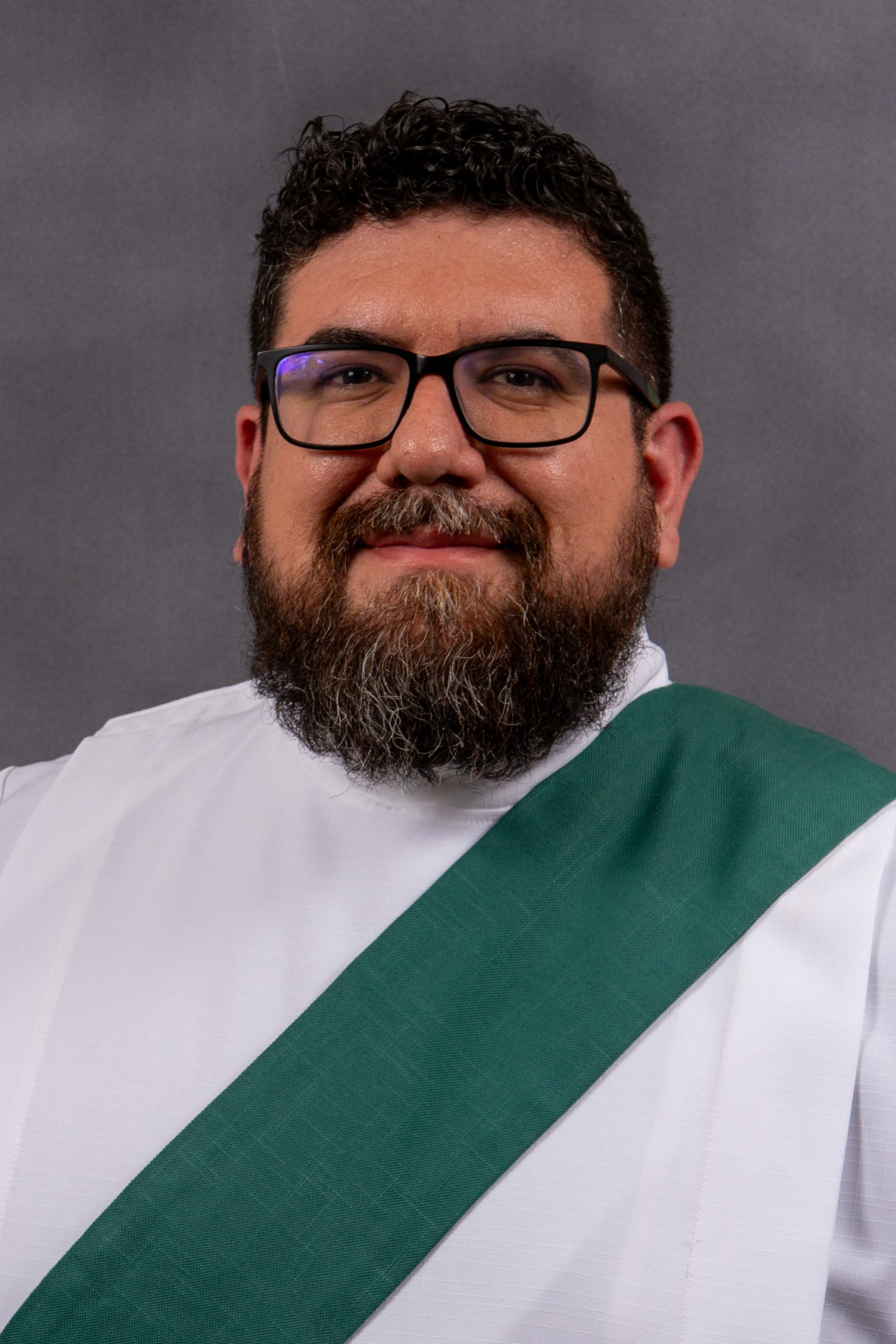
As director of Campus Ministry at Viterbo University, Emilio accompanies students in their faith journeys through liturgy, retreats, service, pastoral care and leadership formation. He has also led pilgrimages to Rome and Assisi through the Franciscan Pilgrimage Program.
Emilio and his wife Emily are professed members of the Secular Franciscan Order. “Through this vocation, we live the Franciscan charism in our marriage, family life and work,” Emilio shares. “This commitment has deeply shaped how I understand ministry, service and accompaniment within the Church.”
The Alvarezes have four children, ages 3 to 12. Emilio calls family life “full, active and deeply life-giving. Our days are busy, but they are also very rich. Our faith is woven into our family life, and over the years, many Viterbo students have become an extension of our family. Sharing meals, celebrations, prayers and everyday moments with students has been one of the great joys of our lives in La Crosse.
“I can see how the Lord has been forming me for [the diaconate] for many years through relationships, mentorships and service. From high school onward, I felt drawn to youth ministry and campus ministry. Learning the faith and sharing it with others consistently brought me deep joy.
“Early in my discernment, I prayerfully considered religious life, but the Lord clearly affirmed my vocation to marriage through my relationship with Emily. Once I said yes to that call, the Lord began forming me in fatherhood, first within my family, and then more broadly through mentorship roles with campers, students and young adults.
“Over time, others began to name gifts they saw in me for service, accompaniment and pastoral presence. The call to the diaconate emerged gradually, often through encouragement from trusted members of the Church.”
Walking closely with a friend through grief awakened something deeper in Emilio. “I sensed the Lord saying, ‘I want you to be here for people. I want you to help bridge their lived experiences with my presence,’” he shares.
“Through prayer, conversation and discernment, the path forward became clear. I applied for diaconate formation, and now, several years later, I am preparing for ordination with deep gratitude for the ways God has patiently led me here.”
Patrick Brueggen
Praying in a Tree Stand
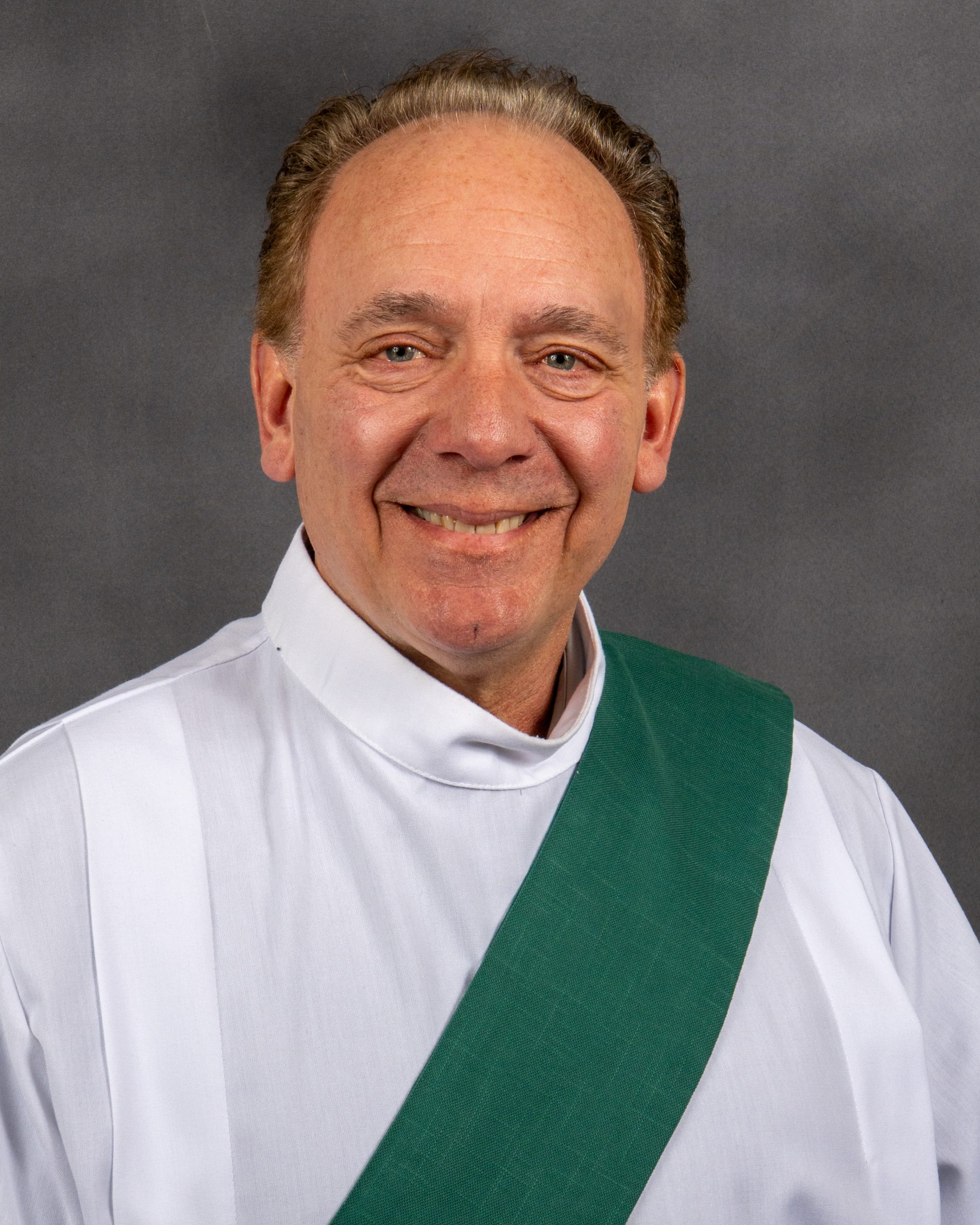
Based at the Shrine of Our Lady of Guadalupe, Patrick works as the international coordinator of the Marian Catechist Apostolate and national coordinator of the Real Presence Association. He and his wife, Cindy, have four children and five grandchildren.
Patrick enjoys many outdoor activities and sharing them with his family. “I love spending time in a tree stand, waiting for that buck to appear,” he says. “All the while I pray my rosary, listen to nature and feel the Holy Spirit’s inspiration. I can’t count how many times I’ve harvested a deer halfway through my rosary. I suppose it’s the stillness that draws me in.”
Patrick has a deep kinship with the Church’s newest canonized saint, Carlo Acutis. “Through my work with the Real Presence Association, I had the opportunity to meet his mother, Antonia, through our promotion of the Eucharistic Miracles of the World Exhibit, which was created just before his passing in 2006,” Patrick explains. “My wife and I were even invited to attend his canonization in Rome, which we gratefully accepted. It was a wonderful week, culminating in the canonization Mass with Pope Leo. I also have the privilege of traveling the country to give presentations on Carlo and his apostolate.”
Patrick’s journey to the diaconate began in his 30s, when he lived on a dairy farm near St. Mary’s Ridge. Monsignor Roger Scheckel asked him to teach a ninth-grade Old Testament class. His first reaction was no, but with Cindy’s encouragement, he agreed. Monsignor Joe Hirsch continued to encourage him to serve the Church, pointing him specifically toward the diaconate. In 2002, Patrick and Cindy sold their farm and committed to full-time Church ministry.
“Over more than 20 years in parish and youth ministry, I’ve formed many relationships with priests and deacons, and I’ve come to believe God was calling Cindy and me to this vocation. She is my biggest supporter. The past five years of formation have been a great joy, and my brother classmates are all exceptional men. I would not have wanted to go through this journey with anyone else. I would encourage any couple discerning this call to take the step. God will give you a peace that only He can provide. Without great faith, no great grace can be given.”
Jonathon Burbach
From Lukewarm to All In
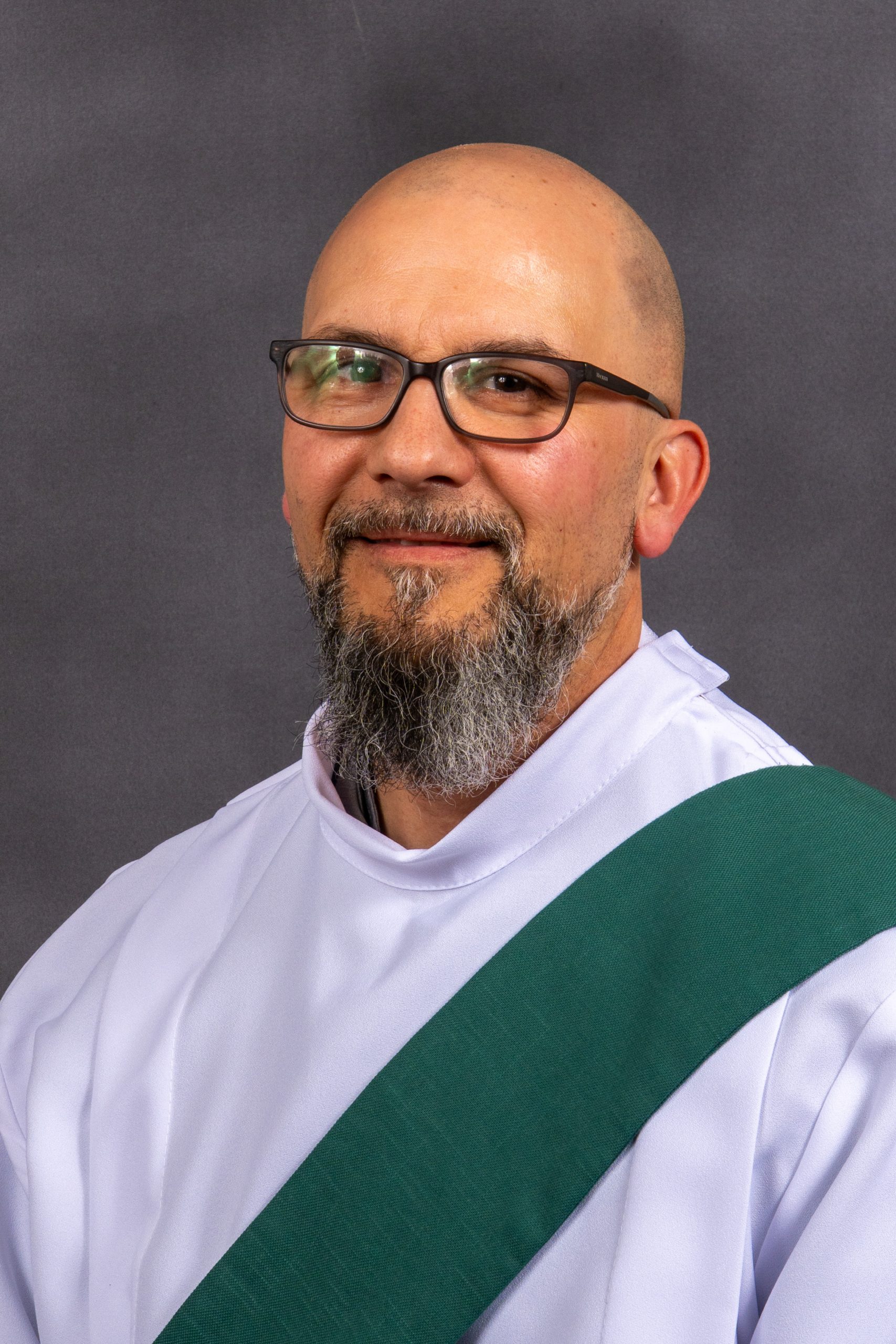
Jon and his wife, Bridget, call Tomah home. They have six children, aged 9 to 23, four of whom are still living at home. One child is away at college, and their oldest is married and serving in the Army. Jon and Bridget were recently blessed with their first grandchild.
Throughout his life and career, Jon has felt called to work with youth. After serving nearly 20 years as an Army officer, Jon became the Commandant of the Challenge Academy at Fort McCoy—a program for at-risk youth. Then, six years ago, he answered a call to serve his parish as director of religious education (DRE), a position he still holds.
“I experienced something of a reversion about 15 years ago,” Jonathon shares. “I was raised Catholic and never really ‘fell away,’ but practiced my faith in a pretty shallow and lukewarm way. God used several things to wake me up, and one of the most impactful was attending a Men of Christ conference in Milwaukee with my father. That experience stoked a fire within me and a hunger to know more about and do more with my faith.”
“I got involved in men’s ministry and became a volunteer catechist for my parish’s religious education program.”
“Even as I became more involved, grew in knowledge and strengthened my relationship with the Lord, I felt He was calling me to more. It took several years to realize it could be the diaconate, and then a few more to seriously consider it. By the time my pastor asked me if I had thought about applying, I was able to tell him yes right away. I had been discerning for some time, and Bridget and I had already discussed it.”
“Discernment has continued throughout formation and was not without struggle, but under the guidance of our excellent formators and with the support of my wife, family and brother candidates, I have become confident that God is calling me to be His deacon.”
Patrick Conley
Finding the Church in an Oxford Pub
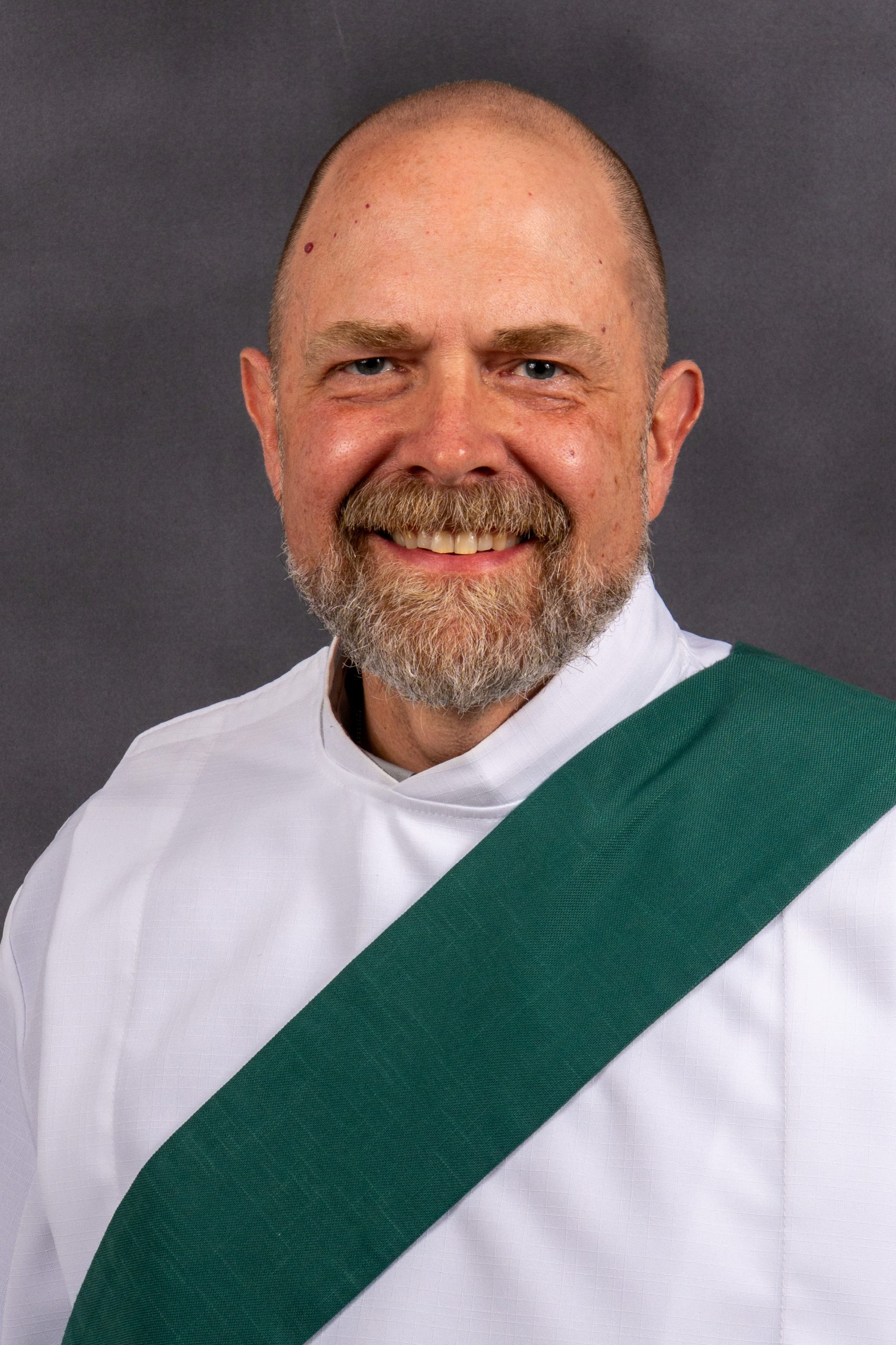
“We are both converts to Catholicism,” Patrick explains. “God led us in parallel but distinct journeys, drawing us each closer and closer to the Catholic Church.”
In 2005, Patrick followed the call to Oxford, England, where he entered seminary in the Anglican Communion, while Kendra accompanied him. There, he met two Americans who shared his deep interest in history, tradition, liturgy and the sacraments. “We decided to start meeting on our own each week, in the local pub, naturally, to discuss these things.”
It wasn’t long before one of them asked, “What about the Catholic Church? They have all of these things, and they claim to be the Church founded by Jesus.” That question set the group on a path of reading, discussing, arguing, laughing, crying and praying, all centered on the claims of Catholicism. “By Easter 2010, all three of us had become Catholic,” Patrick said. “Two of us were married and entered the Church with our wives. The third, who was single at the time, is now a Dominican priest.”
Patrick is keenly aware of God’s generosity, especially since following his call into the Catholic Church. He currently serves in several capacities, all in service to God. He teaches religion at Thorp Catholic School, serves as DRE for St. Bernard-St. Hedwig, is a traveling presenter for the Catherine of Siena Institute and hosts a daily Catholic radio program on spiritual direction called “The Inner Life” on Relevant Radio.
A self-professed “liturgy nerd,” Patrick confesses, “The more I learn about it, the more in awe I become. It facilitates so well a profound encounter with God Himself.”
Patrick first felt the call to the diaconate while living in the Twin Cities, but twice he sensed God saying, “not yet.” After moving to Thorp, the call arose again, and this time everything fell into place. “It still seems surprising in some ways. I am on the brink of ordination! Deo gratias!”
Randall Myszka
Forty Years a Soldier. Thirty a Nurse.
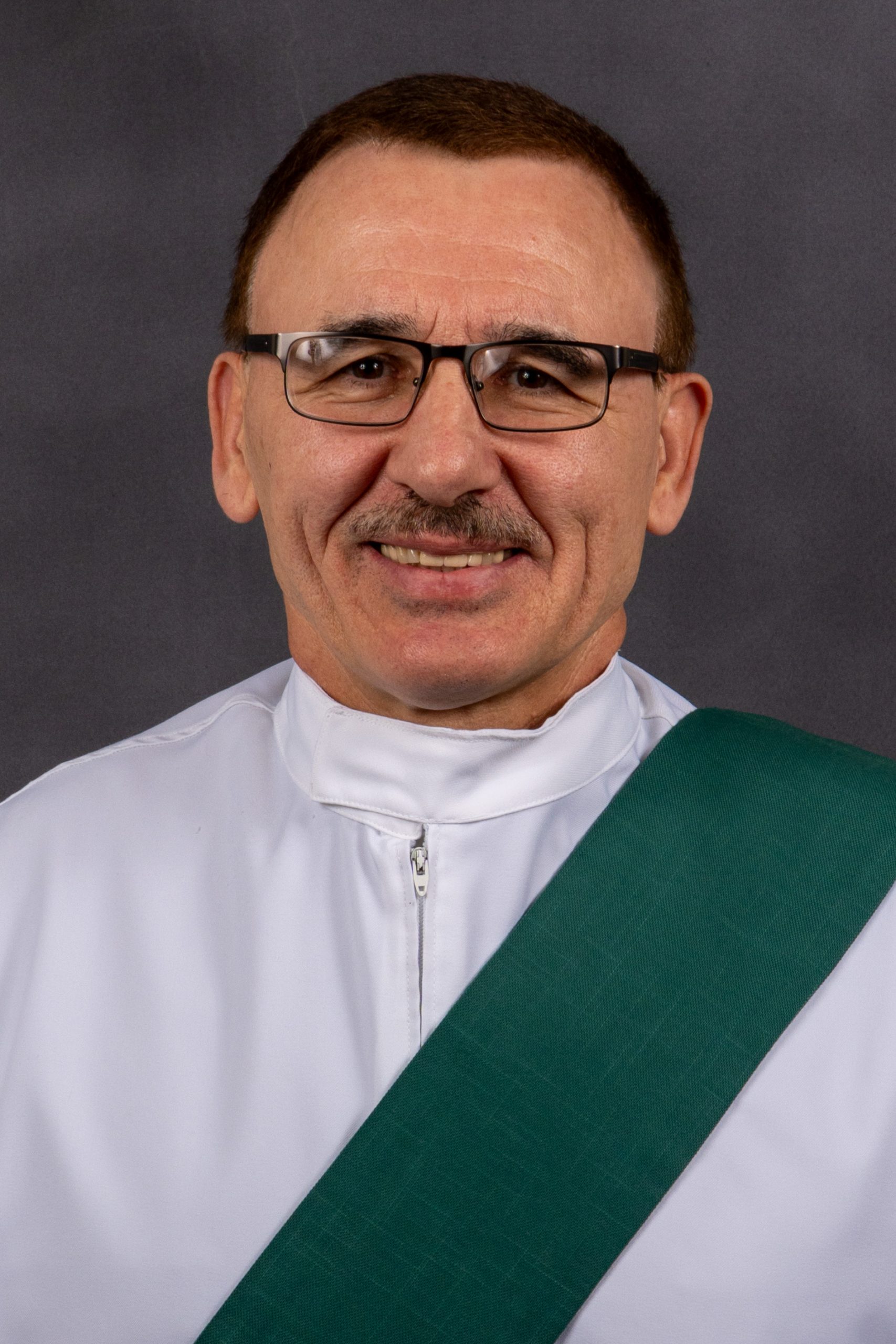
Randall is the youngest of 10 children in a farming family. “The entire family helped with chores in the dairy barn and helped make firewood to keep the farmhouse warm,” he reminisces. Now, he and his wife Patty have two adult daughters. The couple has found great enjoyment growing their own food and raising animals on their own hobby farm.
Randall works as a registered nurse in Marshfield, where he has been employed for 30 years. “I currently work on a medical-surgical unit. In this position, I have the opportunity to minister to people at a time when they need care most. It is very rewarding and offers me a chance to serve others, as Jesus himself showed us.”
Additionally, in May 2023, Randall retired after a 40-year career in the military. “I never thought my time in the Army would span that long,” he says. “It was an incredible career serving alongside many dedicated soldiers. I keep all the members of our Armed Forces in my daily prayers.”
In 2012, Father Bob Streveler recognized Randall’s willingness to serve at the parish and told him, “You are going to make a good deacon,” encouraging him to look into the diaconate. Around this time, Randall witnessed the ordination of local deacons Brian Hilts and Greg Kaiser, which prompted him to seriously consider this unique role. In 2014, Randall was deployed to Kuwait and placed his discernment on hold, but when he returned home, Father Bob was once again there to encourage him, and Randall enrolled in formation in 2021.
Randall is deeply grateful to the diocesan staff and to the priests, especially Fathers William Felix, Justin Kizewski and Alan Wierzba, who taught, coached and mentored him throughout formation.
“The program is nothing short of amazing. I am not the same person who started this journey. It changes you and your relationships with other people and brings you closer in your relationship with God. I have learned so many things about our dear Catholic Faith.”
“My message to other men would be to prayerfully consider the diaconate—even if you tell yourself, ‘I could never do that.’ Our parishes need men to step up and help serve the people of God. Jesus said, ‘Follow me.’ That invitation is always open.”
James Nowicki
His Son’s Vocation Became His Own
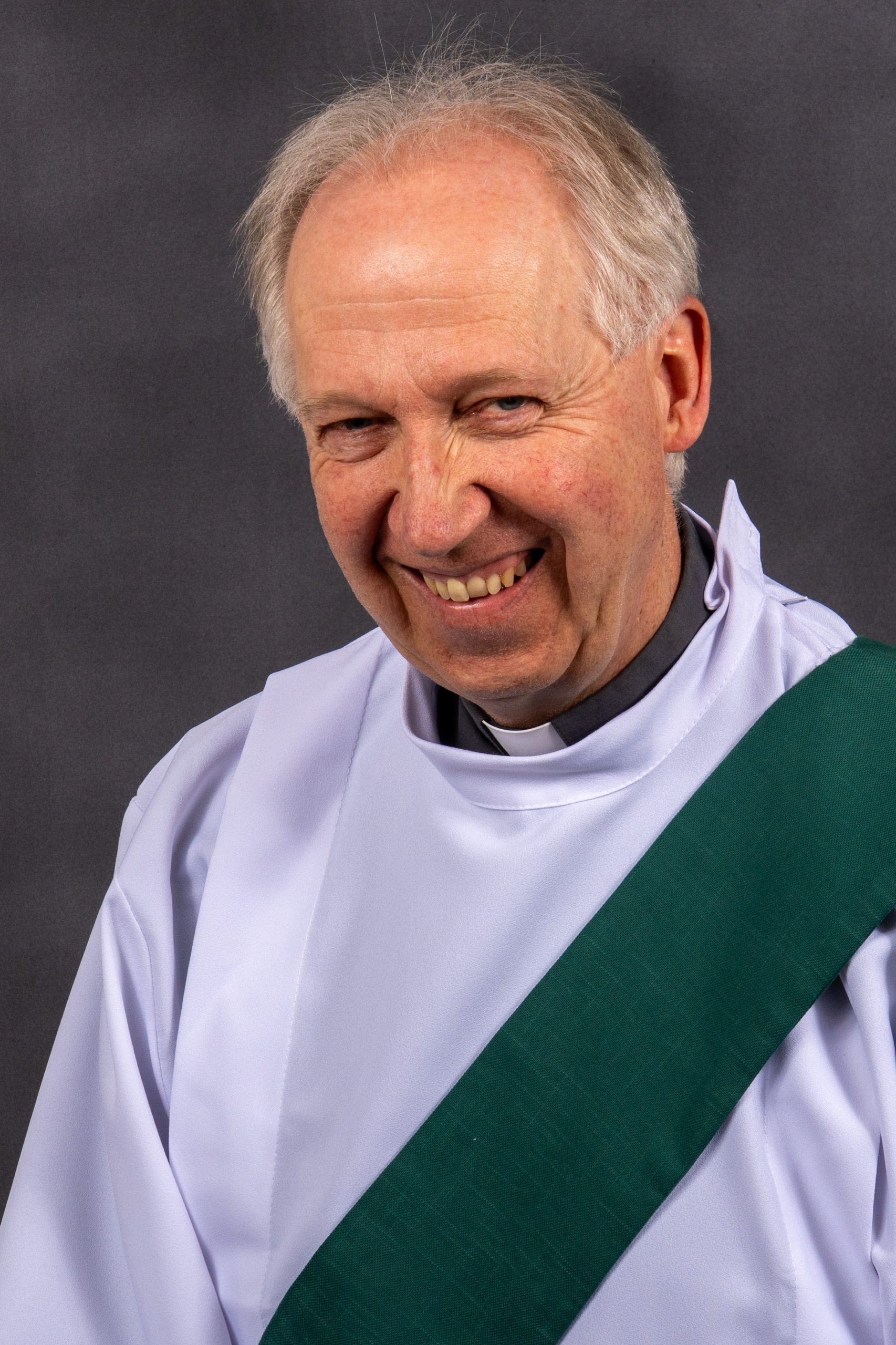
James and his wife, Ann, reside in Athens, where they both grew up. Their son, Father David Nowicki, was ordained for the Diocese of La Crosse in 2024, and their daughter and her husband serve as missionaries with FOCUS (Fellowship of Catholic University Students). Jim spent his career as a software engineer and recently moved to part-time work.
“I am a cradle Catholic,” Jim shares, “and while I always practiced the Faith, for quite a while, I’d call myself a minimalist Catholic. I’d pretty much do what I considered ‘necessary,’ but not really go beyond that. Things really began to change when our son came home from college and told us he would be entering the seminary. His calling set me on the road to my calling.”
David introduced Jim and Ann to the Liturgy of the Hours and they began praying it regularly. They also joined a parish Bible study, which enlivened Scripture in a way they had never experienced. “I believe the Holy Spirit was nudging my wife and me,” Jim shares, “increasing our prayer life and opening our eyes to the many riches of our Catholic faith. He did this through our children, our parish and the Lay Formation Institute [LFI],” which the couple felt called to join.
“Early in the LFI program, something became very clear: I was not simply to retire and live for myself. God had other plans. Talking with men who were in diaconate formation, I began to prayerfully consider whether I was being called, too.”
“During my discernment, two things came to mind. Both of them came from my children. When my son told us he was entering the seminary, he said something that stayed with me: ‘Even if I discern out, I will be a better man.’ I figured the same applied to me. The second came from my daughter, who had decided to become a FOCUS missionary: ‘God does not call the equipped. He equips the called.’ If I were to become a deacon, there was still a great deal of formation needed. And perhaps the final nudge I needed was when my wife started including my discernment as a prayer intention. Her support has been one of the great blessings along this path.”
The “Yes”
On the morning of June 6, before the Cathedral filled, before the bishop took his seat and the candidates processed in white albs, there was a moment of ordinary quiet. Six men woke up for the last time as laymen.
Each of these men, from six different directions, had arrived at the same word—the word the Church had been waiting to hear from each of them since before they knew they would say it.
“ Yes.”