
FSPA President Sue Ernster and embracing human dignity
Sister Sue Ernster
President of the Franciscan Sisters of Perpetual Adoration
Celebrating the year of St. Francis of Assisi, along with the 800th anniversary of his death, offers the opportunity to reflect on how he lived, what was important to him and consider how he and the Franciscan charism are relevant in today’s world. Francis is quoted as saying, “I have done what was mine to do, may Christ teach you what is yours.”
I often find myself and others asking, “What is ours to do?” It seems that there is much to do, and it is difficult to know where to start. How we view the situation, such as a problem or gift, matters. Often, when we encounter a problem or situation, such as those we read or hear about in the news, we intertwine the person with the problem. The problem is the focus, not the person. The person is seen as something to be managed or fixed, as we would manage or fix a broken piece of equipment, rather than as an opportunity to engage in understanding the gift and how to receive and engage with it.
When we see the person as a task (a problem) rather than a gift, they become merely a function that needs fixing. This perspective may make us less open to or interested in them and their thoughts.
Rooted in Human Dignity and the Gospel
Genesis 1:31 reminds us how God sees: “God looked at everything He had made, and He found it very good.” Seeing or engaging each person as a gift given by God is living the Gospel and following in the footsteps of Jesus and Francis. Francis viewed all life as connected and not distinguished based on hierarchies. When he engaged with others, his primary focus was on the relationship rather than on judging the person or their behaviors. He recognized each person as good and a gift rather than as a task to be accomplished or a transaction to be completed.
All is a gift, reminding us to focus on how we want to engage with the person. As God loves us, so do we need to love. Focusing on the person’s dignity reminds us that everyone is inherently good and carries God within them. When we focus on dignity and goodness, opportunity and creativity are present rather than functionality.
We often look to our leaders for examples of best practices in leading others. Leading with dignity and respect is central to recognizing the gift we have from God and the Franciscan charism or spirituality.
Prayer as the Source of Right Relationship

As Francis strove to be another Christ, so do we. In doing so, he spent time away in prayer. To remember the gift we are and have, we need time away—just as Jesus and Francis did. For us, this time away, spent in adoration, allows us to regenerate, focus and remain grounded in what is important—Christ. Praying with and receiving the Eucharist grounds us in whose we are, nourishing us to sustain living our life for Christ and reverencing Christ’s creation.
Our time in prayer feeds us to go out, to live eucharistically, and to meet the needs of the world and live St. Clare of Assisi’s practices.
Clare of Assisi lived her life by the mantra she shared with St. Agnes of Prague: “Gaze upon Christ, consider Christ, contemplate Christ and imitate Christ.” Through gazing upon and meditating on Christ, we are drawn to imitate Him, to reach out, and to enter into relationship as He did. Christ’s capacity for relationship flowed from His relationship with God. As we seek to emulate Christ, spending time with God, the divine source of all being, is essential. One of the ways we do this is through prayer and adoration, especially in front of the exposed Blessed Sacrament.
A person’s dignity is at the heart of service and leadership and respecting this dignity helps us to keep individuals as subjects rather than objects. When they are the subject, relationships become more personal.
Encountering someone as a gift rather than a task recognizes their goodness and intrinsic value. It harkens to the importance of human dignity and openness in relationships with one another. When Francis encountered the sultan during the Fifth Crusade, the primary focus with the sultan was relationship and not successful conversion. They saw each other as subjects (persons) rather than objects (someone to convert). The relationship was a gift rather than a task or a problem to be solved.
Eucharist as the Foundation for Mission
Francis’ desire for being in right relationship sprang from his desire to imitate Christ. He knew that Jesus’ relationship with God and the Holy Spirit was communitarian, overflowing with love and goodness. Through time spent in prayer and being fed by the Eucharist, Francis was compelled to praise all of creation, recognizing God’s presence in it. Through the Eucharist, we receive the graces to become more fully Christ-like and to live lives of thanksgiving.
In our living of the Eucharist, we have come to understand our responsibility to strengthen all relationships, including those from our past. Our administration of St. Mary’s Boarding School in Odanah, Wis., from 1883 to 1969 is one of these and is part of our truth and healing work.
We recognize that our complicity in administering a Native American Boarding School in Odanah caused intergenerational trauma resulting from forced assimilation and cultural eradication. We actively seek to disrupt this trauma through the inner work of acknowledging our past and fully understanding the impact the school had on others. Through this, and by listening to their stories, we engage more openly and meaningfully.
Our truth and healing work is rooted and grounded in our desire to be in right relationship with others. This knowledge has led us to work with and strengthen our relationship with the Lac du Flambeau Tribe.
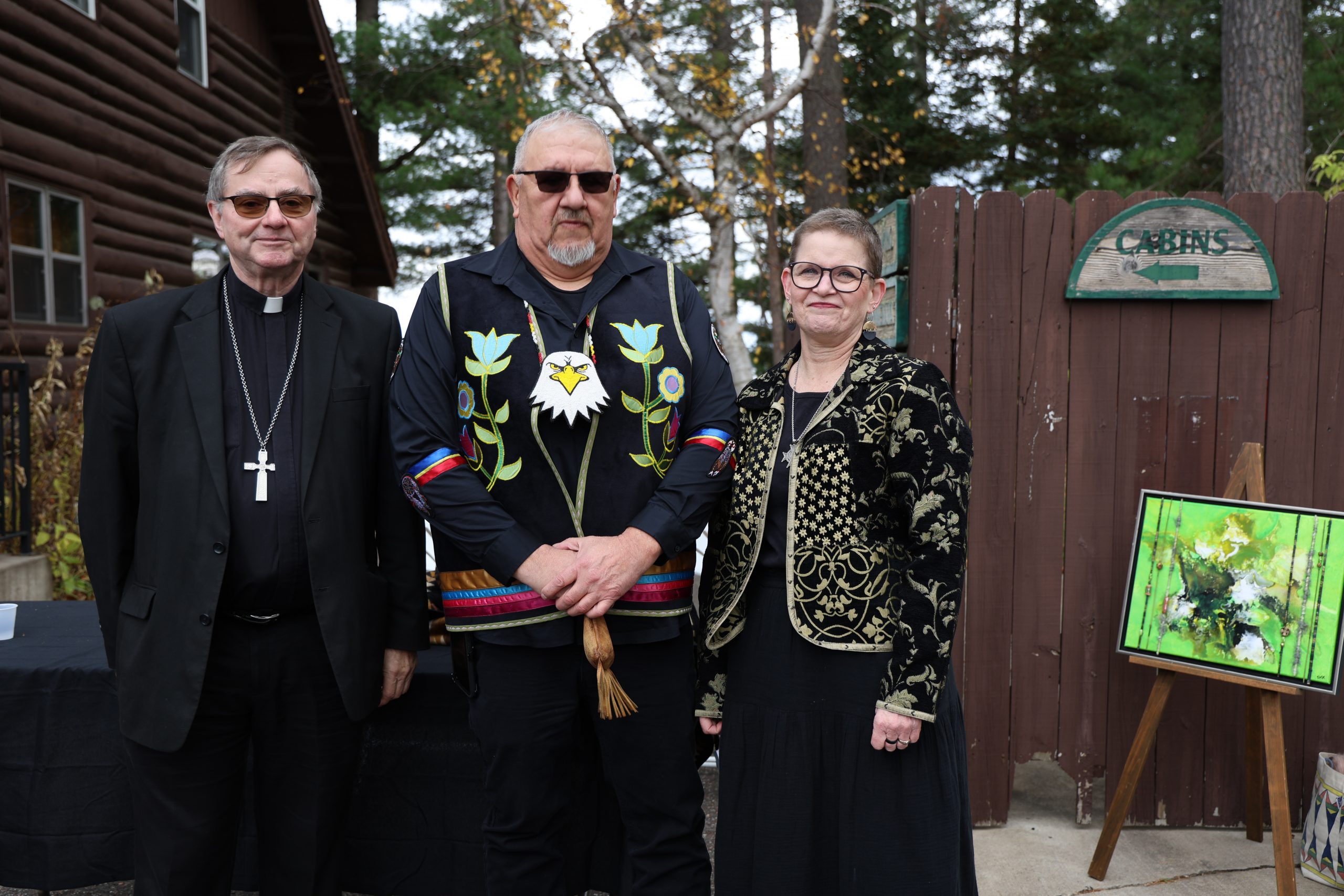
In working with the Lac du Flambeau on the land transfer in October 2025, the first of its kind in the U.S., the dignity of the person, unveiling our white privilege, care for creation, right relationship and encounter were all involved. During the process, we recognized that, due to our skin color, we have been afforded privileges that others have been denied or challenged to obtain, such as access to land.
In the discussions leading to the transfer, we tried to embrace this relationship as one of encounter and gift rather than trying to change the other as task or problem to be solved. There were challenges to address as we engaged in the relationship and closed on the land transfer.
Reliance on God for the Work Ahead
We are becoming more self-confident in who we are, which helps us avoid the need to change ourselves or persuade others. These actions, along with our ability to engage in and navigate difficult situations, stem from a deep relationship with God, reliance on Him and the recognition that God is always with us.
Reliance on God, seeing and believing in His goodness, lifts us to live the Gospel. This allows us to discern and do what it is ours to do now to meet the needs of the times.