
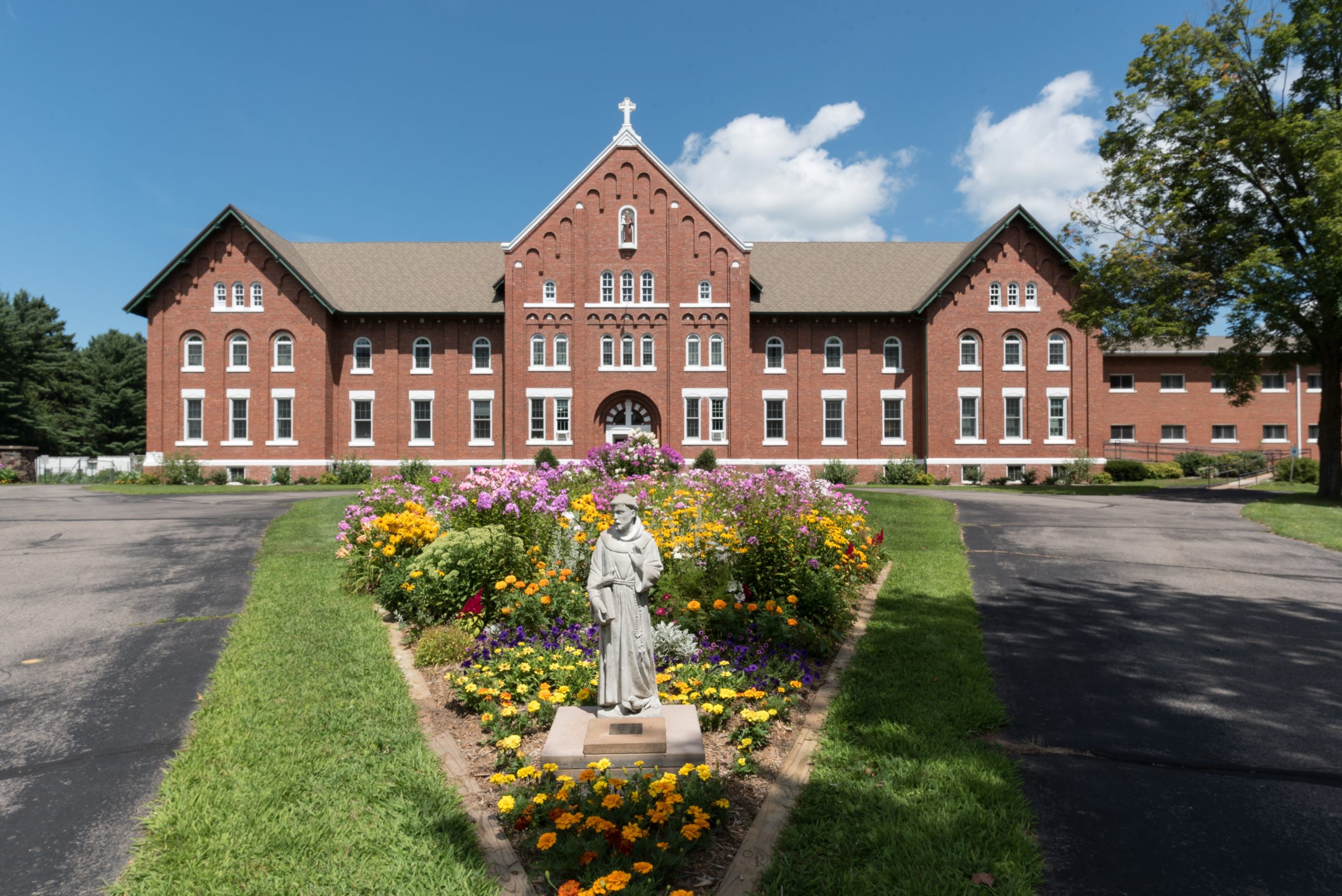
—Ministering to Others Since 1919
Story by Marcy Stenstrom
“Start by doing what is necessary, then what is possible, and suddenly you are doing the impossible.”
—St. Francis of Assisi
St. Francis of Assisi is known for many beautiful and inspiring words of profound depth and simplicity, which he exemplified during his lifetime in the 13th century. Since then, so many other men and women have been called or attracted to follow his template of Christian discipleship, influenced by his model of simple living and harmony with nature. This template is the foundation of the Franciscan Order’s most basic principles: humility, poverty, brotherhood and service to the poor.
Just 100 years ago, Franciscan provincial leaders in the Archdiocese of Milwaukee sought a more remote, rural location to establish a house of studies that could accommodate the influx of men joining this religious order. Accordingly, 40 acres of land in Marathon, a small rural town 20 miles west of Wausau, were purchased in 1917.
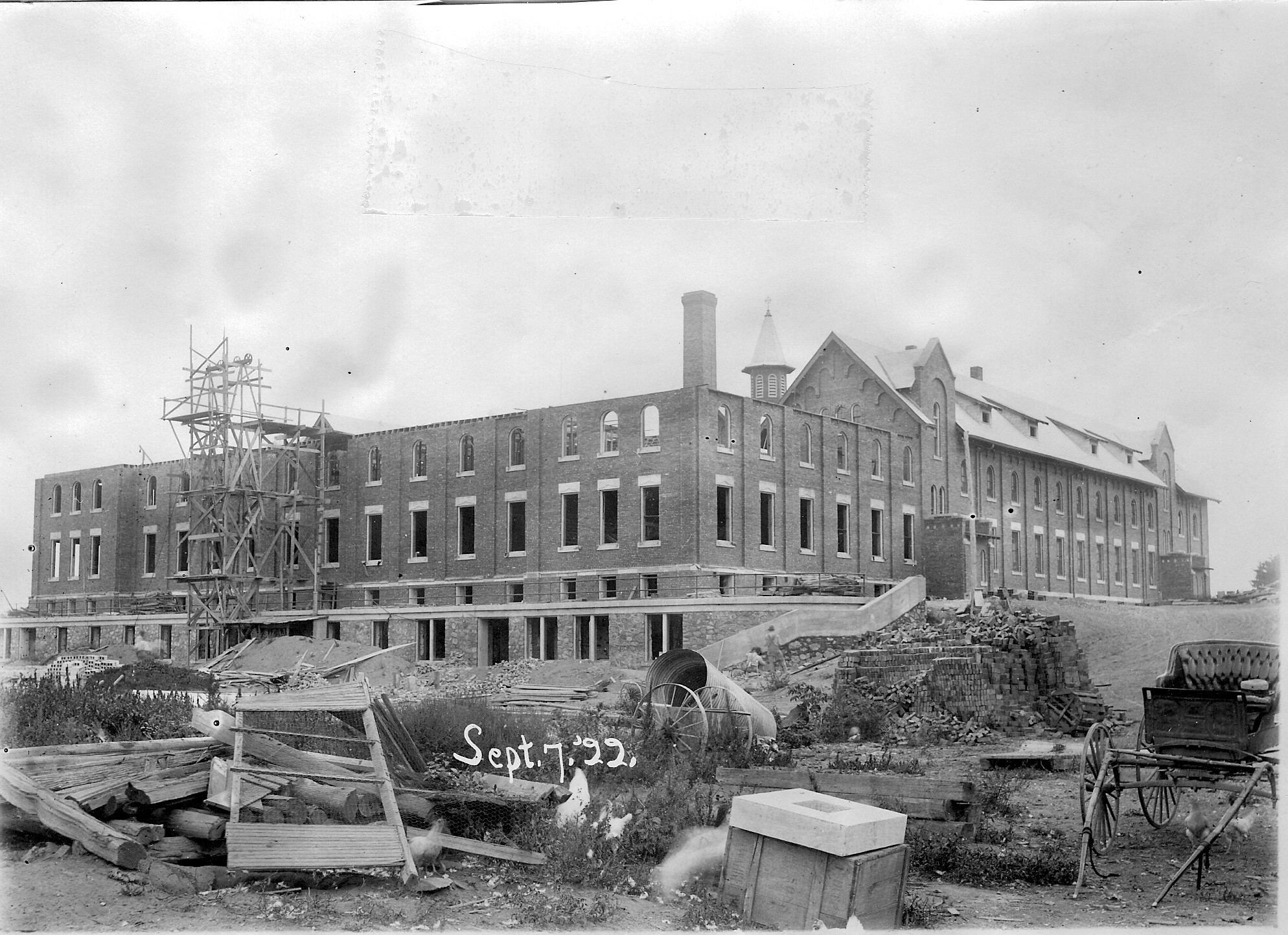
After many local farmers donated and hauled tons of stones by horse and cart, and after major excavations, the masons and bricklayers began their work. They labored alongside friars of all ages, all laboring to fulfill God’s purpose and in service of their vocations.
In the Beginning
The cornerstone was laid on July 7, 1918. On Aug. 15 of the following year, with a Mass and eucharistic procession, the very first building, featuring four wings forming a rectangle, was completed and dedicated. The structure reflects strong German roots and demonstrates Gothic and Italianate architectural influences.
The massive house of studies operated as a friary under the patronage of St. Anthony of Padua because St. Anthony was the first lector of the Franciscan Order and an excellent homilist and preacher. The province leaders also chose the namesake of St. Anthony in memory of Father Anthony Rottensteiner, a highly admired German Capuchin intellectual, who died in Milwaukee in 1903.
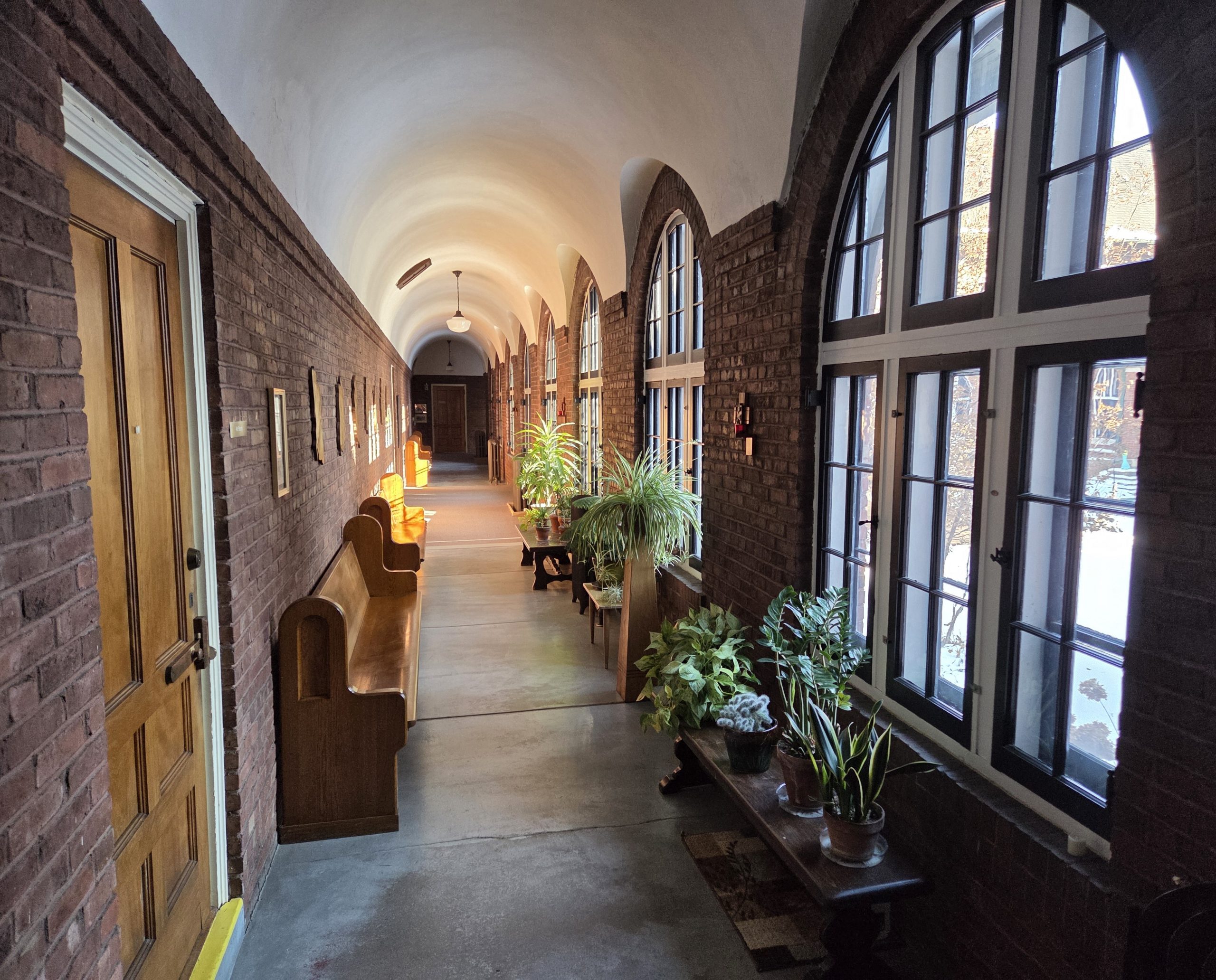
As is typical of most monasteries and orders, St. Anthony’s has a central chapel for adoration and worship, flanked on three sides by small, peaceful interior courtyards. The halls, or plaza, form a square around the courtyards and chapel, where hundreds of Capuchins who lived and studied there walked upon the original concrete floors daily.
From House of Studies to Retreat Center
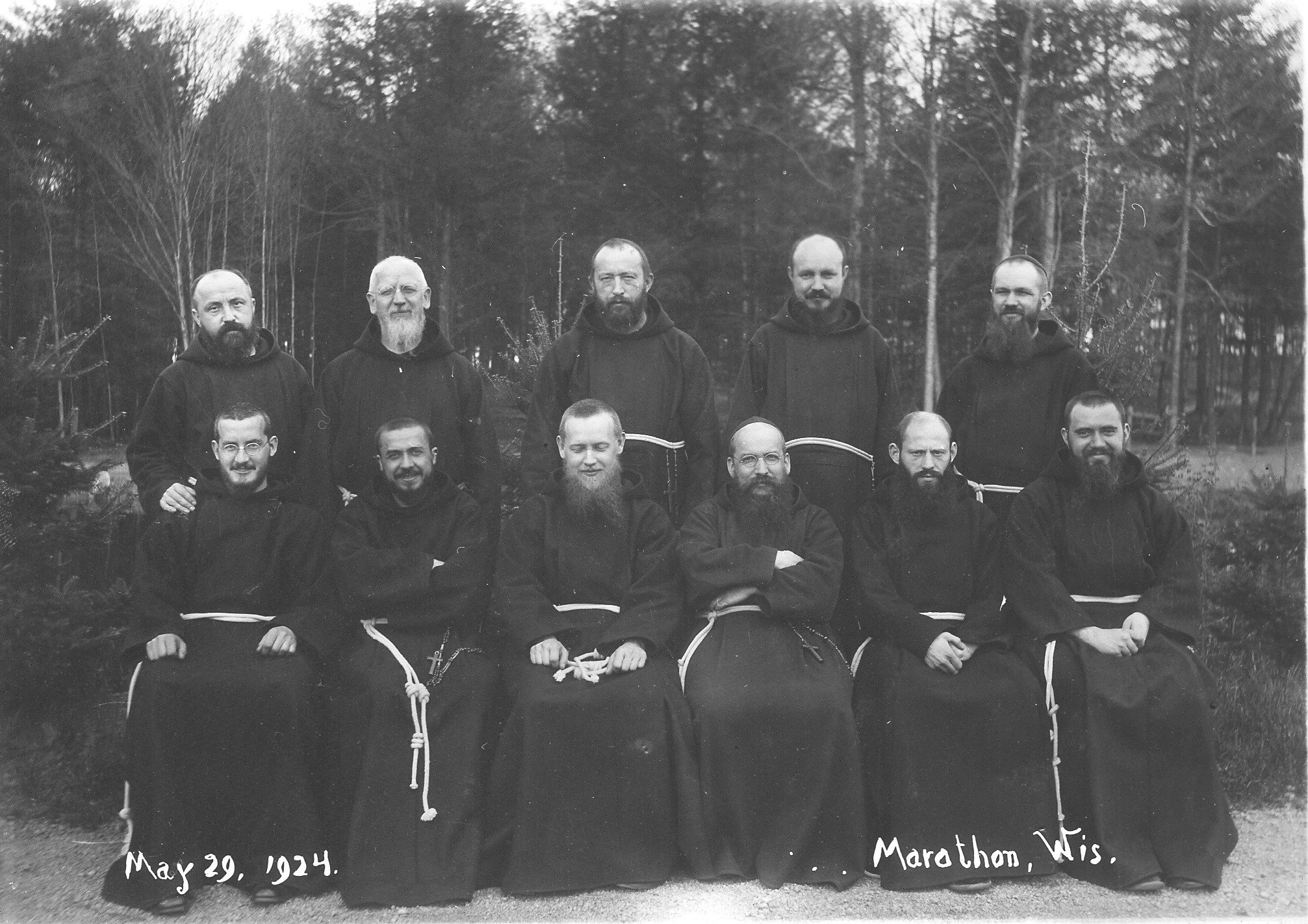
For the next 40 years, St. Anthony’s in Marathon served as a vibrant, thriving house for men eager to discern a vocation to the priesthood. During their time there, they studied theology and philosophy, practiced the Liturgy of the Hours, spent time with the Lord in eucharistic adoration, celebrated Mass and lived in community with one another.
Unlike monks who do not leave their monastery, the Capuchin friars often ministered outside their walls to the surrounding parishes and communities. Despite the house of studies being off limits to outsiders, the friars enjoyed much more than a limited community life.
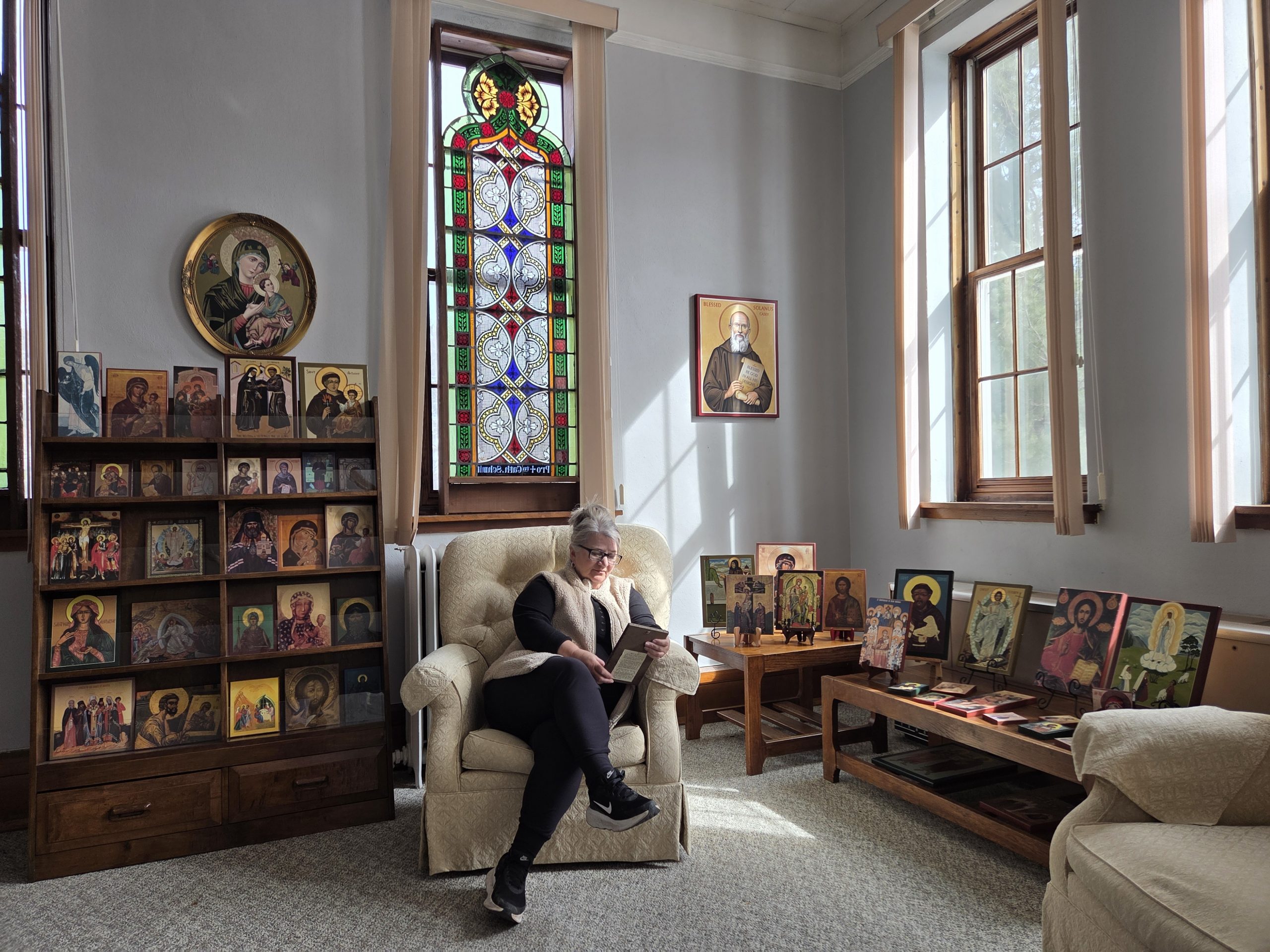
They were known for their woodworking and carpentry skills; many of the Capuchin’s handmade wall décor, utilitarian necessities and folk-art creations are still visible throughout the building.
They were also exceptionally self-sufficient. They sewed their own brown cassocks in a dedicated tailor room, crafted leather sandals in a cobbler room, baked hundreds of loaves of bread in a special bakery room, grew fruit and vegetables, made maple syrup and made wine from grapes grown on the property. They even printed and published books, hymnals and a magazine about their order and prayerful way of life, and they produced, recorded and broadcast a TV show in the late 1960s.
A boom in enrollment in the early 1960s required an addition to the east side of the main building to accommodate additional living quarters. By the late 1970s, however, vocations and residency dropped dramatically, and St. Anthony’s was no longer a viable house of studies.
Many of the remaining older friars relocated to other provinces, but the Capuchins who remained pivoted and opened the house to retreatants, laypersons and religious sisters. They also encouraged on-campus residency for dedicated volunteers.
With the help of all, the “new” retreat center flourished and, for the next 40 years, operated as a place for anyone seeking a peaceful retreat for renewal in a hospitable and communal environment.
The Capuchins continued to share their faith and simple virtues with laypersons, creating deep admiration and lifelong bonds of friendship.
“To heal…, unite…, and bring home…”
During this time, former seminary professor, retreat staff member and resident Capuchin Father Peter Hesse began the ministry of support for those struggling with addiction and seeking recovery. He was an integral part of creating the center’s well-known annual “serenity” retreats and developed trusting relationships with men and women in recovery. He was also a jack-of-all-trades, responsible for the maintenance and care of the entire building and grounds. Fellow Capuchin, Father Tom Zelinski, shared his sentiments during their time together at the center. “He did all his work with quiet humility and the trust in God that he had developed over many years.”
Father Hesse died on Nov. 18, 2004, and is interred in the small Capuchin cemetery plot behind St. Anthony’s just beyond the newly established prairie gardens. His legacy of recovery continues, and his imprint on St. Anthony’s is forever memorialized.
Transitioning Eras
By 2010, the number of friars in residency at St. Anthony’s had further decreased. Now there were only two: Father Dan Crosby and Father Tom Zelinski. Over the next three years, it became clear that the Province of St. Joseph, the owners and facilitators, needed to evaluate the financial viability of St. Anthony’s operations. The provincial leaders realistically assessed pastoral plans and province membership as fewer men were joining the order, while the significantly larger number of friars were aging and retiring.
“Many expressed strong support for maintaining our presence at St. Anthony,” said Father Zelinski. “This is because of the valuable ministry that continues there, our historical connection with that part of Wisconsin, and the nostalgia felt by the friars who passed through studying the priesthood or were brothers in formation there. Some friars used to refer to this place as the ‘Paradise of the Province.’”
Father Zelinski emphasized that this decision was not made lightly. “There was a stirring that many attributed to the action of the Holy Spirit,” he explained. “Lay people began to hold meetings, and ‘We can’t let this place close’ became a kind of battle cry.”
A group of dedicated St. Anthony Ministry Associates, consisting of retreatants, volunteers, and donors, formed a nonprofit LLC called St. Anthony’s of Marathon. They successfully negotiated a purchase agreement with the Province of St. Joseph to ensure the facility continues to operate as a retreat house, meeting center, and place of residency. The original rooms will also be available for private retreats.
With a board of directors, staff and volunteers, this historic and sentimental place is preserved.
Franciscan Living for All
In 2013, when the last Capuchin relocated to another brotherhood community, the Board of Directors continued operating St. Anthony’s but changed its name from a retreat to a spirituality center. Today, the house is finding its footing again under the leadership of Center Director Jackie Kellner, faithful staff and dedicated volunteers.
Visitors are encouraged to schedule a tour to explore the house and the 30+ acres of wooded trails, the Lourdes Grotto, outdoor Stations of the Cross, the grassy labyrinth and several peaceful natural water features along the Rib River that flow through the property.
As an independently owned nonprofit, St. Anthony’s relies heavily on generous donations to sustain its mission: a sanctuary for peace, hope, restoration and spiritual growth. They offer a range of historical rooms suitable for meetings or small group retreats.
St. Anthony’s is open to the public year-round, except on major holidays. Please call or email to schedule a free tour.
Visit sarcenter.com or use your smartphone to scan the QR code below to find retreat offerings or book a private retreat (starting at $65 per night).
Follow them on Facebook and Instagram to stay updated on current events, volunteer opportunities, and enjoy fun photos and videos of their building and grounds.