
A priestly walk through gardens planted, abandoned, tamed and redeemed
Father Woodrow Pace
Director of the Mission Office
Pastor of Holy Name Parish in Wausau
Gardens can provide solace and serenity, even when trial and sorrow quickly follow. Perhaps that is because sorrow goes to gardens to die. That is the hope I would share with anyone, especially priests, young and old. Like the shell of a seed, sorrow eventually gives way and blossoms into its opposite. Joy wins the ultimate victory. With these “Last Words,” I invite you to walk with me through a few gardens of my priesthood. They may help illustrate my point. Regardless, they are certain to show you that this son of Adam is both zealous and slow.
The Gardens I Left Behind
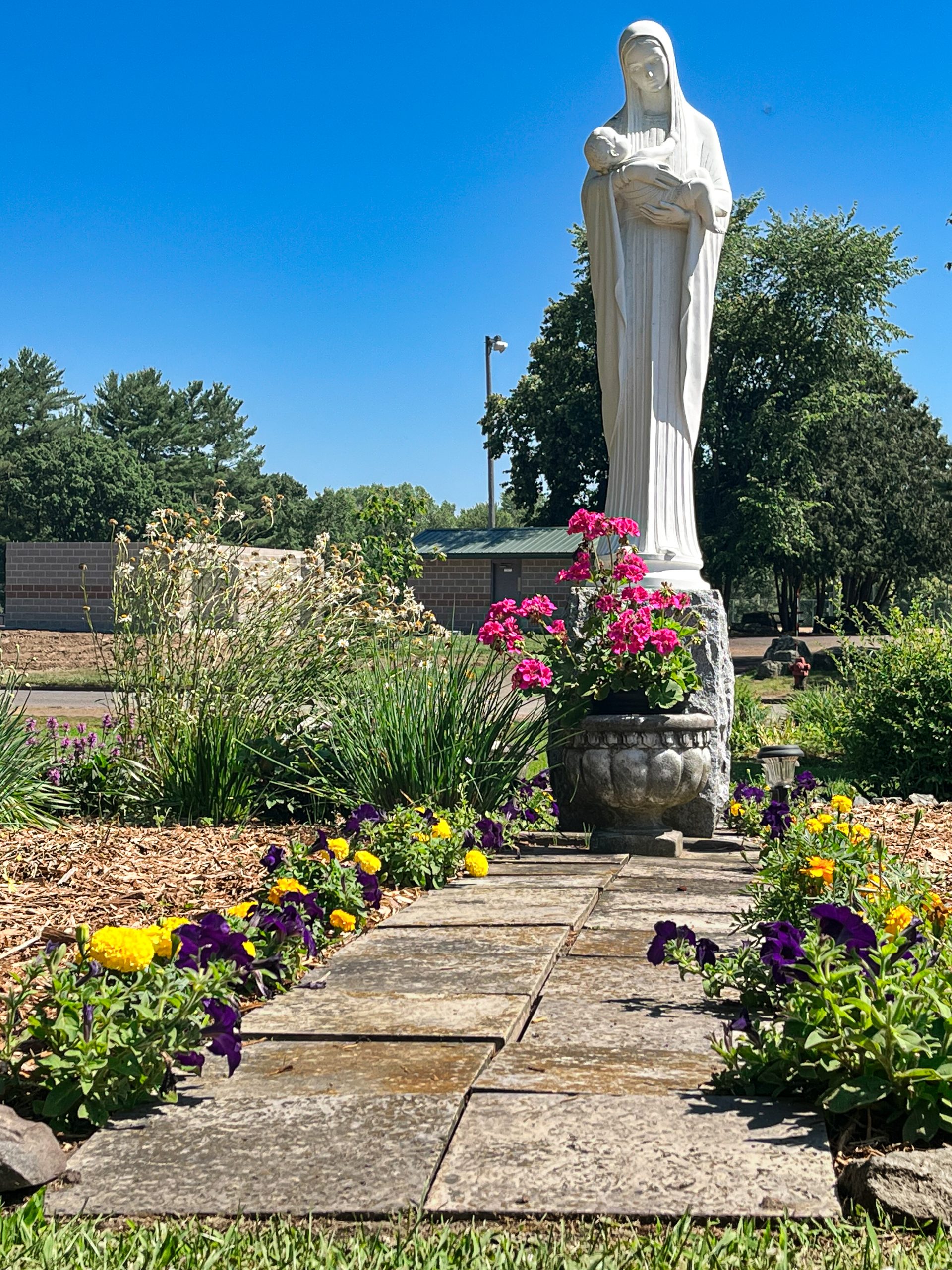
St. Mary Parish in Neillsville was my first assignment as a pastor. It was both exciting and terrifying to be responsible for the parish decision-making process. I had many foolish adventures, one of which was establishing a garden. I marked out the first pathways with striped caution tape, and I should have heeded the tape’s wisdom. Instead, I rented a sod cutter and pulled up enough grass to cause rampant panic. We tilled the beds, laid down stepping stones and added wood chips. We planted perennials, annuals and a few trees. Predictably, there were not enough hours in the day or days in the week for the needed upkeep. My vision had proven irresponsible. When I moved, I left behind a nightmare. Gratefully, parishioners and friends came to the rescue. The team cleaned up my mess and transformed the space into something beautiful.
The grounds at Ss. Peter and Paul Parish in Independence became my next victim. Having learned from my past experiences, I decided to start small. A shade garden and a few other beds fed my itch. My dog, named Gubbio, although he was no wolf, is buried there beneath soil moistened with the tears of kindergarteners and, of course, a river of my own. The space was pleasing and enough.
I soon added a vegetable garden, rows and rows of tomatoes, sweet peppers, hot peppers and herbs. And then, cute fluffy bunnies became my vile enemies. Simple squirrels transformed into wild villains. Weeds choked off the fragile onions, and cilantro sowed itself like evil everywhere. At my departure, they wisely tamed it all and restored tranquility.
When I moved to the Holy Cross Diocesan Center, I was relieved not to be in charge. Over the years, retired priests had created a modest, fenced garden. I was offered a row or two for tomatoes and peppers. With no grand ambitions, tending this garden became my evening solace. There, I enjoyed a good sweat, dirty hands, a ruddy face and some of the harvest. Even weeds and beasts became friends.
When Less Becomes More
When it comes to earthen gardens, it seems that less is more. Material excess is corrupting. But I have wandered other gardens in my priesthood—the gardens of the Bible. They expose a similar truth: fewer appear to plow the way for more.
In Creation’s original garden, sin diminished Adam and caused him to work by the sweat of his brow. But he reaped redemption in Christ. His sorrow and shame became our source of mercy and freedom. The formerly swarthy bride in Solomon’s Song of Songs explores my favorite biblical garden. There, she finds pomegranates that taste of her beloved. They have a drab exterior, thick and protective. But, when the leathery shell is pierced and split, the bright and sweet flesh is made accessible with its fertile seeds. St. Gregory of Nyssa saw in the delectable fruit a multitude of longings nourished and virtues practiced from the soul’s love for her Bridegroom.
The Master Gardener
Other biblical gardens trembled at the serpent’s return after his long absence. Perhaps Satan was feeling anxious. After his 40-day wait, having failed to tempt the hungry and weakened Son of God, he left Him alone for a time. However, in the Garden of Gethsemane, Satan returned, desperate in his battle as he slithered near Jesus. He sought to take advantage of this new suffering. But there, Satan would witness death, his final fearsome weapon, wither and die. Sin’s just punishment began to dissolve in the “sweat and blood” obedience of our Lord, the Master Gardener. The tomb, in which His lifeless body lay in dark mystery, was opened by an ineffable burst of light, life and glory. It is no surprise that gardens always display miracles.
Perhaps gardens express a law of diminishment extending into an infinite epiphany. As one thing ebbs into darkness, another shines forth in grace. At the point where nothingness appears, everything is manifest. That is indeed the case in our final garden, the human soul. Deep within himself, St. Paul disappeared. He could say with faith, “It is no longer I who live, but Christ who lives in me.” St. John of the Cross was emptied of himself. In the night of his soul, his darkened intellect and quieted will embraced his dependence on God with absolute trust. St. Catherine of Sienna said emphatically, “God is He who is; I am she who is not.”
Grass, Cement and Gratitude
This is the very definition of solace and serenity. God becomes everything in the soul that has become nothing. I am still a work in progress in my priesthood—just ask those who have observed my largeness at Holy Name of Jesus and Newman Catholic Schools in Wausau. Zeal and foolishness follow me into every garden. But every priest receives great joys and consolations from the people he serves. Gratitude to God rises habitually from our hearts. Together we garden. Luckily, Holy Name is mostly asphalt and cement. I need to diminish; therefore, grass is scarce. God provides poverty where it is needed most.