
By Deacon Emilio Alvarez, OFS
Director of Campus Ministry at Viterbo University
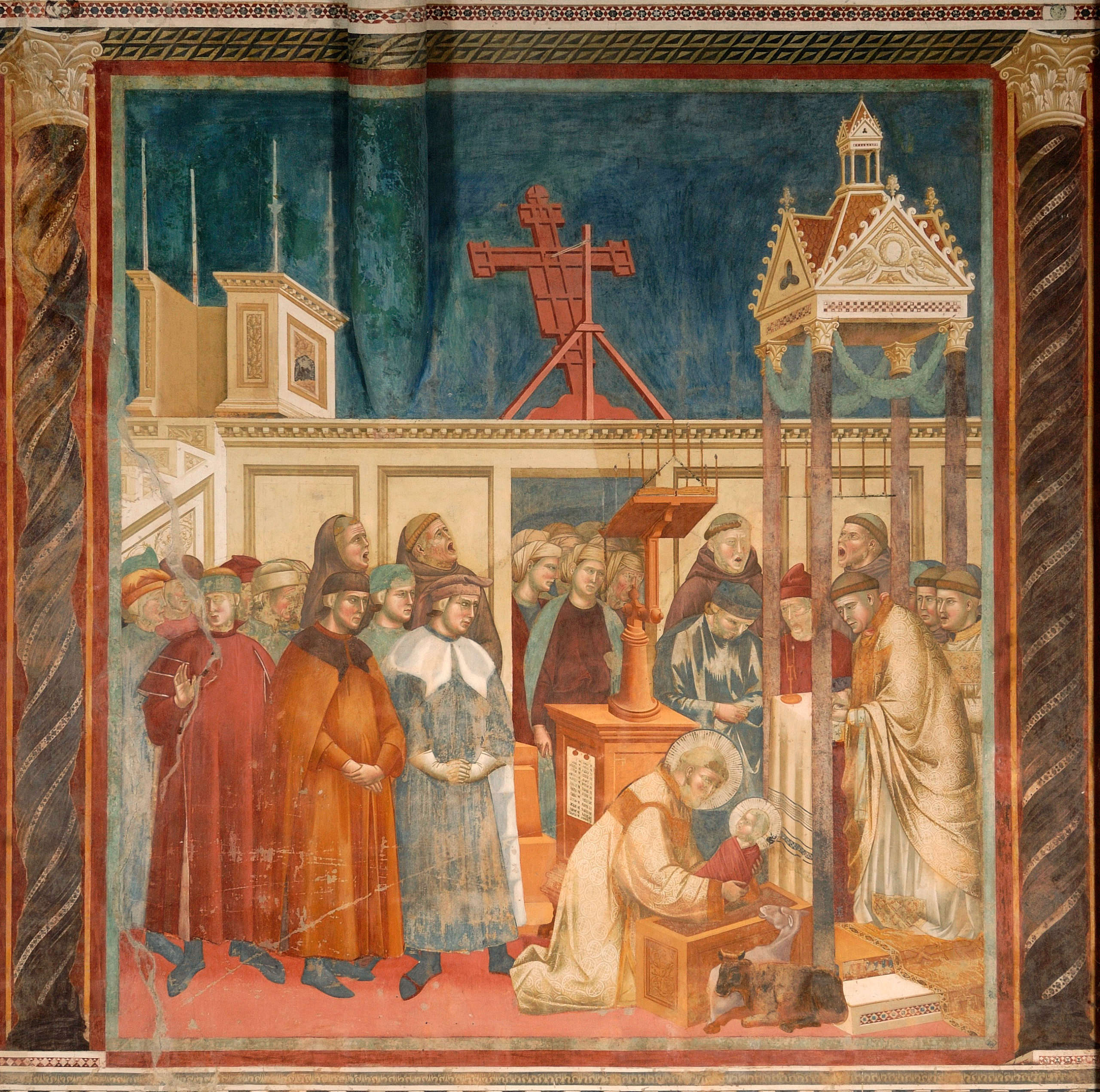
Eight hundred years after the death of St. Francis of Assisi, the Church remembers not only a beloved saint, but a deacon whose life reshaped how the Gospel could be lived in the world. Francis deliberately remained a deacon, devoted to proclaiming the Word, serving the poor and reverencing the Eucharist with profound humility. His ministry reminds the Church that renewal does not begin with power or perfection, but with faithful service rooted in love.
A Living Rhythm of Gospel and Mission
Francis’ life illustrates a rhythm at the heart of both Franciscan spirituality and the diaconate itself. The Gospel is proclaimed, carried into the messiness of human life and returned again to prayer, Eucharist and discernment. From this movement flows a mission for healing and restoration. It is a way of life that continues to shape the Church’s understanding of service today.
To observe the Gospel means allowing it to take flesh in the ordinary contours of daily life. What we say and what we do, who we encounter and who we avoid, how we spend our time and direct our attention, all of it shapes how the Gospel is either embodied or obscured. For Francis, this was grounded in the conviction that all life is sacred, all creation is good, and every relationship is worthy of sacred dignity. The Gospel does not hover above reality. It enters it, sanctifies it and gently transforms it from within.
Life itself has the capacity to question and refine how we understand the Gospel. The world is encountered through our senses, through touch and sound, through suffering and joy, through memory and longing. Christ Himself became human to enter fully into this reality, not to escape it but to redeem it. When we engage the world honestly, without fear or denial, our understanding of the Gospel is often purified. We discover anew that salvation unfolds not apart from human experience, but precisely within it.
Returning to the Source: Prayer and Sacrament
This is why prayer, the Eucharist and discernment are not optional supports but essential sources. Without returning to them regularly, our efforts to live the Gospel begin to resemble a stream cut off from its source. The movement may continue for a time, but eventually it grows stagnant or dries up. When ministry relies solely on personal strength or good intention, it becomes exhausting and hollow. When it flows from prayer and sacrament, it becomes grounded, patient and life-giving. Our souls, like our bodies, need to be nourished by the living God.
The Gospel often needs to be received again most urgently in places of woundedness. When relationships are fractured, when trust has been broken, when individuals or communities carry deep hurt, the Gospel must be proclaimed not as abstraction but as healing presence. Whether we encounter woundedness in ourselves or in others, among the poor, the marginalized or those forgotten by institutions, it is there that the Gospel is most needed. It is there that Christ desires to speak words of restoration, mercy and new life.
Holiness in the Ordinary
The Franciscan charism insists that this work happens within the fabric of ordinary life. Marriage, family, work and responsibility are not distractions from holiness but its primary setting. Life is often messy, unpredictable and demanding, yet God is present within it all. The temptation to separate “ordinary life” from “spiritual life” is strong, but Franciscan spirituality resists this division. Integration is essential. It is amid the ordinary that reverence for life is cultivated, humility is learned and relationships are formed and restored.
This integrated rhythm leads naturally to an understanding of penance as restoration rather than punishment. For Francis, conversion was not about self-condemnation but about returning relationships to right order, with God, with others, with creation and within oneself. Daily conversion often looks small and hidden, unspectacular and quiet. It takes the form of listening, apology, patience and sacrifice. In this way, penance becomes an expression of love rather than fear.
The Diaconal Heart of Service
Here, the diaconate finds a natural home. The deacon stands close to the hearts of individuals and communities, not as the source of healing, but as one whose heart is conformed to Christ the servant. There is a distinct grace in diaconal listening, shaped by secular lived experience and grounded in the self-giving love of Jesus. From that listening flows a movement toward restoration, accompaniment and care. The deacon does not resolve all things but bears them prayerfully and faithfully toward the altar, trusting Christ to do the transforming work.
The Eucharist at the Center
At the center of this rhythm stands the Eucharist. For Francis, the Eucharist was the clearest and most concrete way Christ remained present in the world. His reverence for the body and blood of the Lord shaped how he saw human dignity, humility and service, and it formed his conviction that the mystery of the Incarnation continues not only in history but also on the altar and in the lives of God’s people.
Eucharistic reverence shapes how we see human dignity and teaches us patience towards the world’s imperfection, slowness and fragility. Just as simple bread and wine become the body of Christ, so too we are transformed into Him. This transformation is gentle, often unseen, yet profoundly real. A eucharistic life does not end with dismissal but continues in acts of mercy and charity where Christ is present.
Eucharistic vision protects the Church from both clericalism and activism. It reminds us that ministry is not about control or efficiency, but about humility and availability. Christ makes Himself present in the smallest and most vulnerable form, teaching us that God’s power is revealed through self-emptying love. This vision calls the Church to remain close to the ground, attentive to real people and real needs.
Fraternity as the Context of Discernment
Franciscan life emphasizes fraternity not because personal holiness is unimportant, but because it is incomplete on its own. Discernment is never meant to happen in isolation. It is formed and refined in the give‑and‑take of shared life, where conversion is sustained through relationship. Francis sent the friars out two by two, modeling a shared and communal way of following the Gospel. Fraternity mirrors the Trinitarian life of God Himself, a communion of love rather than solitary perfection. It provides correction, support, accountability and mutual encouragement. For the deacon, this means living ministry with the Church and not merely for the Church.
Within this shared life, obedience takes on its proper meaning. When discernment is formed in fraternity and lived in communion with the Church, obedience is no longer experienced as limitation, but as freedom. In a culture that equates freedom with self-determination, Franciscan obedience offers a countercultural peace. Trusting God’s will, as mediated through community and the Church, relieves the burden of constant self-direction. It frees the heart from anxiety and opens space for joy, humility and deeper trust.
The 800th anniversary of the death of St. Francis invites the Church to reflect anew on these truths. Francis lived in a time marked by division, fear and institutional strain, not unlike our own. His response was neither withdrawal nor aggression, but radical fidelity to the Gospel. He approached every person and all creation with reverence, dignity and love. He trusted that fear is dispelled not by control but by humility and sacrificial love.
This Jubilee is not about nostalgia but about hope. It reminds the Church of the vision of the New Jerusalem promised by Christ, a future free from fear, grounded in love. When the Church lives the Gospel simply and faithfully, hope emerges quietly and persistently. People respond. Hearts soften. Fear loosens its grip.
A Quiet Path of Transformation
Faithfulness does not require having all the answers. It asks only that we remain open, attentive and willing to be transformed. Living the Gospel in the ordinary renews the Church from within, not through grand programs but through everyday acts of love, service and presence. In this way, the Church continues to move from the Gospel into daily life, and from daily life back to the Gospel, following the humble and joyful path first walked by St. Francis and now entrusted anew to each generation.