
Donated logs, hauled sand, pew rent paid in firewood: for 125 years the farm families of St. Joseph Ridge have raised and kept a church with their own hands
Story by Mary Kay McPartlin
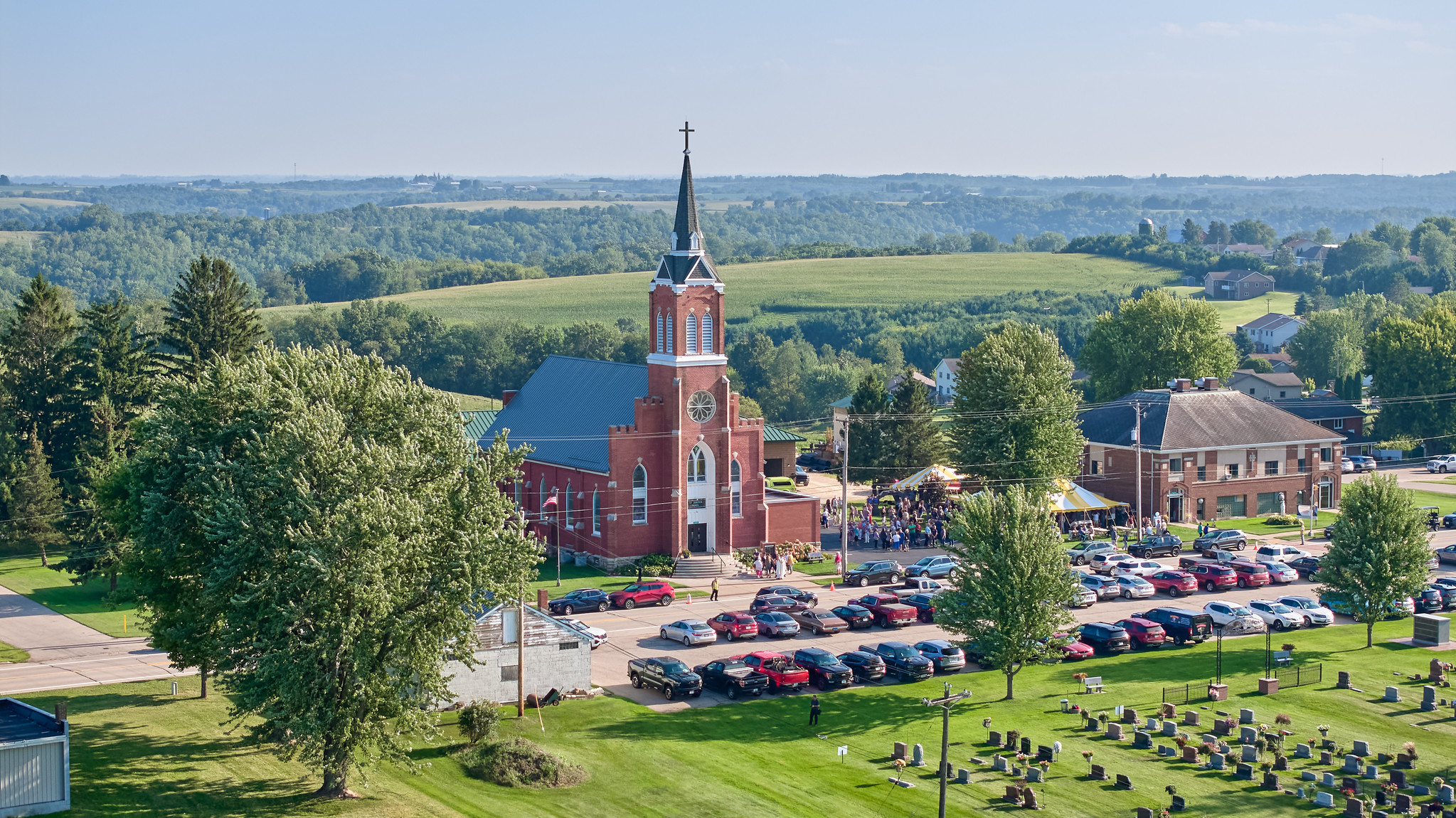
For 125 years, the church building on St. Joseph Ridge has been the center of a community built on faith, family and perseverance. Dedicated in 1901, the present church is the third church building to serve St. Joseph Parish, which traces its roots back to 1857.
The parishioners, past and present, are proud to be part of a family that is also the hands and feet of Christ in their community. Life on the Ridge has not always been easy, but their strength is in Christ, and they support each other in faith.
The Start of Something Special
Beginning in 1857, immigrants from Ireland, Germany, Bohemia (what is now the Czech Republic) and Luxembourg came to Wisconsin hoping to make a new life. Fertile farmland provided a means to feed their families and a place to build a home.
“They came from different countries and backgrounds, but their Catholic Faith brought them together,” said Sara Mikshowsky, St. Joseph Parish historian. Many of today’s parishioners can trace their ancestry to those original pioneer settlers of St. Joseph Ridge. Together, their families became the foundation of the St. Joseph community that continues today.
After almost 10 years of celebrating Mass in their pioneer homes, it was time to build a church for the community. In 1866, parishioner Michael Weiker donated the logs used to build the first St. Joseph Church, with Father Florentine Zadziocski as the first pastor.
“That first church did not last long,” Sara said. It burned in 1869, and the parish replaced it with a church of brick that served the congregation until 1900. By then, St. Joseph Ridge had become more than simply a church community. It was an important center for the surrounding Catholic population, and it eventually helped give rise to mission churches that became St. Peter at Middle Ridge and St. Mary at Coon Valley.
The parish community was more than just a church. In 1873, a two-story stone schoolhouse and brick parsonage were built. The school was led by the Franciscan Sisters of Perpetual Adoration, and by 1896 it had about 90 students.
“It was not simply a place where children attended classes,” said Sara. “It was part of the community’s religious and social life.”
The sisters did more than staff the school. Over the years, several young women from the Ridge joined the Franciscan Sisters of Perpetual Adoration and other communities themselves.
“Their stories are another reminder that the parish’s influence extended beyond the people who attended Mass each Sunday,” Sara said. “St. Joseph also helped nurture religious vocations and a commitment to serving the Church.”
Bigger and Better
St. Joseph Parish needed more room for the growing number of families at the turn of the 20th century. The brick church was sold to a local farmer, who used it for a hay barn.
In 1901, the third and current St. Joseph Church building was built. More than 100 loads of lumber were delivered in March 1901, and the church was completed in time for its dedication on Oct. 20, 1901. Bishop James Schwebach of La Crosse and Bishop Johannes Joseph Koppes of Luxembourg participated in the dedication.
The new church was struck by lightning not long after construction, which caused the steeple to burn down. No strangers to challenges, the parishioners rebuilt the steeple.
At the same time, the number of children in the parish grew, requiring a bigger school. The new school building was constructed in 1929 and cost approximately $19,000.
Parishioners did not hesitate to support this important part of their community. About $11,589 had been pledged or paid, with another $5,300 raised through dinners, bazaars and other fundraising. Much of the labor was donated. The parish records name the contractors and plasterers, and also the people who hauled sand, provided lumber and did the painting, members of several parish families among them. To Sara, the list is a good example of how a major parish project got done: many people contributing in different ways.
Life on the Ridge at the Turn of the 20th Century
Based on a multitude of records from 20th-century life at St. Joseph Parish, it is clear that faith and fiscal responsibility went hand in hand for the church leadership and the parishioners. When the new church was only a few years old, the parish focus was to pay down the debt.
The parish annual report gives, in Sara’s words, “a wonderful glimpse into how the parish operated.” The report proudly announced that the debt had been greatly reduced and was expected to be paid off, and that new side altars would soon adorn the church. Even the parish societies were contributing. The Christian Mothers, the Young Men’s Society and the Marian Sodality had accumulated about $391 toward the side altars.
The report also names individuals. Four Clements men—Emil, George, John and Peter—are listed with amounts for pew rent, debt payments or both, a direct glimpse of one family taking part in parish finances more than a century ago.
“It gives the impression of a young parish that had worked hard to build its beautiful new church and was determined to finish paying for it,” Sara said.
Financial reports may seem like just a listing of numbers, but those numbers paint a picture of what life was like a century ago.
“These expenses and income show what mattered to the people of St. Joseph,” Sara said. “The reports make it clear that keeping the parish going was a community effort.”
A Rural Parish and Its People
The people of St. Joseph Parish lived in a rural community, and their parish tithe was not always provided in cash. Support came in different ways.
The financial records show how closely the parish was tied to farming. Farm rent appears regularly in the reports. The parish owned or managed land of its own, and in 1965 it sold farmland on Anthony Road for approximately $9,000.
“At one point, wood could even be accepted as payment, with the pastor establishing values for different types of wood,” Sara said.
The community found ways to support the parish that were also tied to building community among the parishioners. A yearly parish picnic was a lucrative fundraiser for St. Joseph.
Another tradition was the annual Smelt Fry, held during Lent. It was a popular parish fundraiser that brought together generations of volunteers, with some parishioners helping for decades. In 1992, parish volunteers prepared 700 pounds of smelt, served with homemade German potato salad, coleslaw, tartar sauce, bread and homemade coffee cake. By 1998, the Smelt Fry was drawing 800 to 900 people, showing just how popular it had become. Although the Smelt Fry is no longer held, it was a beloved part of parish life for roughly six decades.
The annual picnic and dinners were not just social occasions. They were significant sources of parish income.
“These activities were a celebration and an important part of keeping the church and school operating,” Sara said.
St. Joseph During the 1930s
The Great Depression of the 1930s presented challenges to the parish families and to St. Joseph, as it did to people around the world. The 1930s financial reports provide an interesting glimpse of parish life during the Depression.
In his 1934 report, the pastor referred to the Depression and to the devastating storm of the previous July. The financial report shows insurance money coming in for storm damage and expenses going out for repairs. In 1936, Father John Pinion wrote to parishioners about the parish’s improvement program and the remaining debt. In 1937, he wrote about the financial pressures of maintaining the church, school and other parish property.
“Yet the parish continued moving forward,” Sara said. The parish faced difficult economic circumstances but continued to maintain its buildings and programs.
Beginning Again
Decades later, it became clear that the parish could not keep the school operational. The parish community on the Ridge came together in a different way.
In 1969, the Parish Council, along with parishioners, made the difficult decision to close the school. The building is now used for religious education and other parish activities.
The parish adapted to the loss of the school, making sure to keep students and families connected. Parish buses transported Catholic students to Aquinas High School in La Crosse. The convent remained part of the parish property until it was sold in 1989. The building was moved nearby and converted for use as Toddle Inn Daycare, giving the former convent a new purpose in the community.
“Through each of these changes, the parish community found ways to begin again,” Sara said. “Buildings, schools and ministries changed, but the desire to gather as a Catholic community, support one another and pass the Faith on to the next generation remained.”
Shepherds on the Ridge
Caring shepherds have guided the parish through good times and challenges. These men have made their marks on parish history, according to Sara’s research. Fifty priests, including the present pastor, have served St. Joseph over the years, and two of them served two separate terms.
One of St. Joseph Parish’s most distinguished sons was George Albert Hammes.
Born in St. Joseph on Sept. 11, 1911, to August and Caroline (Schumacher) Hammes, George decided to become a priest after graduating from St. Joseph Ridge School in 1925. He continued his education at seminaries in Wisconsin, Missouri and Washington, D.C., and was ordained a priest for the Diocese of La Crosse on May 22, 1937.
Following his ordination, Father Hammes served as secretary to Bishop Alexander McGavick of La Crosse. In 1944, he became chancellor of the Diocese of La Crosse.
In 1957, he became the founding pastor of St. Leo Parish in West Salem, now known as St. Teresa of Kolkata Parish.
On March 28, 1960, Pope John XXIII appointed Father Hammes Bishop of the Diocese of Superior, making him the first priest from the Diocese of La Crosse to be named a bishop. During his 25 years as bishop, he participated in all four sessions of the Second Vatican Council and guided the Diocese of Superior through many changes in the Church.
Bishop Hammes retired in 1985 and died in 1993.
A Vibrant Life Continues
St. Joseph has never ceased growing and adapting. Life on the Ridge in 2026 is not the same as it was in 1857, but the commitment to faith, community and family is as strong today as it was 169 years ago.
From painting and carpeting to heating, the parish has gone through many renovations over the past 125 years, with the largest happening in 1978 and 1998. In 1996, the large church bell—silent for nearly 30 years—was restored.
“The parish continued investing in the building rather than simply allowing the historic church to age,” said Sara.
Forever Family
The records and memories of St. Joseph parishioners are clear that people on the Ridge cherished their life together.
St. Joseph Parish was much more than a church building. It was a school, a gathering place, a center for religious education and a place where parish organizations worked together. There were school plays and music programs, card parties and fundraising dinners, social events and the parish picnic every year. The church basement, the school, the convent, the rectory, the cemetery and the grounds all became part of the memories of generations of families.
“St. Joseph was a community and a family,” Sara said.
Time for Celebration
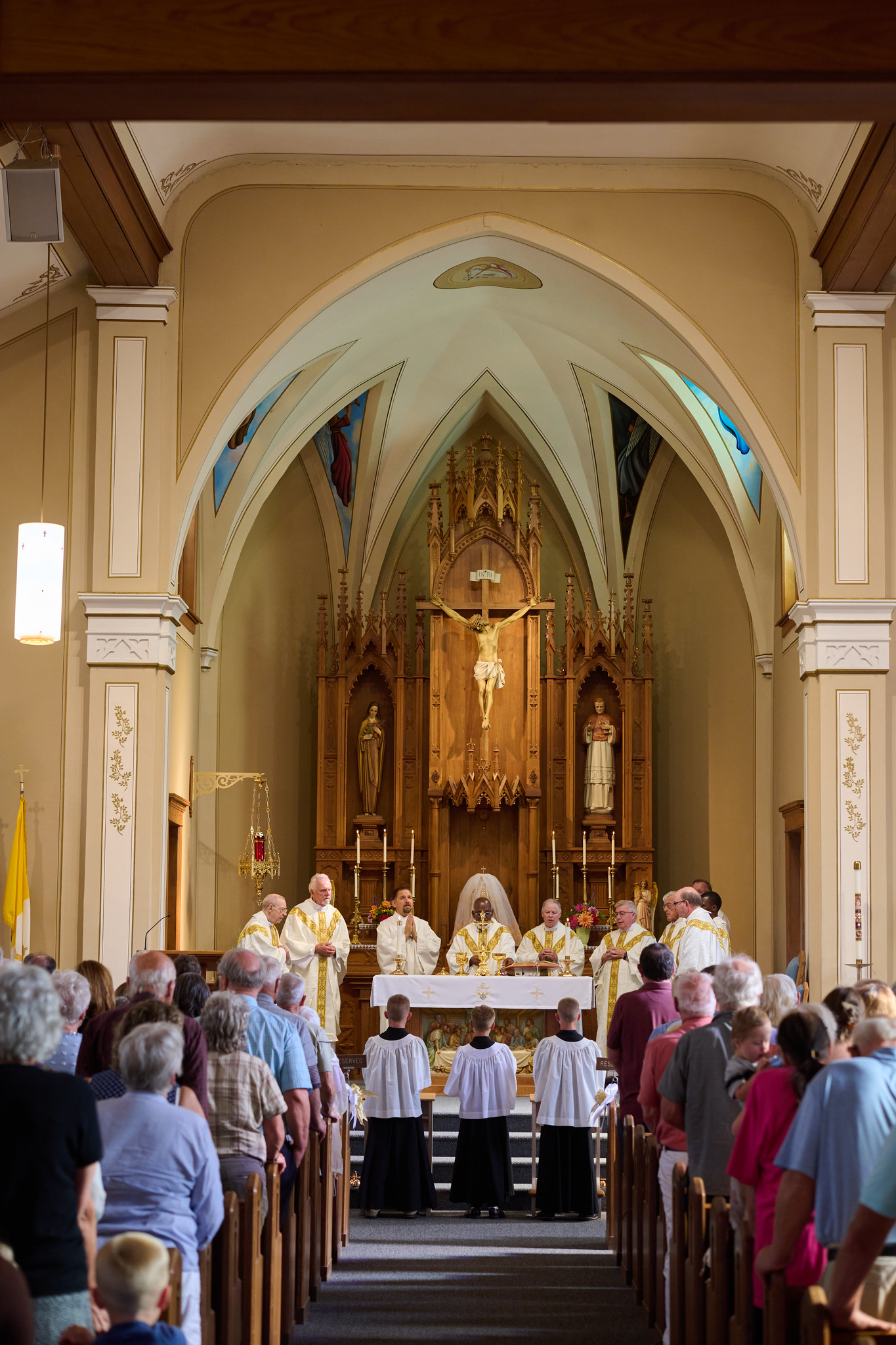
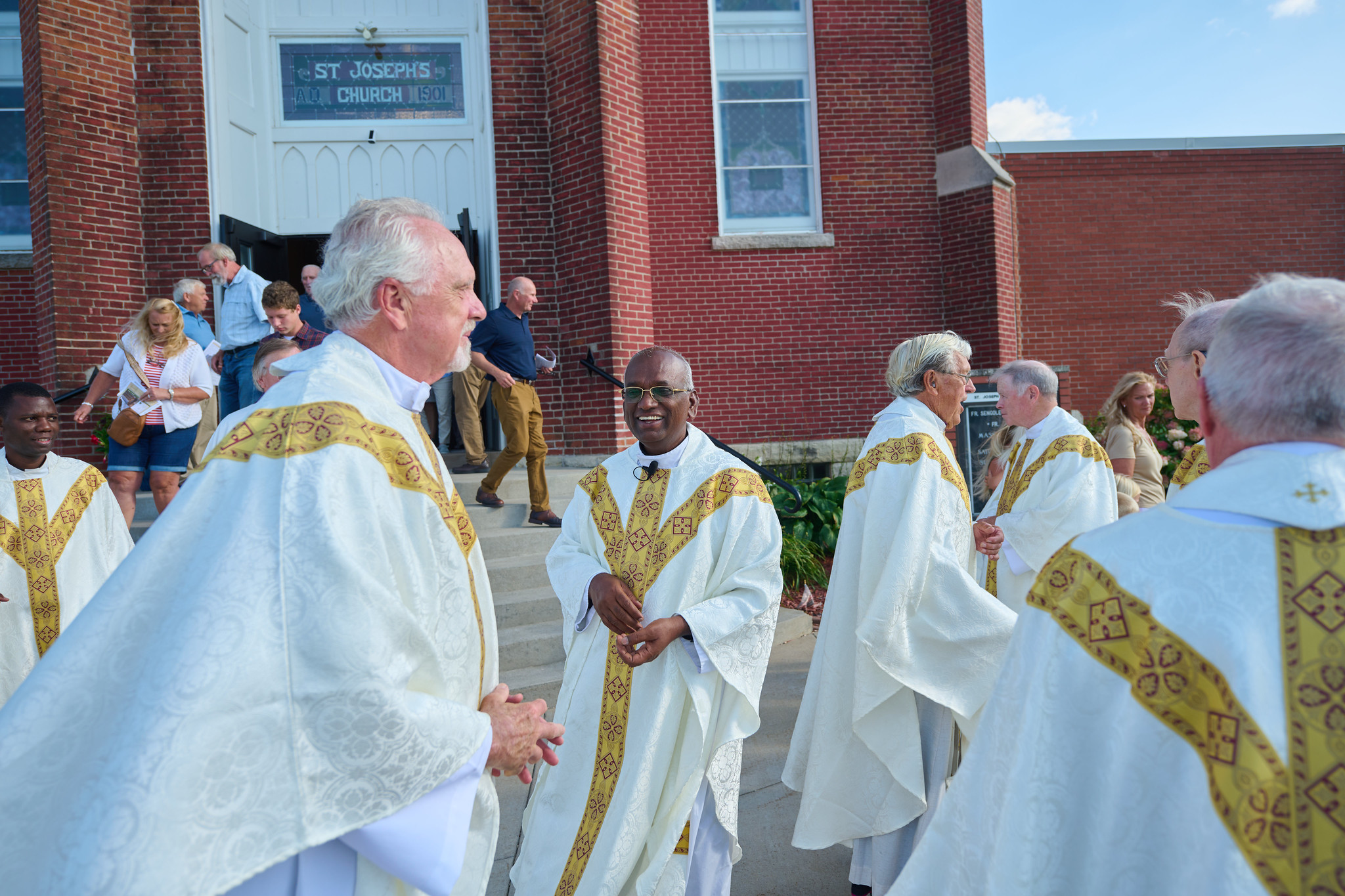
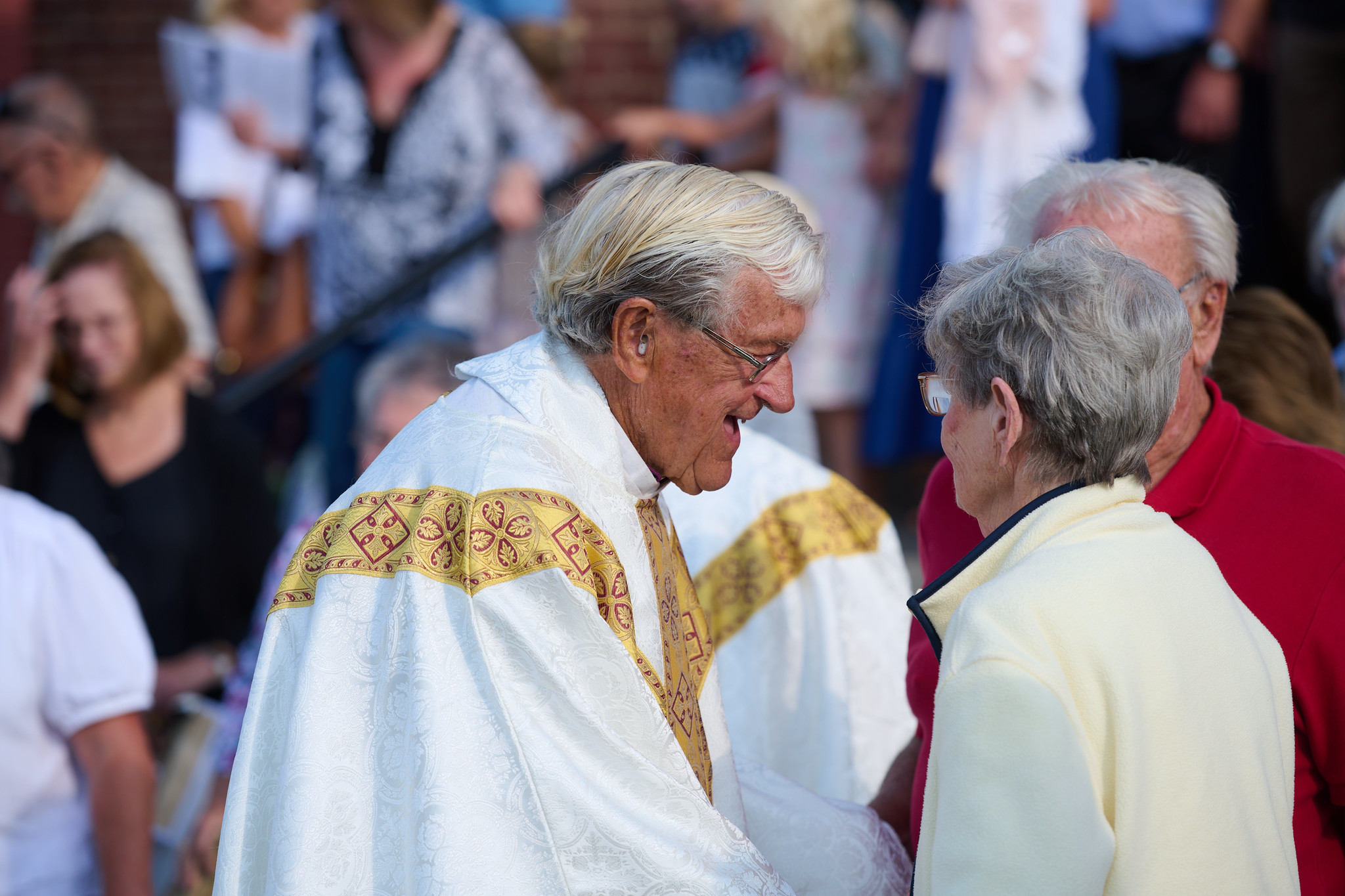
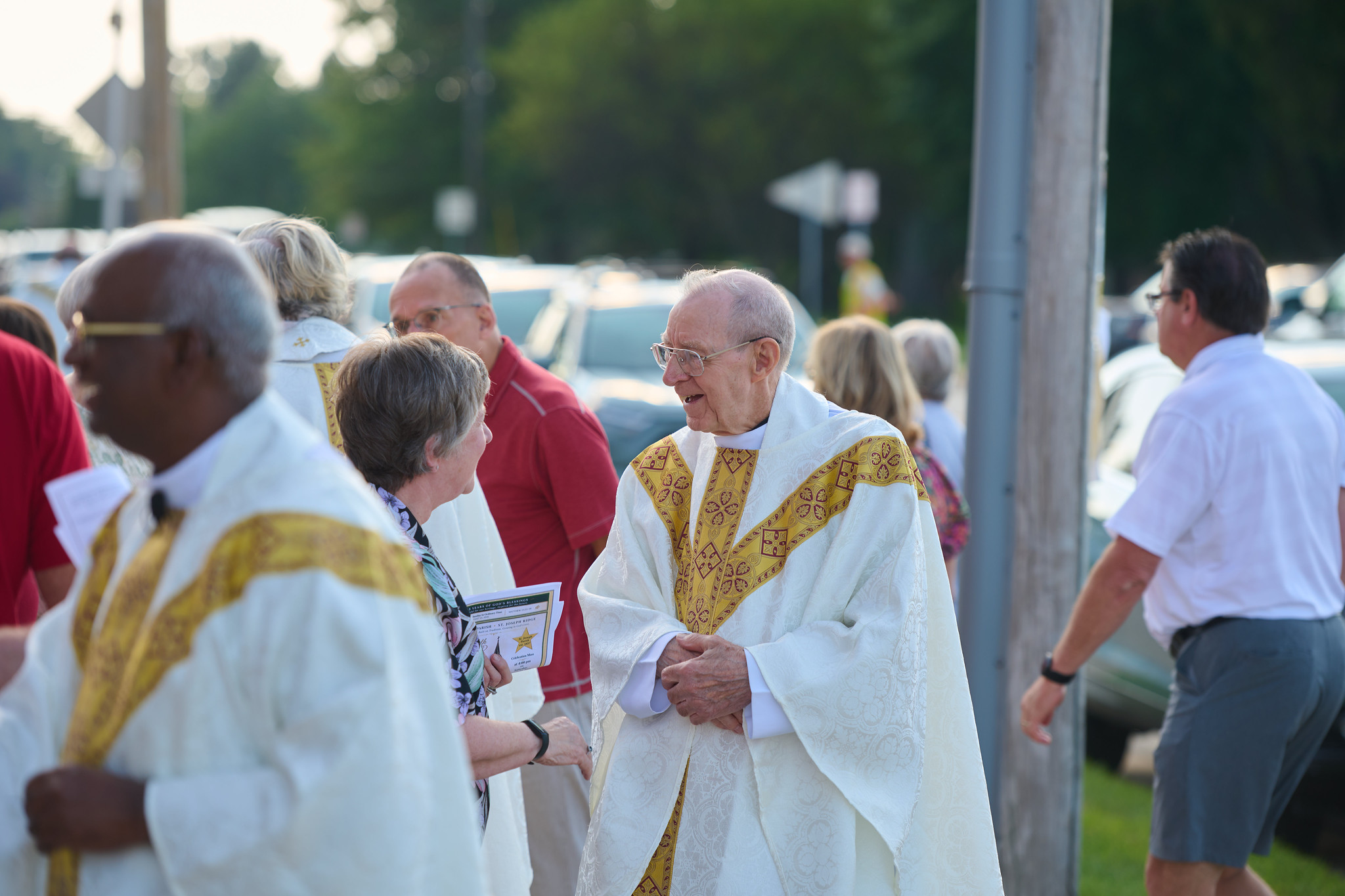
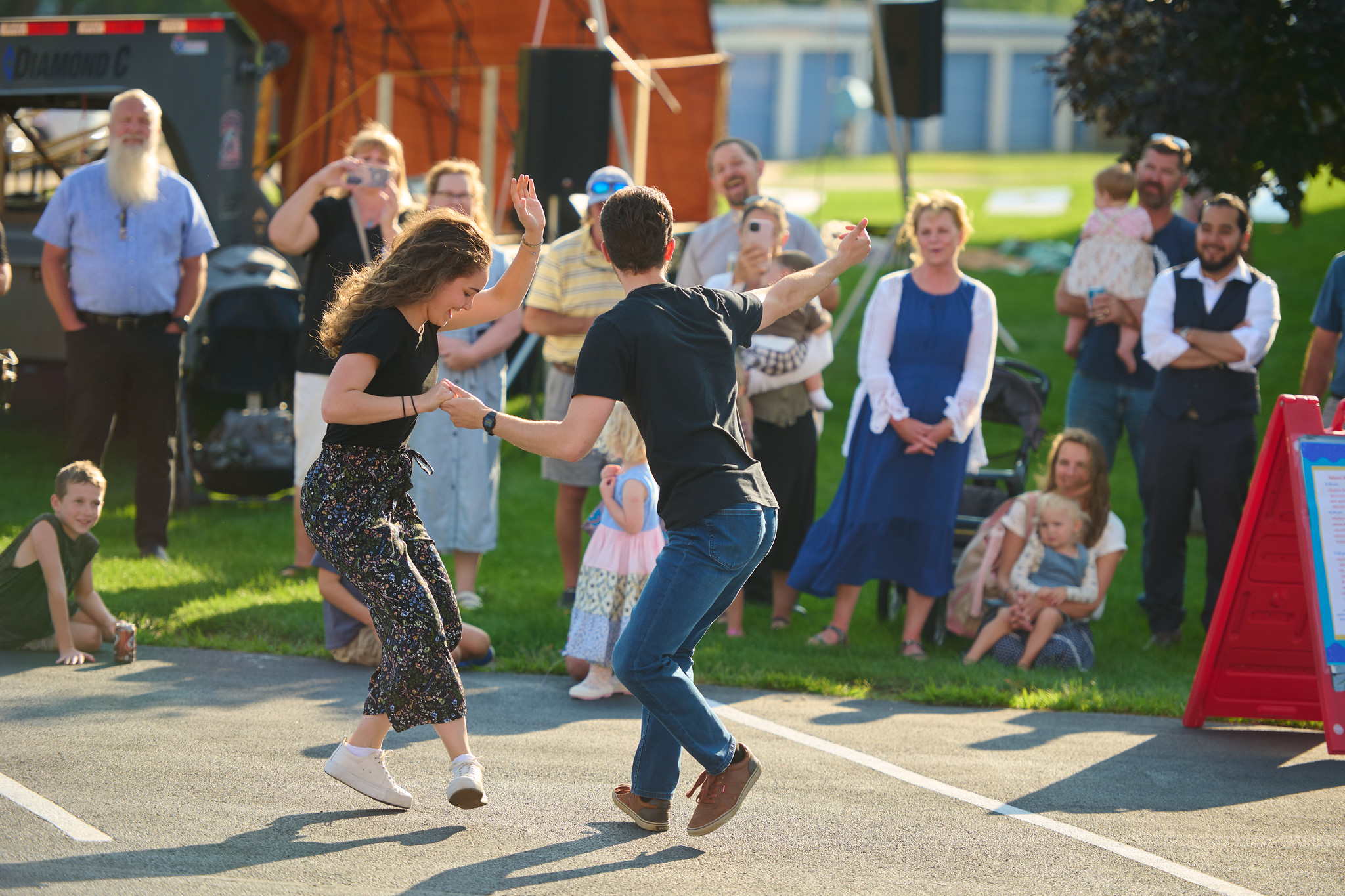
This summer, the parish held a 125th anniversary celebration of the existing church building. The faith and family foundation of St. Joseph on the Ridge provided generations of families with a community that cared about each other and building the Kingdom here on earth.
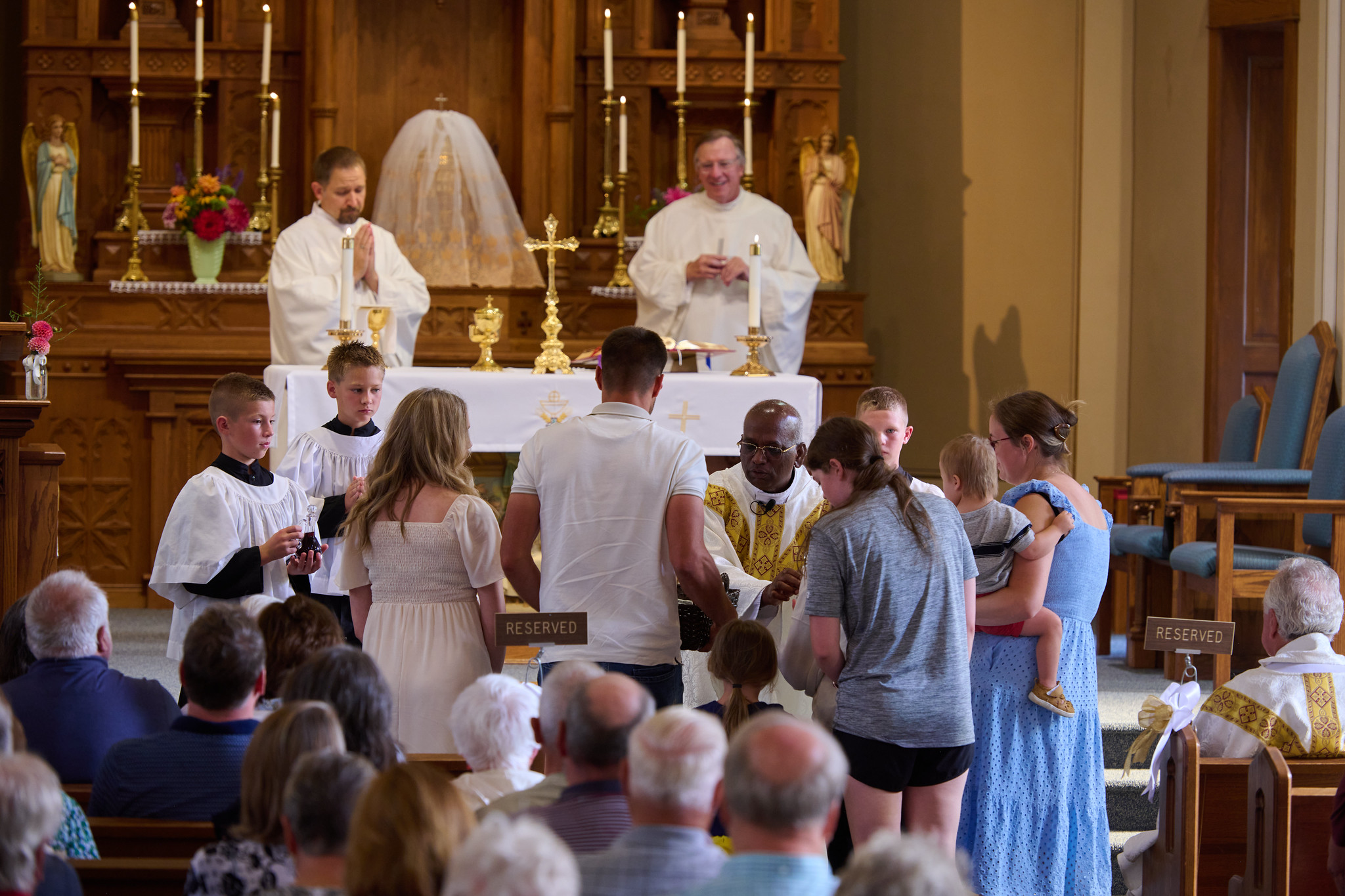
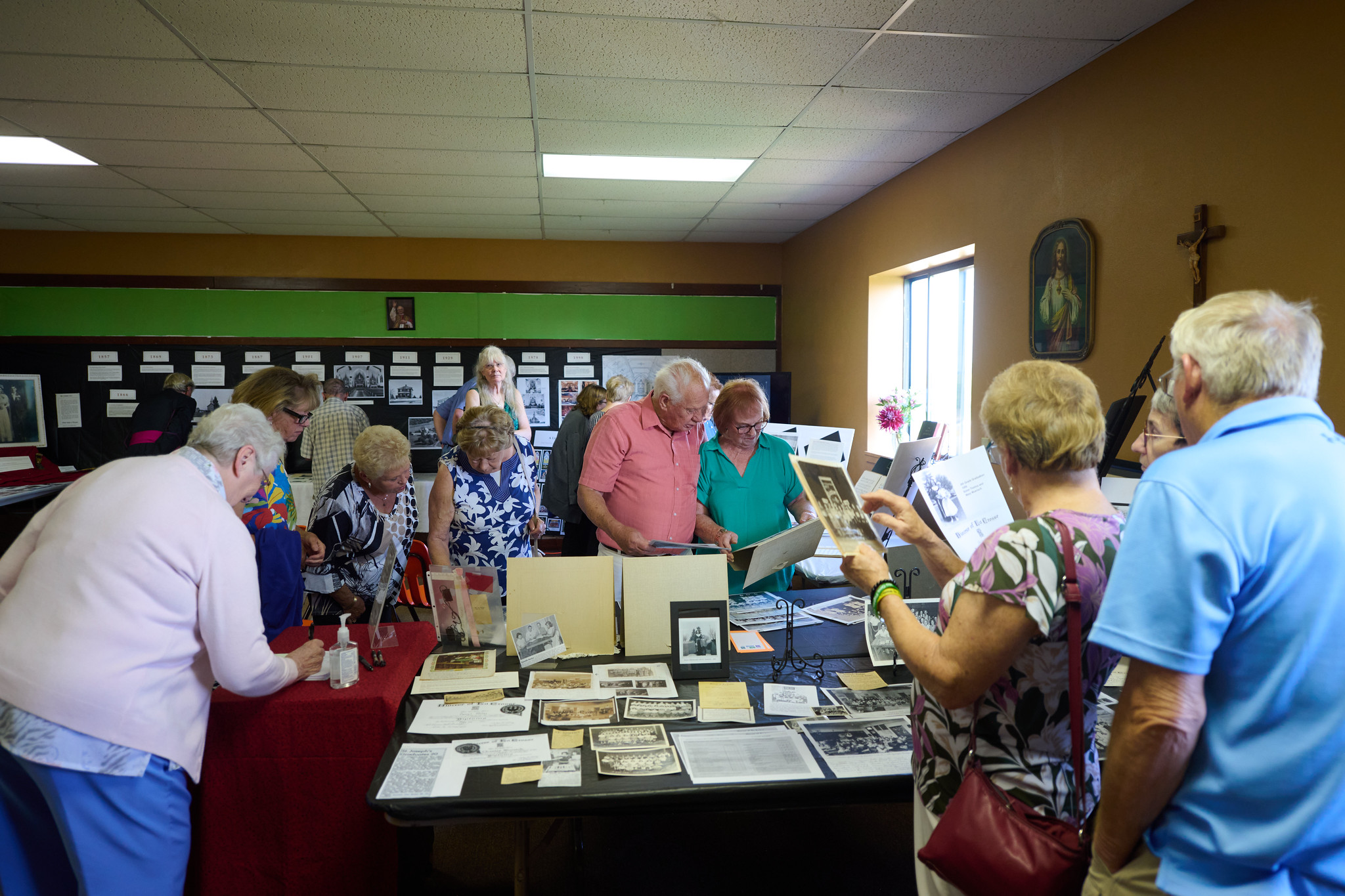
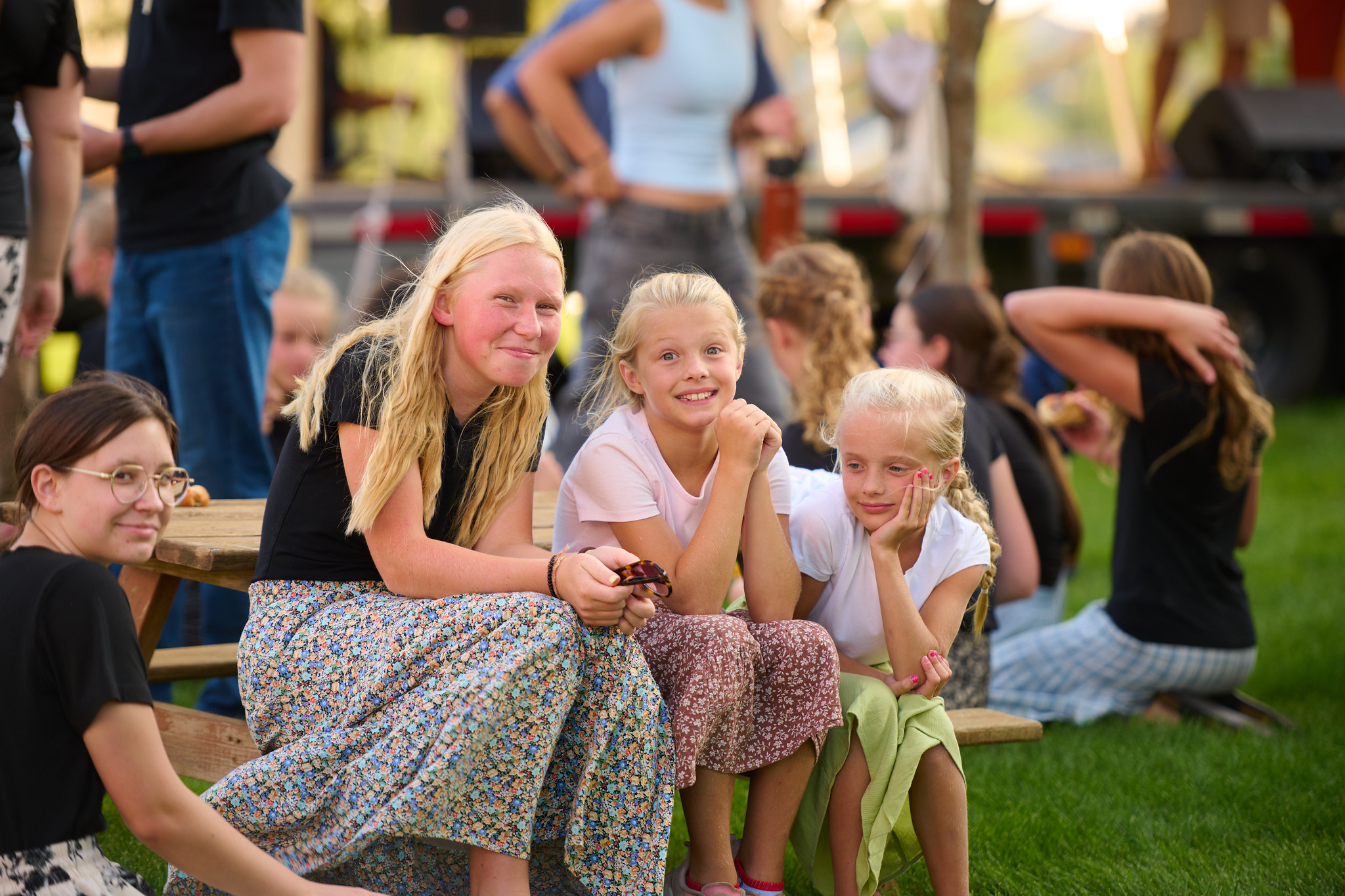
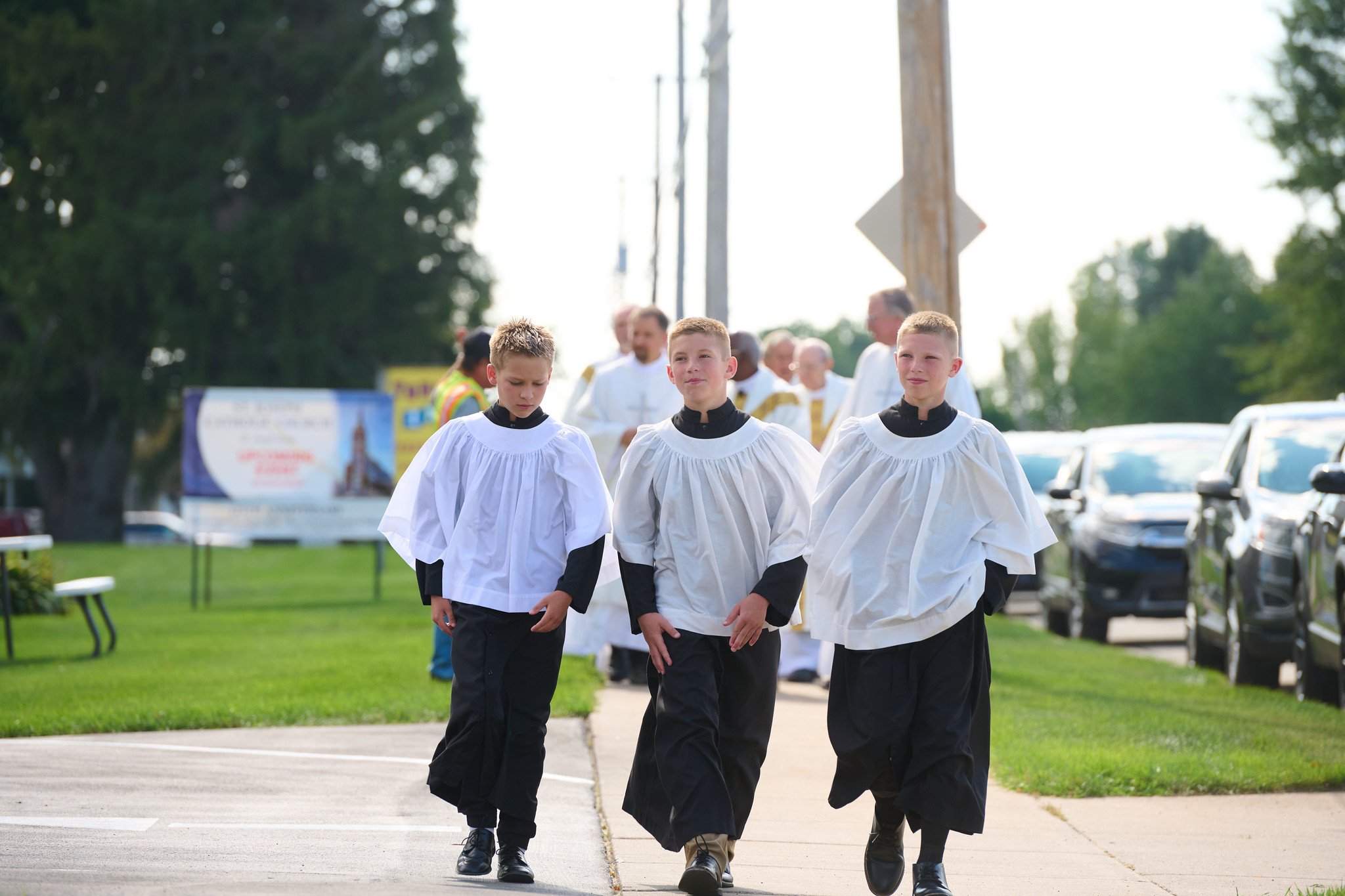
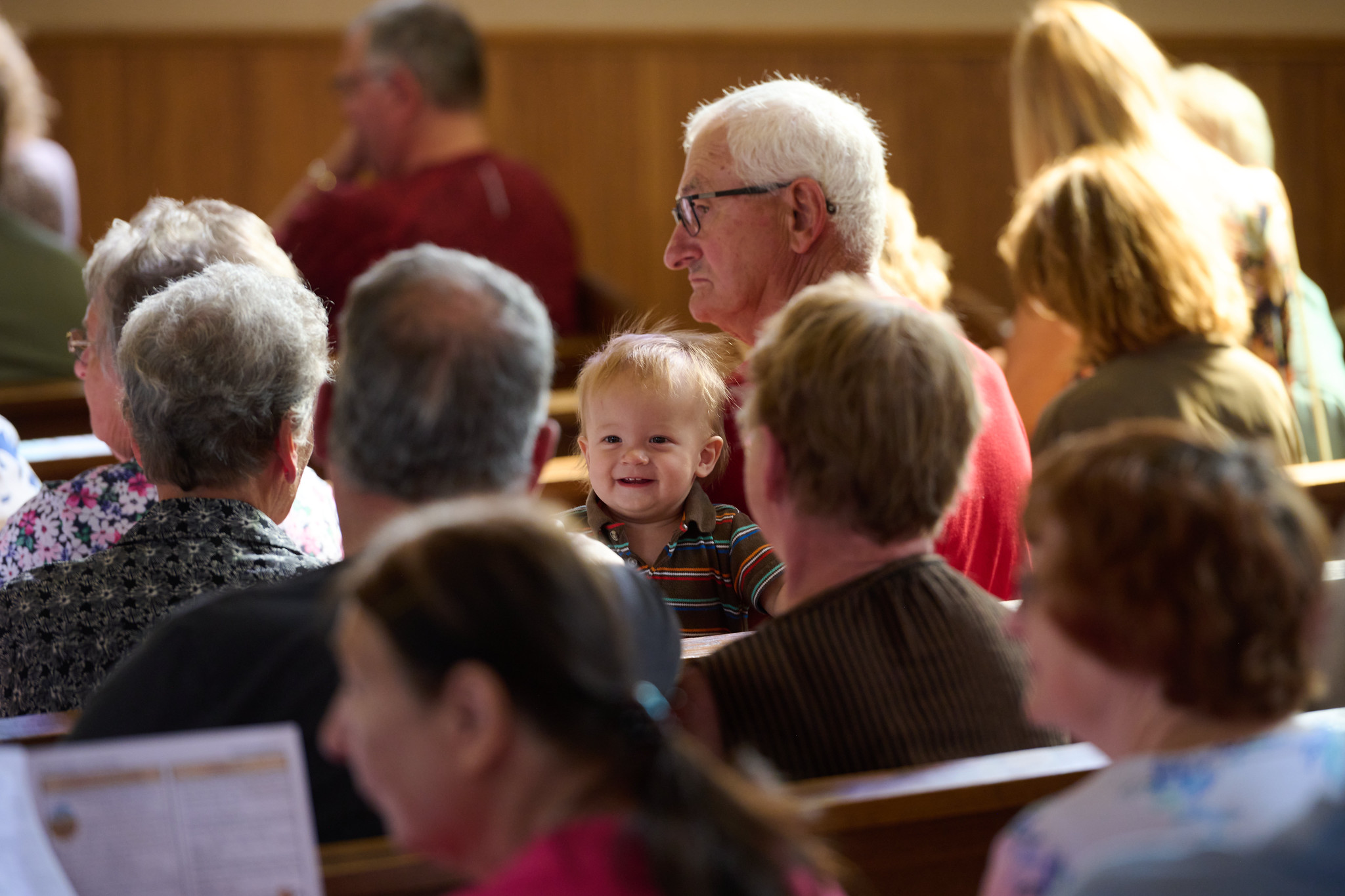
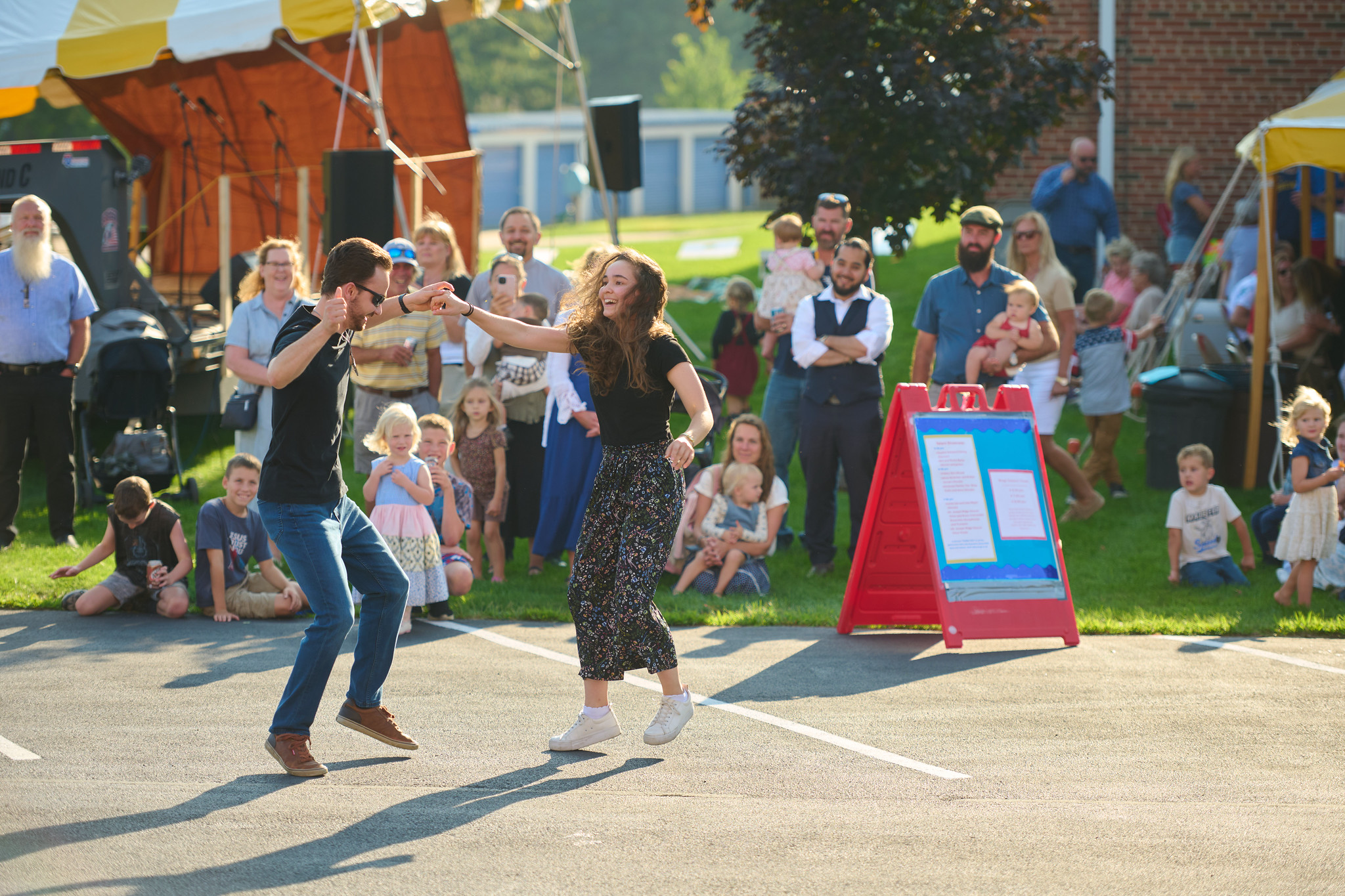
The celebration brought the St. Joseph community together for a day of faith, fellowship and fun. Four priests, four monsignors and two deacons joined in celebrating the anniversary Mass, and the church choir sang. After Mass, parishioners and guests enjoyed a picnic of brats, hot dogs, barbecue, coleslaw, potato salad, chips, cookies and refreshments. Children enjoyed a fishpond and a sawdust pile, and there was bingo for everyone. The talent show included young swing dancers, music by Father Sen, the church choir and various family musical groups.
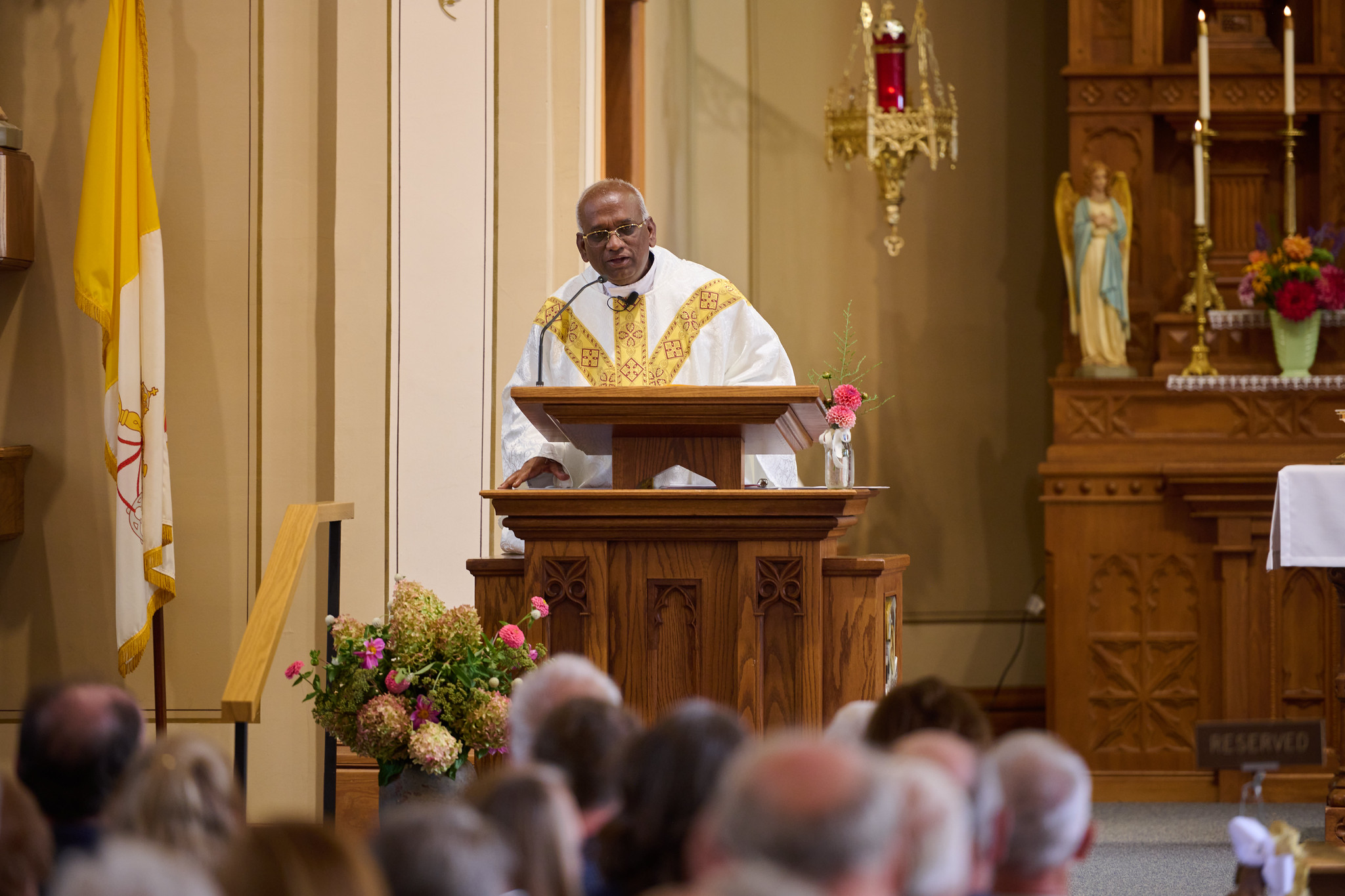
Father Sen thanked the many parishioners who served on the food, talent, history and setup committees, whose time and effort helped make the anniversary celebration a memorable day for the entire parish.
The turnout showed how people identify with St. Joseph. They do not see their history as something distant or belonging only to the past—they see their own families and memories in it. It was a reminder that the same sense of community that helped build and sustain St. Joseph Parish through generations is still present today.
“The parish’s 125th anniversary celebration showed that the spirit of St. Joseph Parish is still very much alive,” Sara said.
For many people, St. Joseph is part of their family’s story. The 125th anniversary gave everyone an opportunity to come together, remember where they came from, reconnect with old friends and celebrate the Faith and community that continue to bring people together today.
Women From the Ridge Who Joined Religious Orders
- Sister Claudine Arenz
- Sister Mary Joanina Parsche
- Sister Rosetta Trinkes
- Sister Assumpta Lucas
- Sister Ursula Lucas
They do not see their history as something distant or belonging only to the past—they see their own families and memories in it.