
Holy Family Parish in Prairie du Chien,
St. Wenceslaus Parish in Eastman and Sacred Heart of Jesus Parish in Wauzeka
Building on a long history of Catholic education in Prairie du Chien
Story by Dan Rislove
When Father Brandon Guenther arrived in Prairie du Chien in 2024, he encountered a thriving Catholic community with well-attended parishes. Now assisted by his associate pastor, Father Brian Ward, he cares for three parishes, including St. Wenceslaus in Eastman, Sacred Heart of Jesus in Wauzeka and Holy Family Parish in Prairie du Chien.
At one time, the two churches of Holy Family Parish, St. Gabriel Archangel Church and St. John Nepomucene, each had their own school, but the schools merged into a single elementary/middle school about 15 years ago.
The last remaining school, Prairie Catholic School, caught Father Guenther’s attention when he first arrived at his new post. “The first thing I heard about when I came to the parish,” he said, “was how much we love our school and our children.” Prairie Catholic School offers education from pre-K through eighth grade, but most students attend the public high school afterward. Father Guenther thought, “How beautiful would it be to continue that Catholic education through the high school years?”
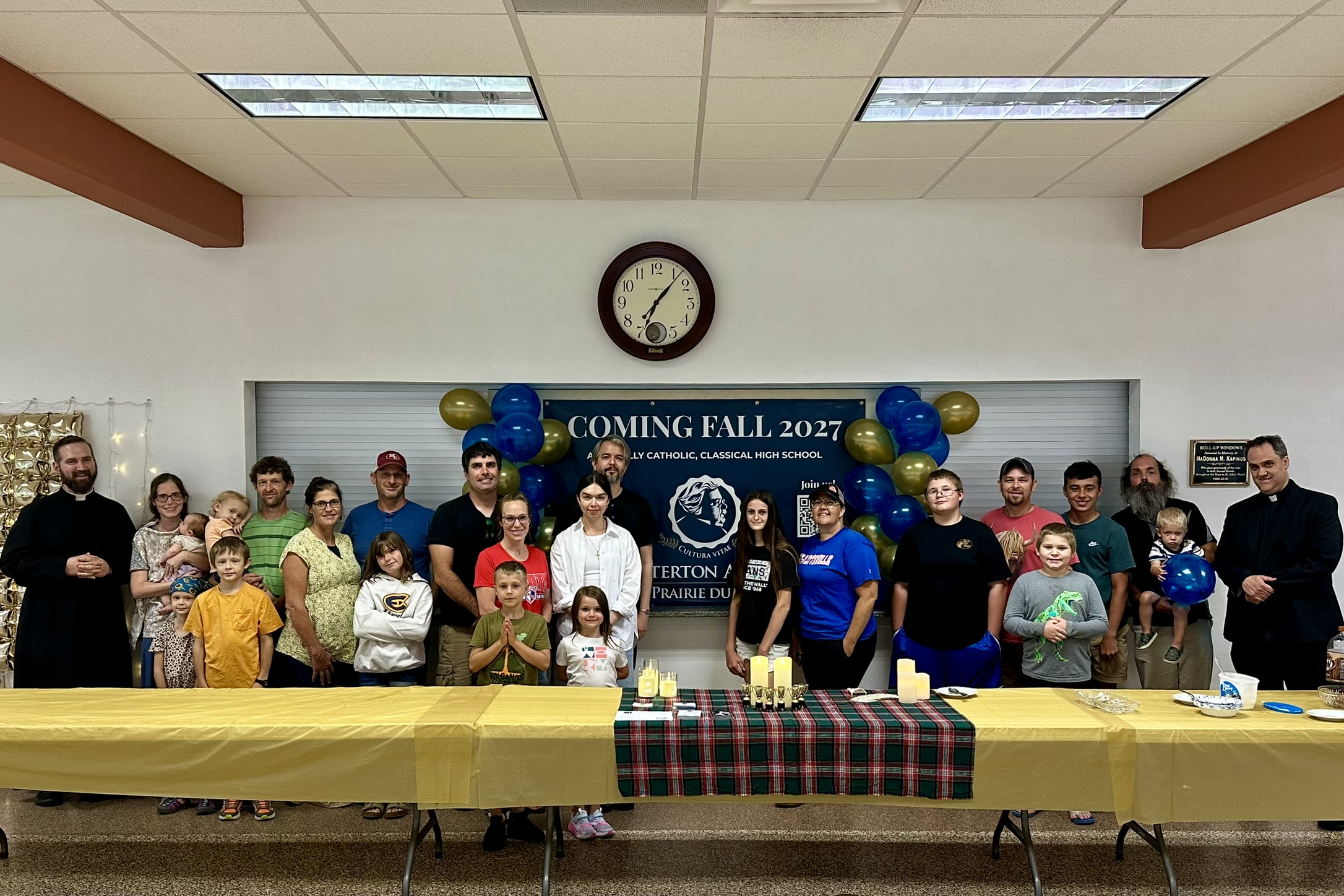
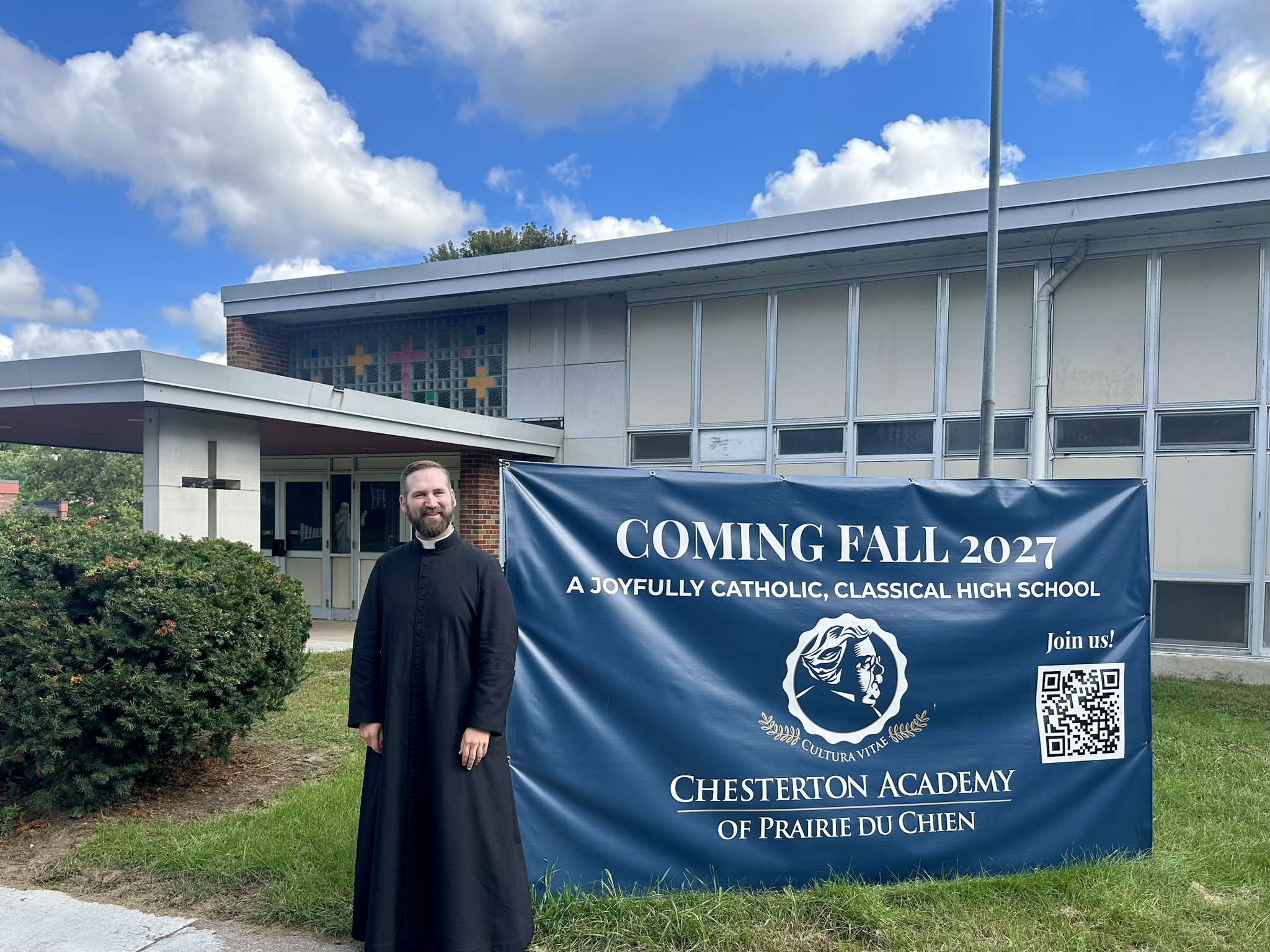
After two years of careful planning and hard work, that dream is now on the cusp of becoming reality, as the community of Prairie du Chien hopes to open a new Catholic high school, the Chesterton Academy, in the fall of 2027.
Among the seven Catholic high schools in the Diocese of La Crosse, Chippewa Falls is the smallest community to host one. Prairie du Chien is roughly one-third the size of Chippewa Falls, with a population of around 5,500. However, Prairie du Chien also has a magnificent history of Catholic education going back to the 1800s.
At one time, the city claimed not one, but two, Catholic high schools. Campion Jesuit High School was a popular boys’ boarding school, founded in 1880 and closed in 1975. There was also a Catholic girls’ preparatory school called St. Mary’s Institute, which closed in 1968. At one time, there was even a Catholic college in Prairie du Chien. It moved to Milwaukee in 1928, becoming Mount Mary University.
Trying not to REINVENT the Wheel
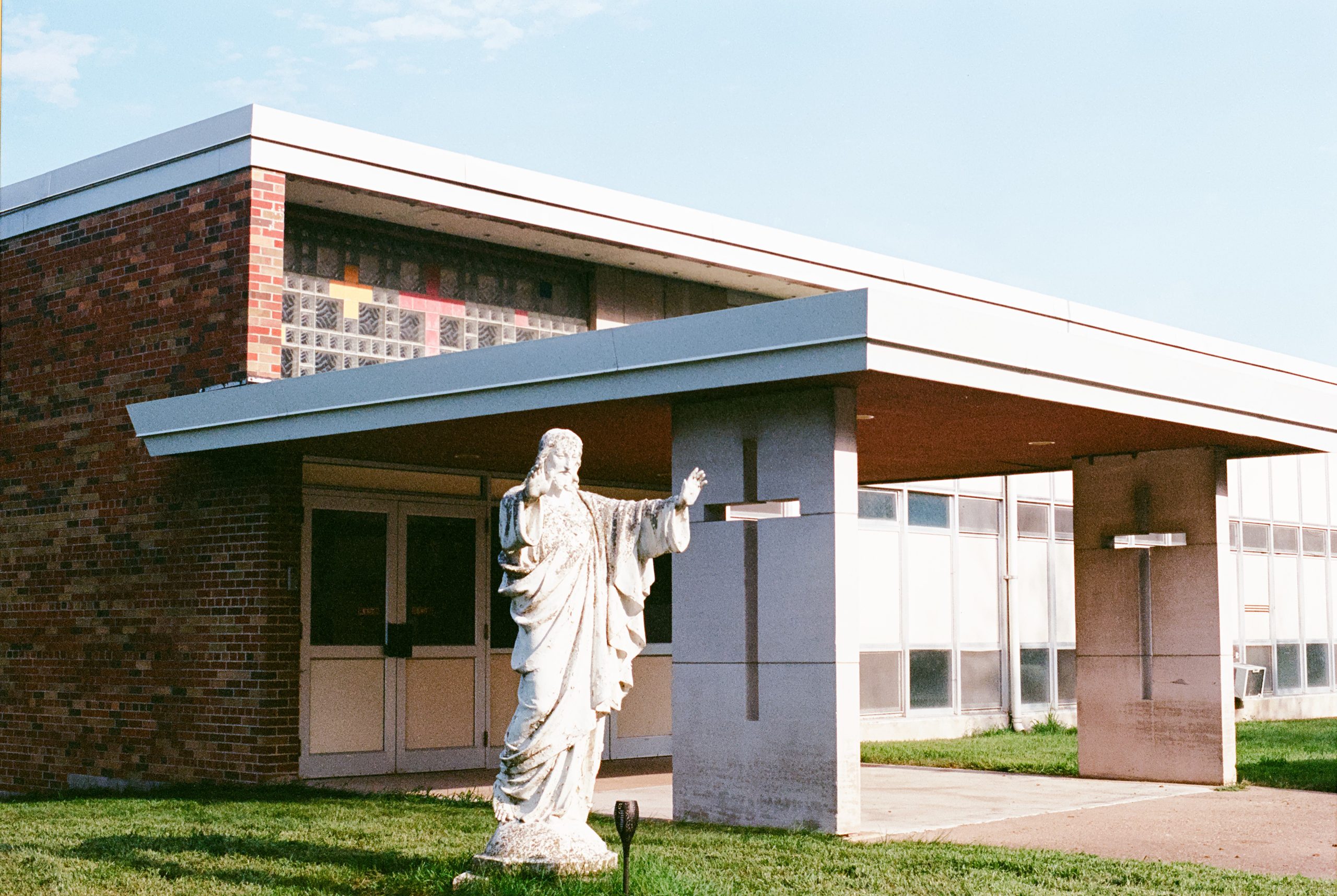
Given the city’s history, there should be no shortage of abandoned school buildings available for the new school’s location. Unfortunately, St. Mary’s Institute is now an apartment complex, and Campion High School is a minimum-security prison owned by the State of Wisconsin. However, St. John’s Catholic School, which was abandoned after the merge with St. Gabriel’s School, is still owned by the parish.
With a fresh coat of paint and some infrastructure updates, it will become the new Chesterton Academy. It has almost everything they need for a high school, including classrooms, office space, a cafeteria and St. John Nepomucene Church right next door for the school Mass. The only thing lacking is a gym, but the gym at St. Gabriel’s School is only a mile and a half away.
In the early stages, Father Guenther met with Bishop Gerard W. Battersby to discuss his vision for a new school, and they shared an interest in diverse ways of educating children in a Catholic key.
Funding and enrollment are relatively straightforward goals, but ensuring that the school’s education is authentically Catholic is the most vital goal of all. During that first year, Father Guenther was reminded of the Chesterton School Network, and after a little research, he decided to contact the network for guidance.
Guidance from the Chesterton Schools Network
Father Guenther describes the Chesterton School Network as an educational franchise that simplifies the process of opening a Catholic school. The network provides branding, marketing, training and guidance for starting a new school. Headquartered in Hopkins, Minn., the Chesterton Network has successfully helped establish nearly 70 Chesterton Academies worldwide.
The Chesterton Network also offers guidance on how to establish authentically Catholic educational programs. Their humanities sequence, for example, offers classes in literature, history, philosophy, theology and Latin. It progresses from the ancient period through the medieval, Renaissance and modern periods as the students advance through the grades.
There is also a strong emphasis on character and spiritual development. As Father Guenther explains it, “being authentically Catholic is something that Chesterton Academies is really all about, and so we have Mass every day and opportunities for confession and adoration, and the teachers take an oath of fidelity, which is really beautiful.” He says that it’s all centered around being “joyfully Catholic,” which is not a burden, but rather, “a wonderful thing.”
One reason for the popularity of Chesterton Schools is their commitment to making Catholic education accessible. They aim to charge half the tuition of similar Catholic schools in the region. This affordability has led to strong interest in establishing Chesterton Academies in rural areas like Prairie du Chien.
After receiving permission from the bishop to move forward, Father Guenther and his team of a dozen clergy members, parents and volunteers were excited to begin their work. However, the Chesterton Schools Network emphasized that there are several preliminary benchmarks that must be met to ensure success. “They’re pretty measured,” said Father Guenther, “and they want to make sure that your goals are realistic and that you can have the strongest start that you can.”
They made some phone calls, did some interviews and attended “Discovery Days,” where they learned about the process of planning and opening a new school. Some of the parishes that start the process drop out of the program once they see what is involved, but Holy Family Parish is still working methodically toward its goal of opening in the fall of 2027.
A Springtime for Catholic Education
Even without a formal admissions process, they have nine very interested students for the 9th– and 10th-grade classes they plan to offer that first year. There are also students currently attending the middle and elementary schools who would be interested in the new Catholic high school.
The availability of sports is a concern to some parents, but they may be able to co-op with the public school initially to offer additional athletic opportunities for students. Joyfully, there have already been a large number of unsolicited offers to teach at the new school, and Father Guenther does not expect any difficulties in filling the available positions once the hiring process begins.
One of the principles of the Chesterton School Network is to avoid criticizing public education as a tactic to attract students to Catholic schools. Father Guenther believes that students and parents should choose the new school because they are genuinely impressed by what it offers and are seeking an authentic Catholic educational experience. He states, “We rest solely on the virtues of this school, and we believe that is enough to encourage people to join us.”
Father Guenther is optimistic about the future of Chesterton Academy and the Church as a whole. He noted that there was a time when many Catholic schools were closing, but now it seems to be a period of rejuvenation for Catholic education. This revival is likely driven in part by new voucher programs. However, Father Guenther also believes that it reflects a broader springtime of the Faith. He shared, “I think the Catholic schools that are flourishing are the ones that are really leaning into their Catholic faith in a good and beautiful way.”